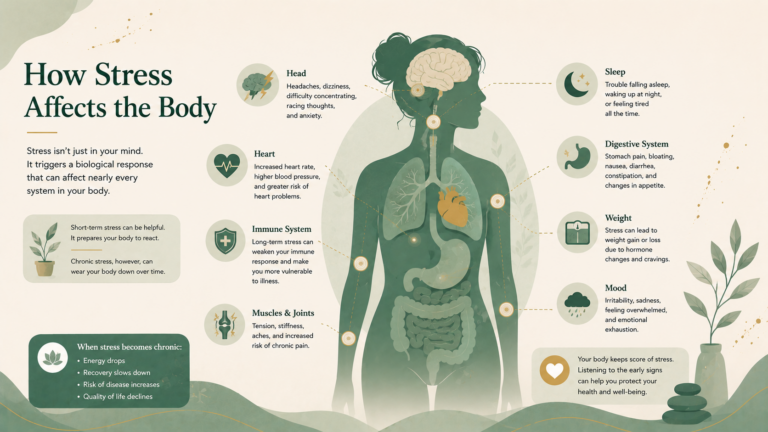
What Is the Vagus Nerve and Why It Matters for Stress

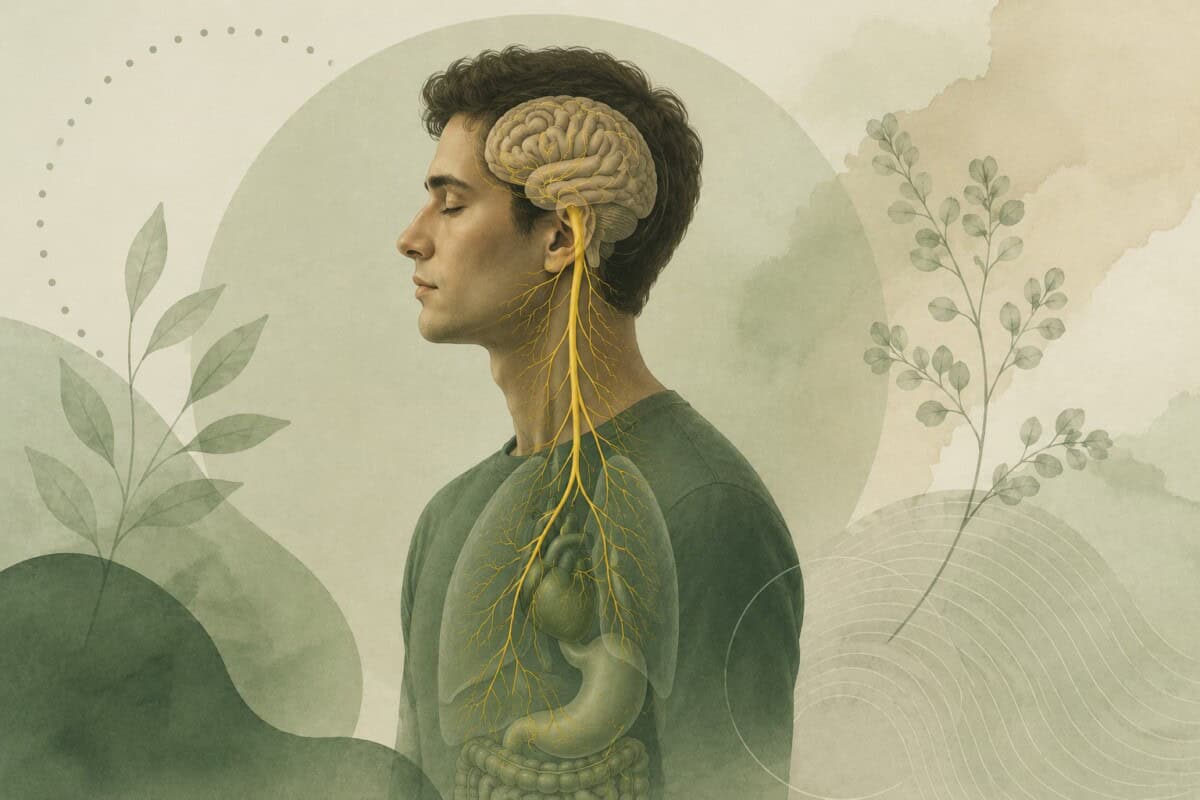
You’ve probably seen the vagus nerve mentioned everywhere lately, from cold plunges and humming exercises to breathing videos that promise to “activate” it. Some of the claims can make it sound like another wellness trend. But the vagus nerve is very real, and it plays an important role in how your body responds to stress.
Understanding what it actually does makes it easier to separate useful advice from the hype. It can also help explain what happens when your body starts to settle after a stressful moment. Some people seem to return to their usual state quickly, while others may stay tense or on edge for much longer.
Medical Disclaimer
This article is provided for general educational and informational purposes only and does not constitute medical advice, diagnosis, or treatment. While the content is written with input from a licensed healthcare professional, reading this article does not create a nurse-patient, provider-patient, or any other professional relationship between you and the author or Vida Atlas.
The information here is general in nature and is not a substitute for personalized medical advice from your own doctor or qualified healthcare provider, who can take your full medical history and individual circumstances into account. Always consult your doctor or another qualified healthcare provider with any questions you may have regarding a medical condition, and never disregard professional medical advice or delay seeking it because of something you read on this site.
If you think you may have a medical emergency, call your local emergency number or go to the nearest emergency room immediately. Do not rely on this article for urgent or emergency medical situations.
Vida Atlas and the author make no representations or warranties about the accuracy, completeness, or timeliness of the information provided, and disclaim liability for any actions taken or not taken based on the content of this article.
Quick Answer
The vagus nerve is the main nerve of your parasympathetic nervous system. That is the part of your body that calms things down after stress. It runs from your brainstem down through your neck, chest, and belly. It plays a direct role in how fast your heart rate, breathing, and digestion settle after a stressful moment.
What the Vagus Nerve Actually Does
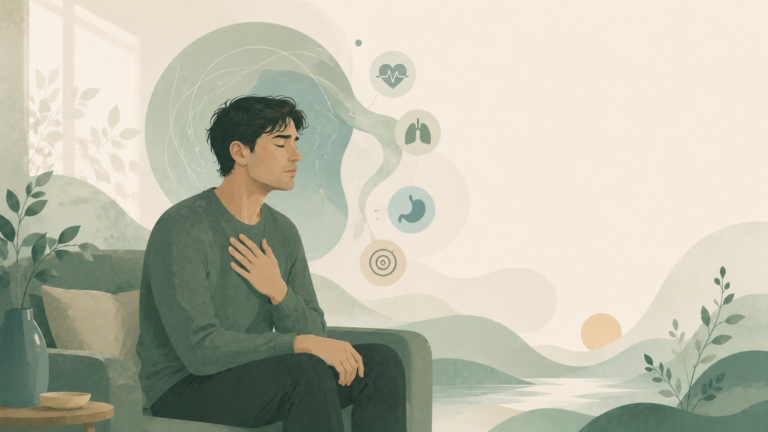
The vagus nerve is actually a pair of nerves, one on each side of your body. It is the longest of the cranial nerves. It connects your brain to your heart, lungs, and digestive system. That is why it touches so many different physical feelings at once.
Its main job is regulating things you do not consciously control. That includes heart rate, digestion, breathing rate, and even some immune responses. When people talk about “vagal tone,” they mean how well this nerve does that job.
How It Connects to Stress
The Fight-or-Flight Switch
When your body senses a threat, real or not, your sympathetic nervous system takes over. It raises your heart rate and gets you ready to react. Once the threat passes, the vagus nerve pulls things back the other way. It lowers your heart rate and lets your body settle.
Vagal Tone Explained
Vagal tone is how well the vagus nerve shifts your body from stressed back to calm. Higher vagal tone is usually linked to a faster, smoother recovery from stress. It is closely related to heart rate variability, a measure some doctors use to check how well your body adapts to stress. Lower vagal tone can mean the stress response lingers longer than it needs to.
Why Some People Recover From Stress Faster
I notice this often with patients. Two people can go through the exact same stressful event and come out of it very differently. It is not just a mindset difference, it is a physical one too, and it is part of why the same calming technique does not work equally well for everyone.
Signs Your Nervous System May Be Slow to Settle
If you often find it hard to calm down after stress, you may also notice digestive discomfort, lingering tension, or a heart rate that takes time to return to normal. You might simply feel like your body stays “on” even when the stressful moment has already passed.
These experiences can happen for many different reasons and do not necessarily mean there is a problem with your vagus nerve. What matters more is noticing patterns in how your body responds to stress and how easily it returns to its usual state afterward.
What Can Help
Slow, Deep Breathing
Slowing your breathing directly stimulates the vagus nerve, especially when your exhale is longer than your inhale. Research on breath control supports this as one of the simplest, best-studied ways to tell your body it is safe to settle down.
Cold Exposure
Brief cold exposure can activate the vagus nerve and slow your heart rate. Splashing cold water on your face works the same way. You do not need a cold plunge for this, a quick splash at the sink uses the same effect.
Humming, Singing, or Gargling
The vagus nerve runs close to your vocal cords and throat muscles. Activities that engage them, like humming, singing, or gargling water, can stimulate it. It sounds minor, but it is a genuinely easy way to add to your day.
Movement
Regular physical activity is linked to improved vagal tone over time. It doesn’t need to be intense, consistency matters more here than intensity. Walking, swimming, cycling, or any other movement you enjoy can be an easy way to make regular activity part of your routine.
Social Connection
Feeling safe and connected with other people also engages the vagus nerve. That is part of why a supportive conversation can genuinely calm you down, not just distract you. It is one of the more overlooked tools, since it does not feel like a “technique.”
When to See a Doctor
Most of the practices above are simple ways to support stress regulation and do not require medical care. But symptoms such as ongoing digestive problems, frequent dizziness, repeated episodes of a racing or irregular heartbeat, or feeling unusually weak or lightheaded are worth discussing with a doctor, especially if they are new, getting worse, or affecting your daily life.
It is also important not to assume that persistent symptoms are caused by your vagus nerve or “low vagal tone.” Digestive changes, palpitations, dizziness, and fatigue can have many possible causes, and a healthcare professional can help determine whether something else needs to be checked.
Seek medical care promptly if you faint without a clear reason, have a new or persistent irregular heartbeat, or develop symptoms such as chest pain, significant shortness of breath, or severe dizziness. These are not symptoms to manage with breathing exercises, cold exposure, or other vagus nerve techniques at home.
Conclusion
The vagus nerve isn’t a wellness trend. It is a real part of your nervous system that helps your body recover after stress. What I find useful about understanding how it works is that techniques like slow breathing or regular movement stop feeling like random wellness advice. They have a purpose, even if they are not quick fixes.
You also do not need to try every vagus nerve technique you see online. Start with something simple that fits naturally into your day and see what actually feels helpful for you. If stress has been showing up physically in other ways, my guide on why anxiety shows up as physical symptoms explains more about that connection.