
Skin Changes That Might Signal Something More

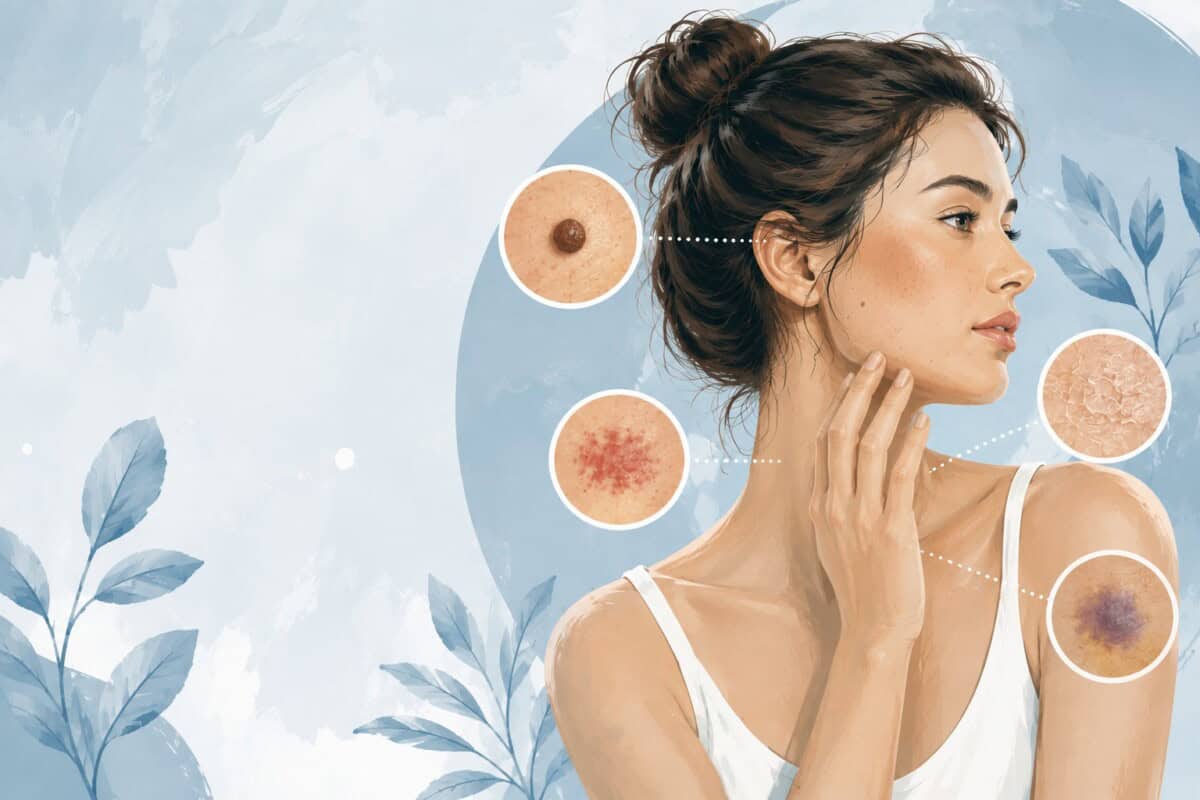
A new mole, a patch of dry skin that won’t clear up, or a bruise that showed up for no clear reason. Most of the time, changes like these are minor and go away on their own. Skin naturally changes with age, weather, hormones, and everyday irritation, so not every new spot means something is wrong.
But your skin can also show changes happening somewhere else in your body. Certain rashes, changes in color or texture, odd bruising, or spots that will not heal may be worth mentioning to a doctor. It’s not about worrying over every mark or bump. It’s about knowing what is normal for you, and noticing when something needs a second look.
Medical Disclaimer
This article is provided for general educational and informational purposes only and does not constitute medical advice, diagnosis, or treatment. While the content is written with input from a licensed healthcare professional, reading this article does not create a nurse-patient, provider-patient, or any other professional relationship between you and the author or Vida Atlas.
The information here is general in nature and is not a substitute for personalized medical advice from your own doctor or qualified healthcare provider, who can take your full medical history and individual circumstances into account. Always consult your doctor or another qualified healthcare provider with any questions you may have regarding a medical condition, and never disregard professional medical advice or delay seeking it because of something you read on this site.
If you think you may have a medical emergency, call your local emergency number or go to the nearest emergency room immediately. Do not rely on this article for urgent or emergency medical situations.
Vida Atlas and the author make no representations or warranties about the accuracy, completeness, or timeliness of the information provided, and disclaim liability for any actions taken or not taken based on the content of this article.
Quick Answer
Most skin changes are harmless. But some, like a mole that is changing shape, yellow skin, bruises with no clear cause, or a sore that won’t heal, can point to a health problem that goes deeper than the skin. Knowing what is normal for your body makes it much easier to notice when something is actually different.
What’s Actually Happening Inside Your Body
Skin is your body’s largest organ. It is closely linked to blood flow, hormones, the liver, and the immune system. When something changes inside your body, skin is often one of the first places it shows up, sometimes before any other symptoms appear.
That does not mean every mark is a warning sign. It means a change that is new, spreading, or does not fit your normal pattern is worth a little extra attention than one that has always been there. Paying attention to how your skin normally looks and behaves can make it easier to notice when something is genuinely different.
Changes Worth Paying Attention To
New or Changing Moles
A mole is worth getting checked if it has an uneven shape, a ragged edge, more than one color, is bigger than a pencil eraser, or has changed over recent months. Doctors often use the A-B-C-D-E rule, for shape, border, color, size, and change over time, as a simple way to check moles.
Yellowing Skin or Eyes
A yellow color in the skin or the whites of the eyes is called jaundice. It is often linked to how well the liver is working. This is not something to guess about on your own, and it is worth getting checked fairly soon.
Unexplained Bruising
Sometimes you bump into something without noticing, and a bruise shows up later. That’s usually normal. But bruising that shows up often, in odd places, or for no clear reason can sometimes point to a blood clotting problem or a medicine side effect worth reviewing with a doctor.
Persistent Itching Without a Rash
Itching with no rash, that does not go away with the usual remedies, can sometimes be linked to liver, kidney, or thyroid problems. It is an easy symptom to brush off, since it does not look serious, which is part of why it is worth mentioning if it lingers.
Changes in Skin Color or Dark Patches
Dark, soft patches of skin, often on the neck or under the arms, can be linked to insulin resistance. This kind of change is easy to miss since it happens slowly, but it’s a useful clue worth bringing up at a checkup.
Slow-Healing Sores
A cut or sore that takes much longer than normal to heal, especially on the feet or lower legs, can be linked to blood flow or blood sugar problems. It’s one of those changes that’s easy to write off as bad luck when it’s actually worth a closer look.
What May Help
Getting to know your own skin makes changes much easier to catch. A simple habit, like looking over your skin once a month in good light, helps you notice what’s actually new rather than relying on memory alone.
Taking a photo of anything you’re unsure about can help too. It gives you and your doctor something real to compare, whether the change is still there or gone by your next visit.
When It’s Worth Paying Attention To
A single new freckle or a bruise you can explain is usually nothing to worry about. What matters more is whether a skin change is new, keeps growing or spreading, or looks noticeably different from what is normal for you. Changes that appear along with symptoms like unusual tiredness, unexplained weight changes, or ongoing pain are also worth mentioning to a doctor.
Some changes should be checked sooner rather than later. This includes a mole that is changing quickly, yellowing of the skin or eyes, or a sore that does not seem to heal. If you are unsure about a change, especially one that keeps getting worse, it is reasonable to have it looked at rather than waiting for it to disappear on its own.
FAQ:
No. Most new moles are harmless, especially when you are young. It is moles that change or look unusual that are worth getting checked.
Yes. Stress can trigger flare-ups of eczema, hives, or acne. But changes that stick around and are not tied to a stressful time are still worth getting checked.
Once a month is a good starting point for most people. Check more often if you or your family have a history of skin cancer.
The Bottom Line
Most skin changes turn out to be nothing serious, and the goal here isn’t to worry over every mark. In my experience, the changes worth acting on are usually the ones that are new, changing, or don’t fit your normal pattern. When in doubt, having it looked at is a quick way to either rule something out or catch it early.