Why Anxiety Shows Up as Physical Symptoms

You’ve already been told it’s anxiety. Maybe by a doctor, maybe by a therapist, maybe you’ve known for years. So why does it still feel like your heart is doing something wrong, or your stomach is sick, or your whole body is bracing for an emergency that isn’t there?
This is one of the most common follow-up questions I get after a diagnosis, not “what is anxiety,” but “why does it feel like this.” The disconnect between knowing it’s anxiety and feeling like something is physically wrong is real, and there’s a clear explanation for it.
Medical Disclaimer
This article is provided for general educational and informational purposes only and does not constitute medical advice, diagnosis, or treatment. While the content is written with input from a licensed healthcare professional, reading this article does not create a nurse-patient, provider-patient, or any other professional relationship between you and the author or Vida Atlas.
The information here is general in nature and is not a substitute for personalized medical advice from your own doctor or qualified healthcare provider, who can take your full medical history and individual circumstances into account. Always consult your doctor or another qualified healthcare provider with any questions you may have regarding a medical condition, and never disregard professional medical advice or delay seeking it because of something you read on this site.
If you think you may have a medical emergency, call your local emergency number or go to the nearest emergency room immediately. Do not rely on this article for urgent or emergency medical situations.
Vida Atlas and the author make no representations or warranties about the accuracy, completeness, or timeliness of the information provided, and disclaim liability for any actions taken or not taken based on the content of this article.
Quick Answer
Anxiety shows up physically because the body’s stress response doesn’t distinguish between emotional and physical threats. Your brain triggers the same nervous system reaction to a scary thought as it would to real danger, which is why anxiety can cause very real chest tightness, nausea, or a racing heart even once you know the cause.
Why Your Body Doesn’t Get the Memo
Knowing intellectually that you’re safe doesn’t automatically switch off the physical alarm system. The part of your brain that triggers stress reacts faster than the part that reasons things through. By the time your rational brain catches up, your body has already released adrenaline, tensed your muscles, and pulled blood away from digestion.
This is why you can be sitting somewhere completely safe, fully aware that nothing is wrong, and still feel your heart pounding. The diagnosis explains what’s happening. It doesn’t turn the alarm system off by itself. This is the same mind-body connection at work in a lot of physical symptoms, just with a mechanism that’s especially well understood in anxiety.
How This Plays Out in the Body
The Chest and Heart
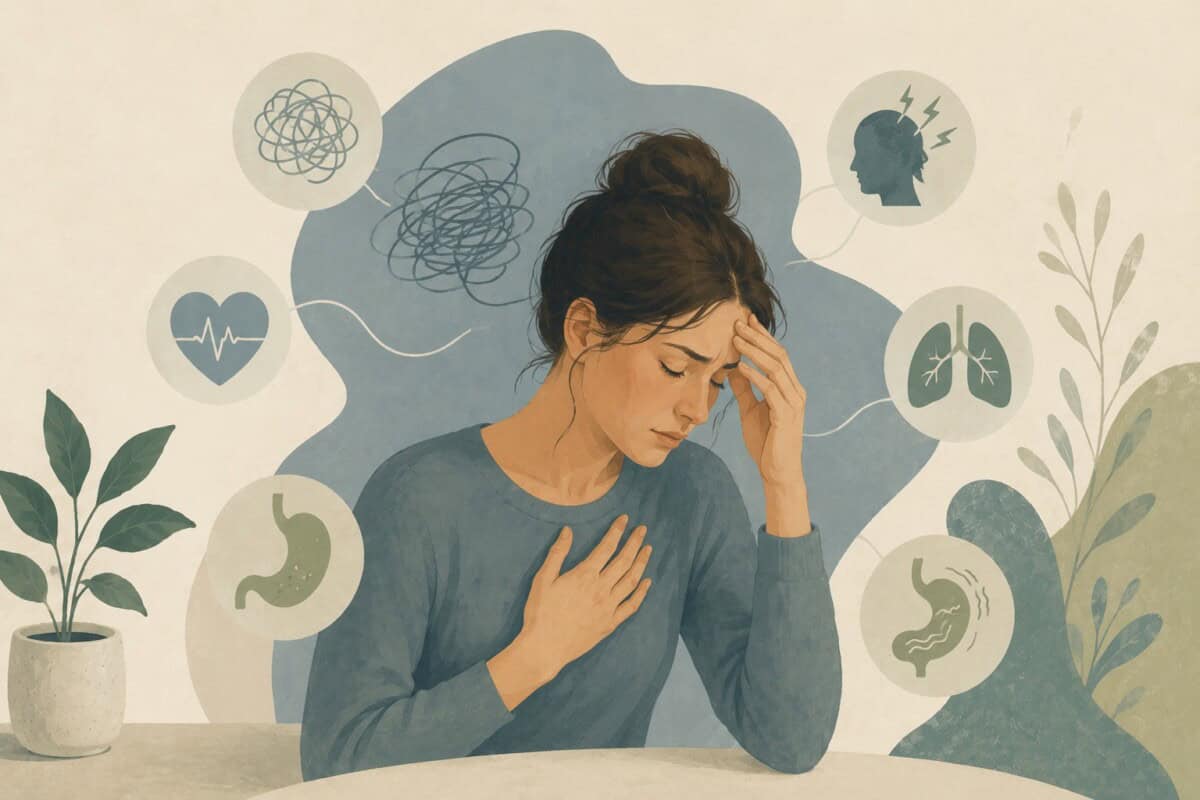
Adrenaline speeds up your heart rate and can make your chest feel tight, which is one of the reasons anxiety is so often mistaken for a heart problem, even by people who already know it’s anxiety. It’s one of the most common reasons people end up in urgent care before realizing anxiety was behind it.
The Stomach
Your digestive system slows down during a stress response, since digesting food isn’t a priority when your body thinks it needs to fight or flee. This can cause nausea, a knotted stomach, or appetite changes. Some people notice this pattern so consistently that they can predict a stressful day by their stomach alone.
The Muscles
Muscles tense in preparation to react, even when there’s nothing to physically respond to. Held over hours or days, this shows up as headaches, jaw tension, or a stiff neck and shoulders. Many people don’t even notice they’re clenching until the tension turns into pain.
The Breath
Breathing often becomes shorter and shallower, which can create a feeling of not getting a full breath, even though your oxygen levels are completely normal. That mismatch, feeling short of breath with nothing actually wrong, is part of what makes it so unsettling.
Why Knowing the Cause Doesn’t Stop the Feeling
One of the more frustrating parts of an anxiety diagnosis is realizing that understanding it doesn’t immediately fix it. Your nervous system responds to repetition, not logic, so it takes consistent practice, not a single insight, to feel safe again. I remind my patients often: knowing what it is and calming it down are two separate skills.
What Can Help the Body Catch Up
Because the physical response starts before conscious thought, physical tools tend to work faster than trying to think your way out of it. Slow breathing, especially a longer exhale than inhale, can signal to your nervous system that the danger has passed. Movement, even a short walk, helps burn off some of the adrenaline your body has already released.
Over time, therapies like cognitive behavioral therapy can help retrain how your brain interprets and responds to triggers, which gradually reduces how often and how strongly the physical response fires in the first place.
When to Reach Out for Support
If physical symptoms remain intense or frequent despite an existing diagnosis and treatment plan, it’s worth revisiting with whoever is helping you manage it. Sometimes treatment needs adjusting, and sometimes it simply takes longer than expected for the body to catch up with what the mind already knows.
Conclusion
Understanding that anxiety is the cause is an important first step, but it’s not the same as the feeling disappearing. In my experience, the body needs its own kind of convincing, separate from what satisfies the mind. If you’re still sorting out whether your symptoms point to anxiety or something else, my guide on physical symptoms of anxiety can help.