Common Causes of Headaches

Almost everyone gets a headache from time to time. Sometimes it’s a dull ache across your forehead. Other times it’s a sharp pain behind your eyes or a throbbing pain on one side of your head.
When it happens, most of us ask the same question: “Why does my head hurt?” But headaches aren’t a disease on their own. They’re a signal that something in your body needs attention. The good news is that most headaches aren’t caused by anything serious. They’re often linked to everyday things like stress, poor sleep, dehydration, or muscle tension. This is one of the most common complaints I hear in practice, and almost always one of the easier ones to work through.
Medical Disclaimer
This article is provided for general educational and informational purposes only and does not constitute medical advice, diagnosis, or treatment. While the content is written with input from a licensed healthcare professional, reading this article does not create a nurse-patient, provider-patient, or any other professional relationship between you and the author or Vida Atlas.
The information here is general in nature and is not a substitute for personalized medical advice from your own doctor or qualified healthcare provider, who can take your full medical history and individual circumstances into account. Always consult your doctor or another qualified healthcare provider with any questions you may have regarding a medical condition, and never disregard professional medical advice or delay seeking it because of something you read on this site.
If you think you may have a medical emergency, call your local emergency number or go to the nearest emergency room immediately. Do not rely on this article for urgent or emergency medical situations.
Vida Atlas and the author make no representations or warranties about the accuracy, completeness, or timeliness of the information provided, and disclaim liability for any actions taken or not taken based on the content of this article.
Quick Answer
A headache happens when pain-sensitive tissues around your brain become irritated. Your brain itself can’t feel pain, but the muscles, nerves, blood vessels, and the protective lining around it can. That’s why many different things can cause a headache, even though the pain feels like it’s coming from inside your head.
What’s Actually Happening Inside Your Body
Here’s something that surprises many people: your brain can’t actually feel pain. The pain comes from the tissues around it. The muscles in your neck and scalp, the blood vessels, the nerves, and the protective covering around the brain all have pain sensors.
When one of these becomes irritated, tight, swollen, or stretched, it sends pain signals to your brain, and your brain turns those signals into the feeling we know as a headache. In other words, the headache isn’t usually the problem itself. It’s your body’s way of telling you that something nearby needs attention.
Why It Happens
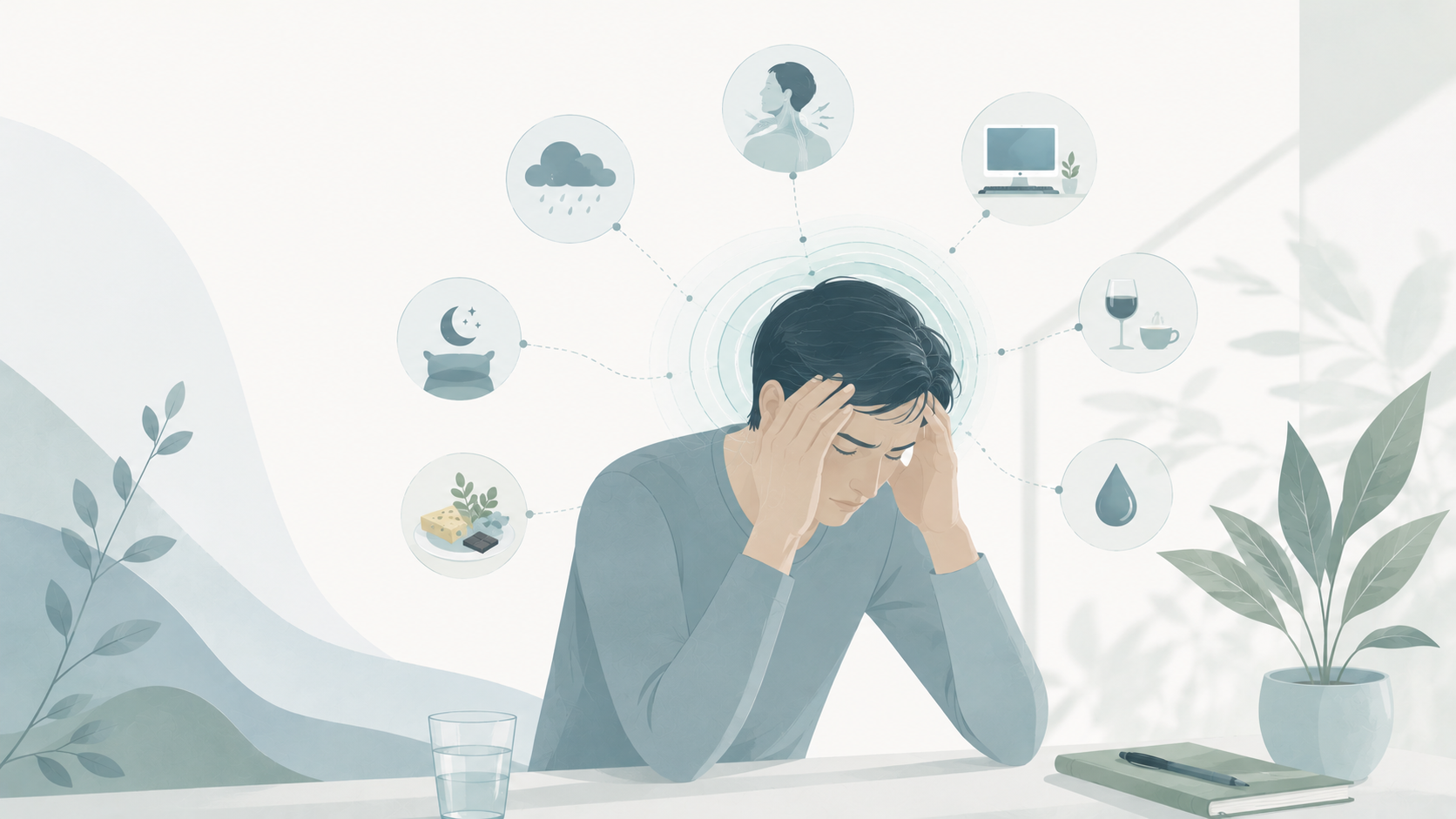
Many different things can trigger those pain signals.
Muscle Tension
Sitting at a desk for hours, looking down at your phone, or feeling stressed can make the muscles in your neck, shoulders, and scalp tighten. Tight muscles can put pressure on nearby nerves and lead to a headache. I see this pattern constantly in patients who spend most of the day hunched over a screen.
Dehydration
Your brain needs enough water to work properly. Even mild dehydration can be enough to trigger a headache in some people. The same trigger is behind a lot of brain fog too.
Poor Sleep
When you don’t get enough rest, your nervous system becomes more sensitive, and it’s easier for pain signals to build up. Ongoing exhaustion often follows a similar pattern. See Why Am I Always Tired?
Skipping Meals
Your brain needs a steady supply of energy from food. If you go too long without eating, you may develop a headache because your brain isn’t getting the fuel it needs.
Hormone Changes
Hormone changes, especially around the menstrual cycle, can also trigger headaches. Some people notice a clear pattern from month to month. See Why Do I Get Period Headaches? for more on this pattern.
Being Sick
Headaches are also common when you’re sick. If you have a cold, the flu, COVID-19, or another infection, your immune system releases chemicals that can make pain receptors more sensitive.
Not All Headaches Are the Same
Even though we use the word headache, not all headaches are the same. The pain can feel different because it doesn’t always come from the same part of the body or happen for the same reason.
Tension Headaches
These are the most common type. They usually feel like a dull ache or a tight band around the head. Stress, muscle tension, poor posture, and long hours at a desk are common triggers.
Migraines
Migraines are different. They’re a neurological condition, not just a severe headache. The pain is often throbbing and may affect one side of the head. Some people also feel sick to their stomach or become sensitive to light, sounds, or smells. Others notice warning signs, called an aura, before the headache begins.
Eye Strain
Long hours in front of a screen, needing glasses, or an outdated prescription can strain your eyes and contribute to headaches. Less commonly, certain eye conditions may also be responsible and should be checked by an eye specialist. Identifying the type of headache can help narrow down the cause.
When It’s Usually Harmless
Most headaches improve with rest, water, food, or time away from screens. They often happen after a stressful day, a poor night’s sleep, or many hours spent in the same position. While headaches can be unpleasant, they’re often a normal response to everyday life and usually go away on their own.
When It’s Worth Paying Attention To
It’s a good idea to see your healthcare provider if your headaches become frequent, keep getting worse, or start affecting your daily life.
Seek emergency medical care if you suddenly develop the worst headache you’ve ever had, or if your headache comes with confusion, trouble speaking, weakness, vision changes, seizures, a stiff neck with fever, or follows a head injury. These situations are uncommon, but they need immediate medical attention.
What You Can Do
If you get headaches from time to time, try looking for patterns. Ask yourself:
- Did I drink enough water today?
- Did I get enough sleep?
- Have I eaten regularly?
- Have I been sitting at my desk for too long?
- Have I been under a lot of stress?
Sometimes the answer is surprisingly simple. If headaches happen often, keeping a headache diary can help you spot triggers. Write down when the headache started, how it felt, what you were doing, what you ate, and how long it lasted. This information can also help your healthcare provider if you decide to seek medical advice. In my experience, most people are surprised by how much a simple diary like this reveals once they actually keep one for a couple of weeks.
The Bottom Line
Headaches are one of the ways your body gets your attention. Most of the time, they don’t mean something serious is wrong. They’re simply a sign that your muscles, nerves, blood vessels, or other tissues around your brain are reacting to something.
Once you understand that, headaches become a little less mysterious. Instead of focusing only on the pain, you can start looking for what your body may be trying to tell you.