
Preventive Screenings: What You Actually Need and When

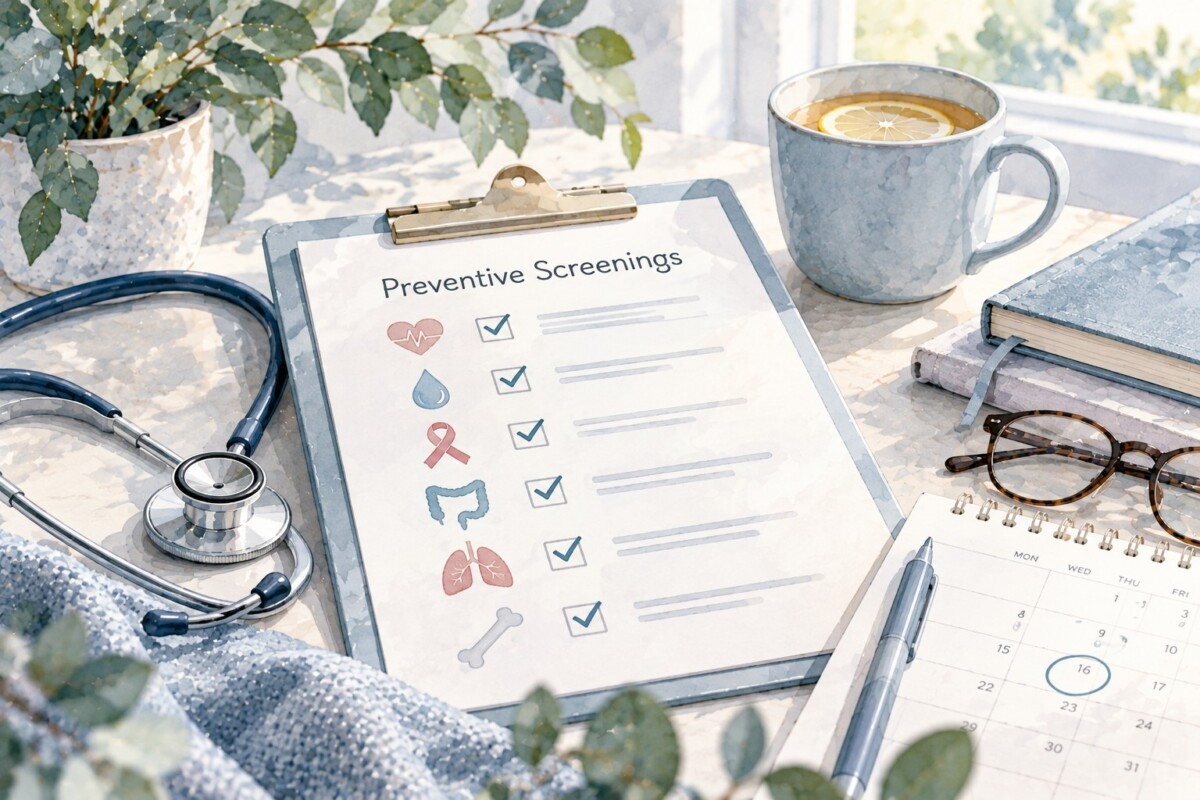
Preventive screenings exist to catch problems before you have symptoms, when they’re often easiest to treat. The tricky part is that recommended ages and intervals change over time as new evidence comes in, so what you heard years ago may not reflect current guidance.
Here is a practical overview of common screening recommendations for average-risk adults. Exact timing depends on your age, sex, medical history, family history, and the guideline used in your country. Children and teens follow a separate schedule from their pediatrician, which can include cholesterol screening in childhood.
Medical Disclaimer
This article is provided for general educational and informational purposes only and does not constitute medical advice, diagnosis, or treatment. While the content is written with input from a licensed healthcare professional, reading this article does not create a nurse-patient, provider-patient, or any other professional relationship between you and the author or Vida Atlas.
The information here is general in nature and is not a substitute for personalized medical advice from your own doctor or qualified healthcare provider, who can take your full medical history and individual circumstances into account. Always consult your doctor or another qualified healthcare provider with any questions you may have regarding a medical condition, and never disregard professional medical advice or delay seeking it because of something you read on this site.
If you think you may have a medical emergency, call your local emergency number or go to the nearest emergency room immediately. Do not rely on this article for urgent or emergency medical situations.
Vida Atlas and the author make no representations or warranties about the accuracy, completeness, or timeliness of the information provided, and disclaim liability for any actions taken or not taken based on the content of this article.
Quick Answer
Most average-risk adults need routine blood pressure checks, cholesterol screening, diabetes screening starting around age 35 if they have overweight or obesity, and age-appropriate cancer screenings like mammograms, cervical cancer screening, and colorectal cancer screening. Your personal risk factors and family history can shift these timelines earlier.
Why Screening Guidelines Change
Recommendations come from groups like the U.S. Preventive Services Task Force (USPSTF), which regularly reviews new research and updates its guidance. Several screening ages have moved earlier in recent years as evidence showed benefit at younger ages, which is part of why it’s worth double-checking rather than relying on what you were told a decade ago.
Different countries and organizations also use different ages and intervals. That is why your own provider’s advice always comes first.
What’s Currently Recommended
Blood Pressure
Blood pressure screening is recommended for all adults from age 18. Adults 40 and older, and people at higher risk, should be checked every year, while younger adults with normal readings can be checked every 3 to 5 years.
High blood pressure rarely causes symptoms, so regular checks are how most people find out. A high reading in the office is usually confirmed with home or ambulatory monitoring before treatment starts.
Cholesterol
Testing for cholesterol is usually recommended every 4 to 6 years for most healthy adults. People with heart disease, diabetes, or a family history of high cholesterol may need it more often.
Diabetes Screening
The USPSTF recommends screening for prediabetes and type 2 diabetes in adults aged 35 to 70 who have overweight or obesity. If results are normal, repeating the test about every three years is reasonable.
Breast Cancer Screening
Screening mammograms are now recommended every other year for women aged 40 to 74, a change from the previous starting age of 50. Other organizations and countries use different ages, so ask which guideline applies where you live.
I wrote my graduation thesis in Estonia on why women do not attend mammography screening, so this topic is close to me. If you receive an invitation or a reminder, please do not ignore it.
Cervical Cancer Screening
Cervical cancer screening starts at age 21, with a cervical cytology test every three years. From age 30 to 65, you can choose cytology alone every three years, HPV testing alone every five years, or both together every five years. As a midwife, I also performed cervical cancer screening myself, so I know how routine this visit is and why it is worth keeping.
Screening usually stops after 65 if earlier results were normal, and the USPSTF is currently updating this recommendation. For other reasons to book a visit, see When to See a Gynecologist.
Colorectal Cancer Screening
Colorectal cancer screening now starts at age 45 rather than 50 and continues through age 75. Options include a colonoscopy every 10 years or stool-based tests, such as a FIT test every year, depending on your preference and risk. For ages 76 to 85, the decision is made individually.
What I Saw in Primary Care
In the family health center where I worked, we invited patients with high blood pressure, diabetes, or a previous heart attack for a check-up visit every year. The aim was to see how they were doing and to notice changes early.
Our thinking was simple. When a problem is found early, there is more time for lifestyle advice, and fewer medicines may be needed later.
How to Stay on Track
A few simple habits can help:
- Ask your provider directly which screenings you’re due for at your next visit.
- Keep a simple record of your last screening dates, since it’s easy to lose track over the years.
- Mention family history of cancer, heart disease, or diabetes, since it can move your timeline earlier.
- Don’t skip a screening just because you feel fine. That’s exactly the point of preventive care.
When to Talk to Your Doctor
Bring up screening timing at any annual visit, and don’t wait if you have a strong family history, new symptoms, or haven’t had a routine physical in more than a year or two. Your provider can help tailor these general guidelines to your specific risk factors.
FAQ:
Yes. High blood pressure, high cholesterol, and early type 2 diabetes often cause no symptoms at first. Screening is meant to find problems before you can feel them.
The ages and intervals in this article are for people at average risk. A strong family history can mean starting earlier or testing more often, so tell your provider about it.
No. Countries and organizations use different ages and intervals, and many countries invite people to screening by mail. If you receive an invitation from your local program, follow it, and ask your provider if you are unsure.
The Bottom Line
Preventive screenings are easy to postpone because you often feel completely well when they are due. Knowing the current recommendations, and scheduling them, is one of the simplest things you can do for your long-term health.
Guidelines change and differ between countries, so use this overview as a starting point. Your provider can tell you what applies to you.
Sources
- U.S. Preventive Services Task Force (USPSTF). Hypertension in Adults: Screening.
- Centers for Disease Control and Prevention (CDC). Testing for Cholesterol.
- American Academy of Pediatrics (HealthyChildren.org). Cholesterol Levels in Children & Teens: Why Early Screening Matters.
- U.S. Preventive Services Task Force (USPSTF). Prediabetes and Type 2 Diabetes: Screening.
- U.S. Preventive Services Task Force (USPSTF). Breast Cancer: Screening.
- U.S. Preventive Services Task Force (USPSTF). Cervical Cancer: Screening.
- U.S. Preventive Services Task Force (USPSTF). Colorectal Cancer: Screening.