
Perimenopause Weight Gain: Why It Happens and What Helps


Same diet, same exercise routine, different results on the scale. It’s one of the most common frustrations women bring up during perimenopause, and your body may be changing even when your routine has not. Understanding what’s driving the shift, and what realistically helps, makes it a lot less frustrating to navigate.
Medical Disclaimer
This article is provided for general educational and informational purposes only and does not constitute medical advice, diagnosis, or treatment. While the content is written with input from a licensed healthcare professional, reading this article does not create a nurse-patient, provider-patient, or any other professional relationship between you and the author or Vida Atlas.
The information here is general in nature and is not a substitute for personalized medical advice from your own doctor or qualified healthcare provider, who can take your full medical history and individual circumstances into account. Always consult your doctor or another qualified healthcare provider with any questions you may have regarding a medical condition, and never disregard professional medical advice or delay seeking it because of something you read on this site.
If you think you may have a medical emergency, call your local emergency number or go to the nearest emergency room immediately. Do not rely on this article for urgent or emergency medical situations.
Vida Atlas and the author make no representations or warranties about the accuracy, completeness, or timeliness of the information provided, and disclaim liability for any actions taken or not taken based on the content of this article.
Quick Answer
Weight gain during perimenopause usually has several causes working together: aging, muscle loss, changing hormones, and changes in sleep and daily habits. It does not mean you are doing something wrong. Strength training, balanced meals with enough protein and fiber, and better sleep are the changes with the most support.
What’s Happening in Your Body?
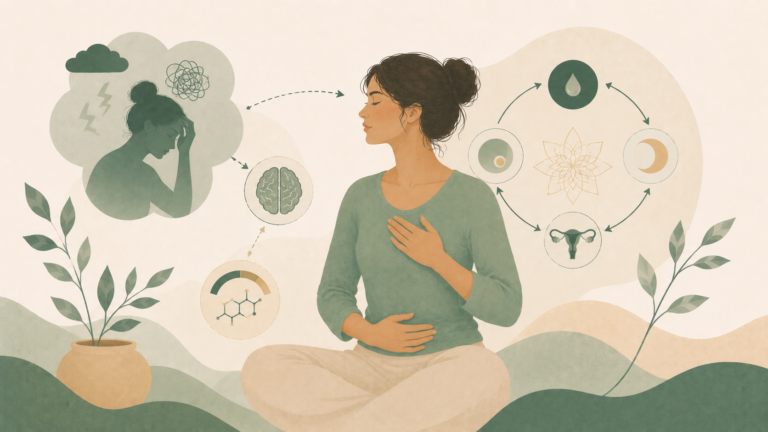
During perimenopause, your estrogen levels rise and fall, and then slowly drop. At the same time, muscle mass goes down naturally with age. Muscle uses more energy at rest than fat does, so your body may burn a little less than before, even if your habits have not changed.
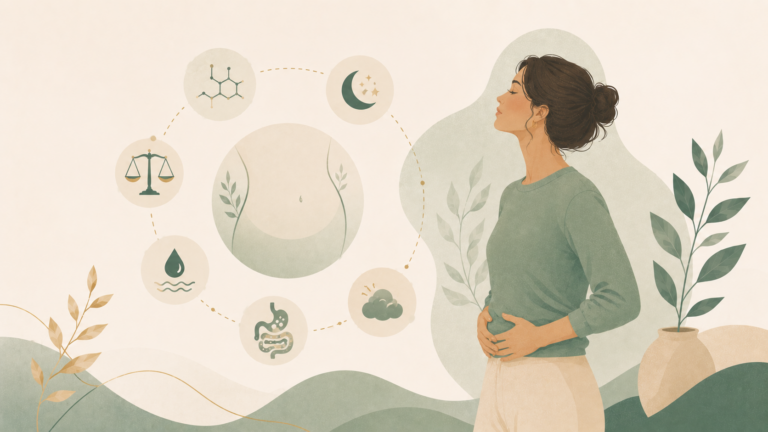
Hormone changes also seem to shift where your body stores fat. Fat tends to collect around the belly instead of the hips and thighs. Changes in how your body handles blood sugar may play a part too. See Signs of Hormonal Changes for the fuller picture of what’s shifting.
Why Weight Gets Harder With Age
Perimenopause is only part of the story. Your metabolism changes slowly through adult life, and the body needs less energy than it did when you were younger. Experts estimate that women gain about 0.5 to 0.7 kg (1 to 1.5 pounds) a year in midlife.
A friend of mine has noticed this. As she got older, losing weight became harder, because her metabolism keeps changing. She had to do things differently than before. The good news is that some of the main factors are things you can influence at any age. Muscle, sleep, and daily movement all matter, and they respond to small, steady changes.
Why It Feels Different This Time
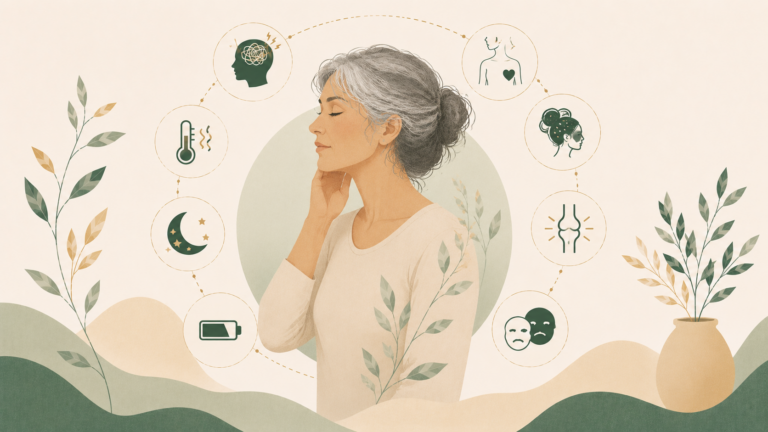
It’s not just the hormones. Other perimenopause symptoms, like hot flashes, poor sleep, and mood changes, can make it harder to keep up the habits that used to work. Work and family can take up a lot of time at this age too, so rest and exercise are often the first things to slip.
What Helps
Most advice on menopause and weight comes down to a few basics: staying active, eating well, and sleeping enough. Small, steady changes usually work better than strict diets.
Strength Training
Regular resistance exercise helps protect the muscle you naturally lose with age. At this stage, it supports your metabolism more directly than cardio alone. A common goal is muscle-strengthening exercise at least two days a week. Weights, resistance bands, and your own body weight all count.
Daily Movement
Strength training works best together with regular moderate activity, such as brisk walking, swimming, or cycling. A common goal for adults is at least 2.5 hours a week, which you can split into short walks. Moving during the day also helps with mood and sleep.
Nutrition and Blood Sugar
Cutting calories alone often works less well than it used to. Meals with enough protein and fiber can keep you full and help keep your blood sugar steadier. Whole foods like vegetables, beans, fruit, and lean protein are a good base. Alcohol also deserves a look. It adds calories and can make sleep worse, so limiting it may help with both weight and rest.
Sleep and Stress
Poor sleep and ongoing stress can affect your appetite, food choices, activity, and weight. Good sleep and a stress outlet that works for you are not only about comfort. They can affect your weight too. If hot flashes or night sweats keep waking you, tell your provider, because treating them can help your sleep.
Medical Options
Hormone therapy is not a weight-loss treatment. For some women, though, it can ease hot flashes and sleep problems, which may make healthy habits easier to keep. Whether it is right for you depends on your health history, so it is a good topic to talk through with your provider.
Where to Start
You do not need to change everything at once. Choose one or two of these, and add more when they start to feel easy:
- Walk for 20 minutes most days.
- Add two short strength sessions a week.
- Include protein and vegetables in most meals.
- Keep a regular bedtime, and limit alcohol in the evening.
- Track more than the scale, such as your energy, your strength, and how your clothes fit.
If you struggle to keep new habits going, see Why Healthy Habits Don’t Stick for ideas that work in real life.
When to Talk to Your Doctor
Bring it up if weight changes are rapid, unexplained, or paired with other new symptoms, or if you want to explore whether hormone therapy or another medical option makes sense for you. A provider can also check for thyroid issues, medicine side effects, or other causes that can look like perimenopause symptoms.
Conclusion
Weight gain during perimenopause is not a sign of weak willpower. Your body is changing, and the habits that worked in your twenties may need small updates. Strength training, steady meals with enough protein and fiber, and real rest are good places to start. Be patient with yourself, and ask your provider for support if you feel stuck.