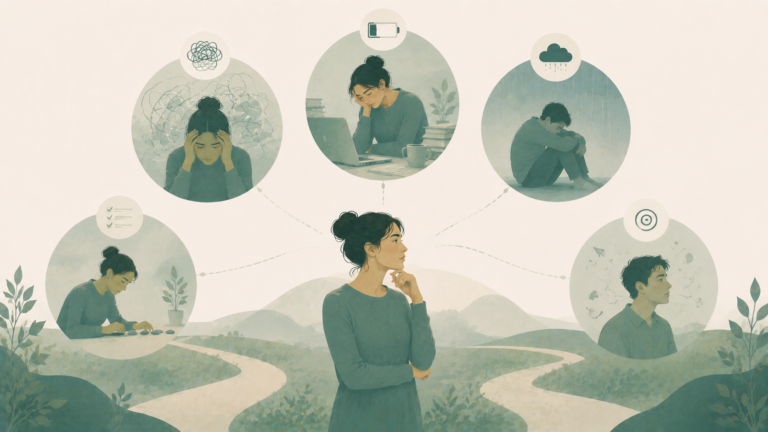
Why Can’t I Fall Back Asleep After Waking Up?

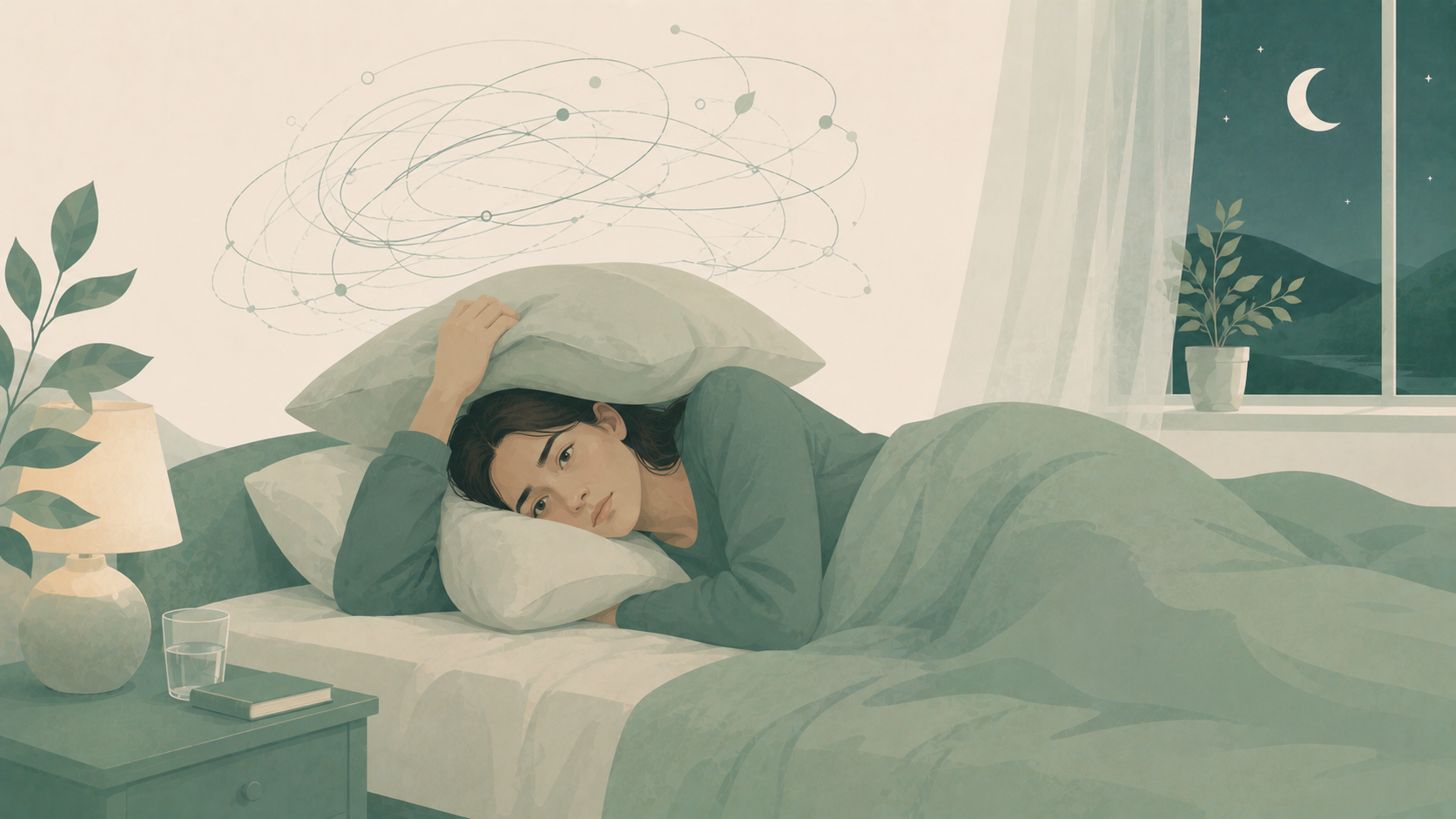
Everyone has a bad night sometimes. Then it happens again a few days later, and then again the following week. After a while, the problem is no longer waking up during the night.
The problem is knowing that once you’re awake, there’s a good chance you won’t fall asleep again. That’s when many people stop worrying about a single bad night and start worrying about sleep itself. It’s a distinction I hear a lot, and honestly, it’s usually the moment I start paying closer attention.
Medical Disclaimer
This article is provided for general educational and informational purposes only and does not constitute medical advice, diagnosis, or treatment. While the content is written with input from a licensed healthcare professional, reading this article does not create a nurse-patient, provider-patient, or any other professional relationship between you and the author or Vida Atlas.
The information here is general in nature and is not a substitute for personalized medical advice from your own doctor or qualified healthcare provider, who can take your full medical history and individual circumstances into account. Always consult your doctor or another qualified healthcare provider with any questions you may have regarding a medical condition, and never disregard professional medical advice or delay seeking it because of something you read on this site.
If you think you may have a medical emergency, call your local emergency number or go to the nearest emergency room immediately. Do not rely on this article for urgent or emergency medical situations.
Vida Atlas and the author make no representations or warranties about the accuracy, completeness, or timeliness of the information provided, and disclaim liability for any actions taken or not taken based on the content of this article.
Quick Answer
If you regularly wake up during the night and struggle to fall back asleep, the problem is often bigger than the wake-up itself. For many people, sleep gradually becomes something they monitor, worry about, and try to control. Unfortunately, that pressure can make falling asleep even harder.
Why This Can Happen
Most people don’t start paying attention to sleep after one bad night. The change usually happens gradually.
After enough difficult nights, the brain begins treating sleep as something important, unpredictable, and worth monitoring. You start noticing every awakening, every restless night, and every morning when you don’t feel fully rested. If your wake-ups happen at a consistent time, see why do I wake up at 3 AM every night?
When Sleep Becomes the Thing You’re Worried About
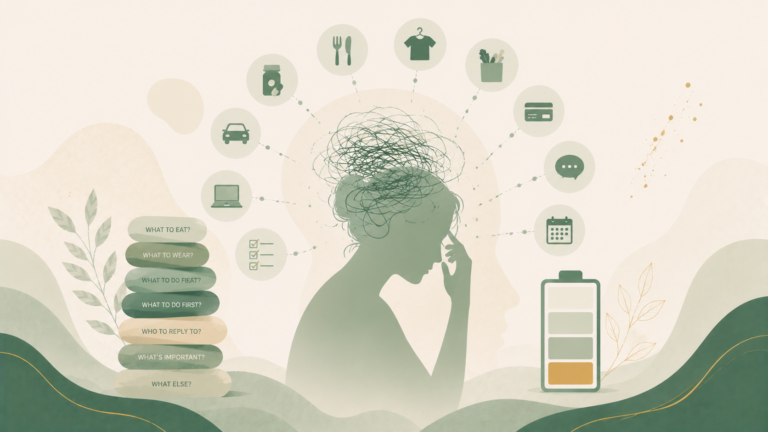
At some point, the focus shifts. Instead of thinking about whatever originally disrupted your sleep, you start thinking about sleep itself. How many hours will you get? Will tonight be better? What if you’re exhausted tomorrow? What if this never improves?
The more important sleep feels, the harder it often becomes to relax around it. Sleep researchers sometimes call this conditioned arousal, where the bed and the act of trying to sleep themselves become linked to anxiety rather than rest.
Why Trying Harder Often Doesn’t Work
Most problems improve when we put more effort into solving them, but sleep is different. Many people respond by going to bed earlier, spending more time in bed, reading sleep advice, checking the clock, or searching for the perfect solution.
The intention makes sense, but sleep doesn’t respond well to pressure. The harder you try to force it, the more alert you may become. I’ve seen patients turn themselves into sleep researchers overnight, tracking every variable, and it often backfires.
What May Help and Why
Stop Treating Sleep Like a Test
A difficult night is frustrating, but it doesn’t mean you’ve failed. The goal is not to achieve perfect sleep every night. The goal is to create conditions where sleep has a chance to happen naturally.
If You’re Wide Awake, Consider Getting Out of Bed
Many sleep specialists recommend getting up for a while if you’ve been lying awake for a long time and feel fully alert. Sit somewhere comfortable, keep the lights dim, and return to bed when you begin feeling sleepy again.
The purpose isn’t to force sleep. It’s to avoid turning your bed into a place associated with frustration and struggle. Doing a quiet, low-stimulation activity like reading a physical book tends to work better for this than checking a phone, since screens can make the brain feel more alert rather than less.
Avoid Constant Clock-Checking
Most people already know whether they’ve been awake for five minutes or fifty. Looking at the clock rarely provides useful information and often increases pressure.
Support Sleep Rather Than Chasing It
Regular wake-up times, daylight exposure, movement during the day, and a calming evening routine can all support healthy sleep. These habits are not instant fixes, but they help create a stronger foundation over time. Sleep is a good example of how closely the mind and body are connected.
Use Tools Without Becoming Dependent on Them
Some people find magnesium, melatonin, herbal teas, relaxation exercises, meditation, or sleep apps helpful. Others don’t notice much difference.
There is no single solution that works for everyone. Sometimes finding what helps requires a bit of trial and error. The goal is to support sleep, not to feel like you can only sleep if a particular supplement, routine, or app is involved.
When to Reach Out for Support
If you’ve been struggling for weeks or months, feeling exhausted during the day, or noticing that sleep problems are affecting your mood, relationships, work, or overall quality of life, it may be time to seek support.
Sleep difficulties can occasionally have underlying medical causes, which is why persistent problems deserve attention rather than simply being pushed through. A therapy called cognitive behavioral therapy for insomnia, often shortened to CBT-I, is considered one of the most effective treatments and does not rely on medication.
Conclusion
The inability to fall back asleep is rarely just about that one moment in the middle of the night. For many people, the bigger challenge is that sleep gradually becomes something they fear, monitor, and try to control. The more attention it receives, the more frustrating it often becomes.
There isn’t one solution that works for everyone. In my experience, sometimes the path back to better sleep starts with taking a little pressure off the process and remembering that sleep is not something you can force. If tension follows you well beyond bedtime, you may also relate to why you can’t relax even when everything is fine.