Signs of Chronic Stress

At first, it doesn’t always feel like stress. You tell yourself you’re just tired. Or busy. Or going through a difficult season of life.
Then you notice you’re waking up exhausted, feeling tense for no obvious reason, forgetting simple things, or reacting to small problems in ways that don’t feel like you. One of the hardest parts is that chronic stress often builds so gradually that you stop noticing how much it’s affecting you.
Medical Disclaimer
This article is provided for general educational and informational purposes only and does not constitute medical advice, diagnosis, or treatment. While the content is written with input from a licensed healthcare professional, reading this article does not create a nurse-patient, provider-patient, or any other professional relationship between you and the author or Vida Atlas.
The information here is general in nature and is not a substitute for personalized medical advice from your own doctor or qualified healthcare provider, who can take your full medical history and individual circumstances into account. Always consult your doctor or another qualified healthcare provider with any questions you may have regarding a medical condition, and never disregard professional medical advice or delay seeking it because of something you read on this site.
If you think you may have a medical emergency, call your local emergency number or go to the nearest emergency room immediately. Do not rely on this article for urgent or emergency medical situations.
Vida Atlas and the author make no representations or warranties about the accuracy, completeness, or timeliness of the information provided, and disclaim liability for any actions taken or not taken based on the content of this article.
Quick Answer
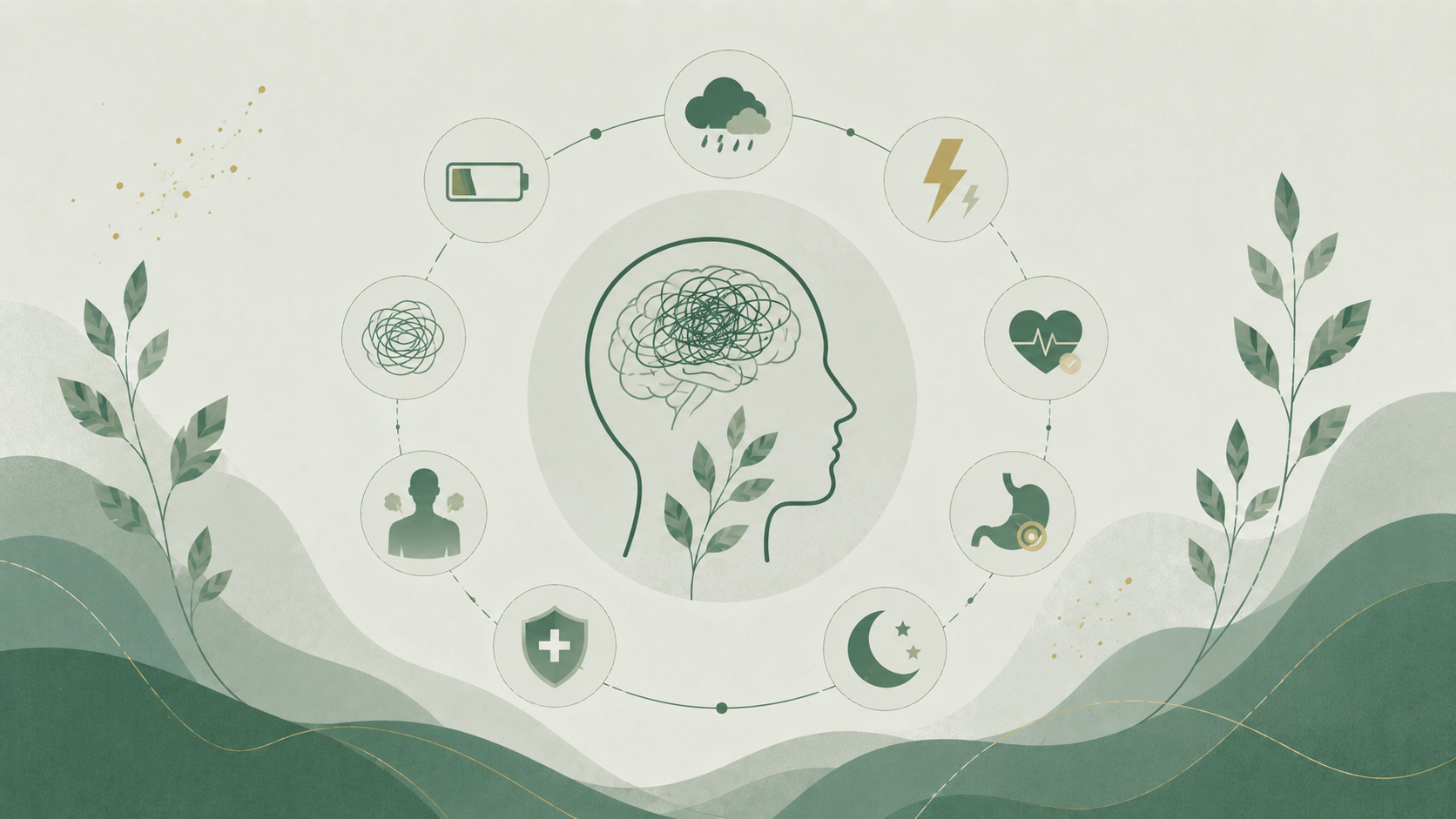
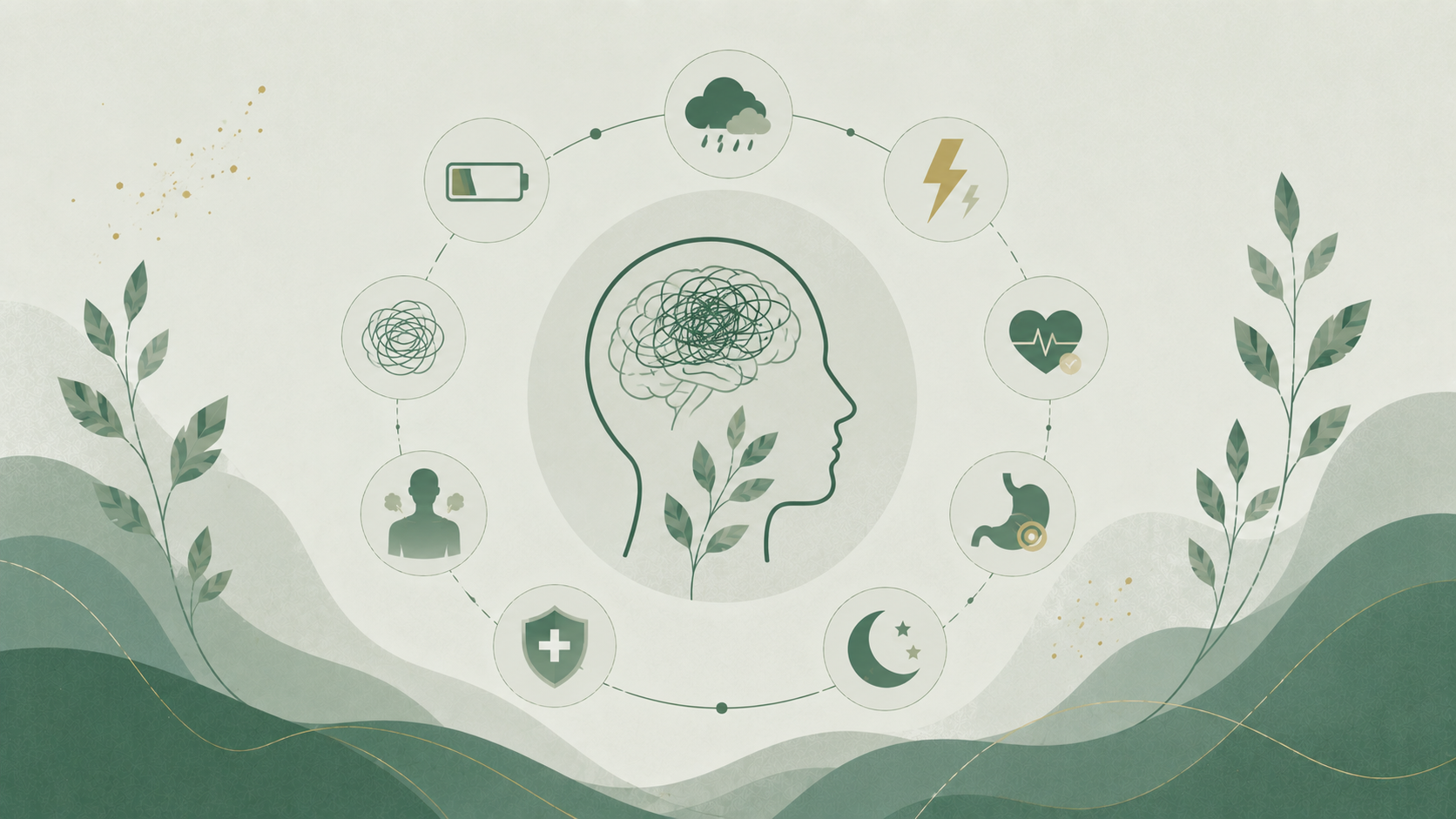
Common signs may include fatigue, sleep problems, irritability, anxiety, muscle tension, headaches, digestive issues, difficulty concentrating, and feeling like you’re always “on edge,” though not every symptom is caused by stress. When several of these changes appear together, stress may be part of the picture.
Why This Can Happen
Stress is part of life, and in short bursts, it can even be helpful. The problem is when it never seems to switch off. The body isn’t designed to stay in a constant state of alertness for weeks or months at a time. Eventually, that ongoing pressure can start affecting sleep, energy levels, emotions, concentration, and physical health.
Sometimes there isn’t a single major event causing it. It may simply be the accumulation of work pressure, family responsibilities, financial worries, health concerns, uncertainty, and dozens of small stressors that never fully go away.
What It Can Feel Like
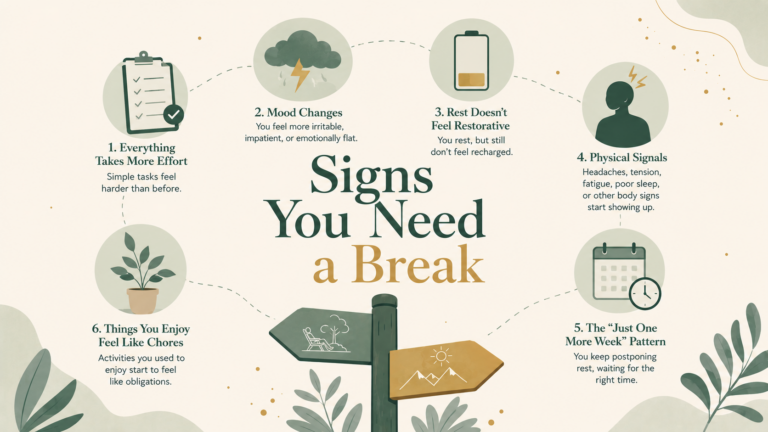
Chronic stress doesn’t feel the same for everyone. Some people feel anxious, others feel exhausted, and some feel both at the same time. You may notice:
- Feeling tired even after sleeping
- Waking up too early and struggling to fall back asleep
- Feeling emotionally overwhelmed by things that usually wouldn’t bother you
- A constant sense of tension in your body
- Difficulty concentrating
- Feeling unusually forgetful
- Increased irritability
- Feeling restless but also exhausted
- A sense that you can never fully relax
In my own practice, this is one of the patterns I see most often: someone comes in expecting to talk about headaches or stomach issues, and it turns out stress has been quietly building in the background for months. Many people expect stress to stay in their thoughts.
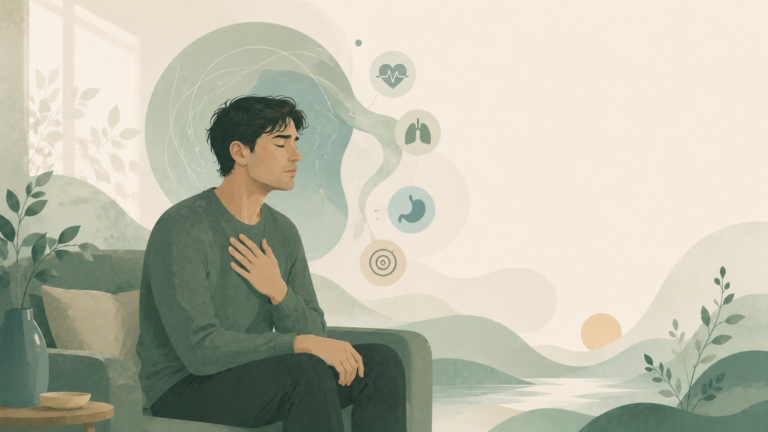
Instead, it often shows up in the body first through headaches, digestive issues, muscle tension, fatigue, or sleep problems. Some people don’t realize how overwhelmed they are until the symptoms become physical. My guide on how stress affects the body goes into these physical patterns in more detail.
Common Triggers or Contributing Factors
Common contributors include:
- Ongoing work pressure
- Family responsibilities
- Health concerns
- Financial stress
- Lack of recovery time
- Major life changes
- Constant uncertainty
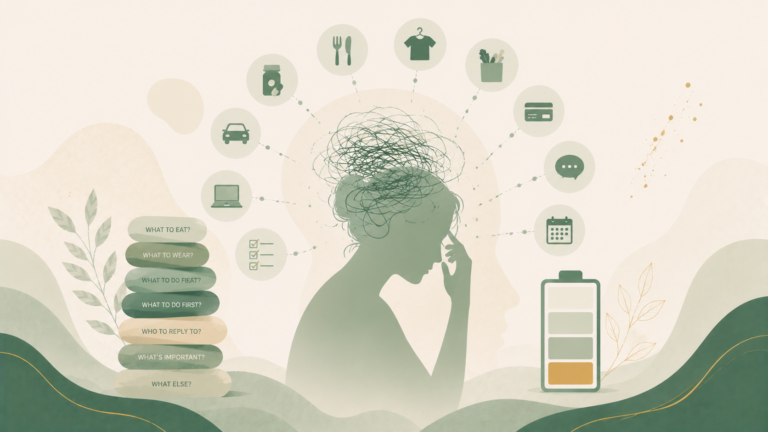
Often it’s not one big problem. It’s carrying too many things for too long without enough time to recover. I ask my patients to walk me through an ordinary week, and by the end of the list, they’re usually surprised themselves at how much they’re carrying.
What May Help
One of the biggest challenges with chronic stress is that many people automatically ask themselves how to keep going instead of asking what is draining them in the first place. It may help to step back and look for patterns. What consistently leaves you feeling depleted? What helps you feel more like yourself again?
For some people, the answer is stronger boundaries. For others, it’s more recovery time, fewer commitments, better sleep habits, therapy, journaling, creative hobbies, time outdoors, or simply having regular moments where they don’t need to take care of everyone else.
The goal isn’t to remove all stress from your life. That’s rarely realistic. Instead, the goal is to create enough recovery that your mind and body no longer feel like they’re running a marathon every day.
When to Reach Out for Support
You don’t need to wait until you’re completely burned out. Support can take many forms. For some people, it starts with an honest conversation with a trusted friend. Others benefit from working with a psychologist, therapist, counselor, coach, or support group.
If stress is affecting your sleep, physical health, relationships, work, or daily functioning, it’s worth reaching out sooner rather than later. Support doesn’t always mean medication. Sometimes it starts with understanding what’s happening and learning new ways to respond to it.
It’s also worth remembering that symptoms such as fatigue, poor concentration, weight changes, or sleep problems aren’t always caused by stress. Conditions such as thyroid disorders, anemia, sleep disorders, and other medical issues can sometimes look very similar.
Conclusion
Chronic stress can be surprisingly difficult to recognize when you’re living through it. In my experience, the women who catch it earliest are the ones who stop asking “am I just being dramatic?” and start asking what’s actually different lately.
If several of these signs sound familiar, it may be worth stepping back and looking at the bigger picture. If the exhaustion feels like more than stress, my guide on burnout vs. stress can help you tell the difference.