PMS or PMDD?

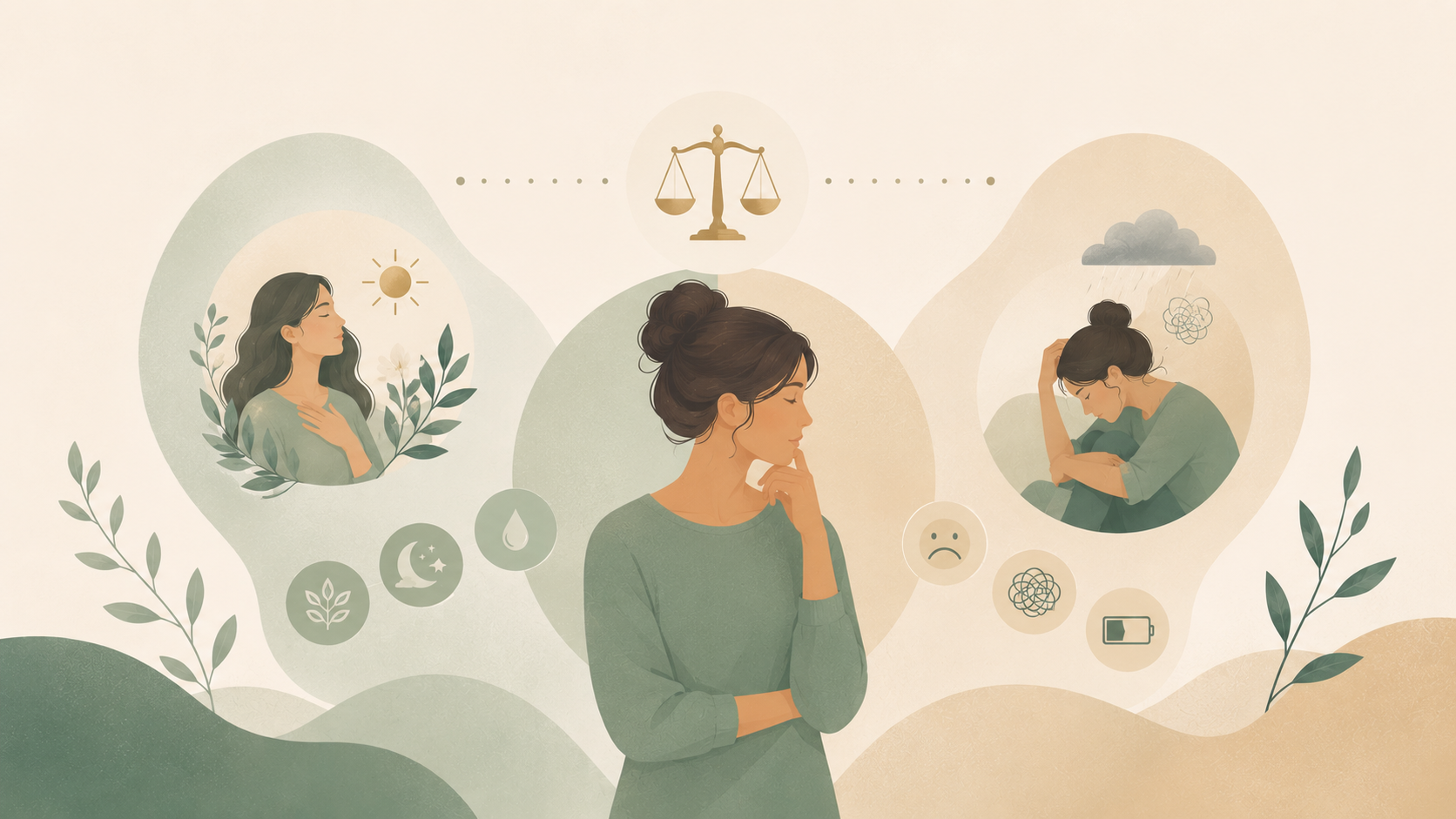
Have you ever felt like a completely different person before your period? One day everything feels normal. Then, a week before your period, you’re suddenly more emotional, more irritable, or completely drained by things that usually wouldn’t bother you.
If that sounds familiar, you’ve probably wondered whether it’s just PMS or something more.
The tricky part is that PMS and PMDD can look very similar at first. But for some women, those monthly symptoms go far beyond mood swings and chocolate cravings, and in my own practice, this is exactly where I try to slow the conversation down, because the distinction genuinely changes what kind of help actually makes sense.
Medical Disclaimer
This article is provided for general educational and informational purposes only and does not constitute medical advice, diagnosis, or treatment. While the content is written with input from a licensed healthcare professional, reading this article does not create a nurse-patient, provider-patient, or any other professional relationship between you and the author or Vida Atlas.
The information here is general in nature and is not a substitute for personalized medical advice from your own doctor or qualified healthcare provider, who can take your full medical history and individual circumstances into account. Always consult your doctor or another qualified healthcare provider with any questions you may have regarding a medical condition, and never disregard professional medical advice or delay seeking it because of something you read on this site.
If you think you may have a medical emergency, call your local emergency number or go to the nearest emergency room immediately. Do not rely on this article for urgent or emergency medical situations.
Vida Atlas and the author make no representations or warranties about the accuracy, completeness, or timeliness of the information provided, and disclaim liability for any actions taken or not taken based on the content of this article.
Quick Answer
PMS (Premenstrual Syndrome) and PMDD (Premenstrual Dysphoric Disorder) both happen before a period and can cause physical and emotional symptoms. The main difference is severity. PMS can be uncomfortable, while PMDD can significantly affect daily life, relationships, work, and emotional well-being.
What’s Actually Happening in Your Body
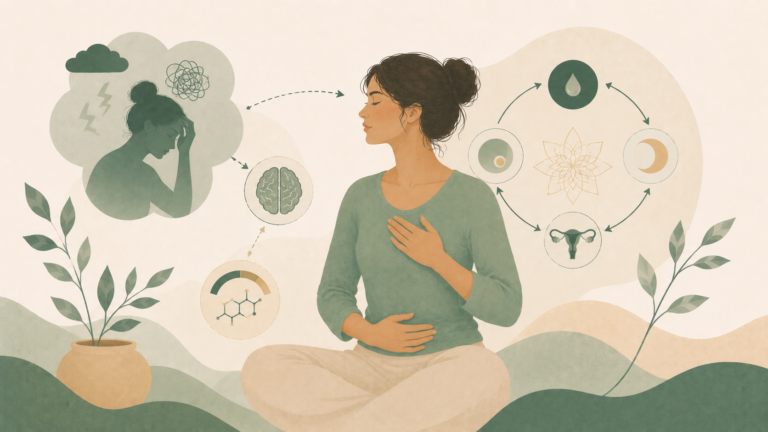
Neither PMS nor PMDD is caused by having “too many hormones.” Instead, experts believe some women are more sensitive to the normal hormone changes that happen during the second half of the menstrual cycle. After ovulation, estrogen and progesterone levels rise and fall.
These hormonal shifts can affect brain chemicals that help regulate mood, sleep, energy, and emotions. For some women, the changes are mild. For others, the effects can be much stronger.
PMS Symptoms
Emotional Symptoms
PMS can cause:
- Irritability
- Mood swings
- Feeling more emotional
- Mild anxiety
- Feeling stressed more easily
- Trouble concentrating
These symptoms are often manageable, even if they’re annoying.
Physical Symptoms
You may also notice:
Symptoms usually improve once the period starts.
PMDD Symptoms
Emotional Symptoms Are Much More Intense
PMDD can look similar to PMS at first, but the emotional symptoms are often much stronger. Someone with PMDD may experience:
- Severe irritability
- Intense mood swings
- Persistent sadness
- Feelings of hopelessness
- Significant anxiety
- Anger that feels difficult to control
- Feeling emotionally overwhelmed
The symptoms can be strong enough to affect work, relationships, and everyday activities.
Physical Symptoms Can Happen Too
Many women with PMDD also experience:
- Fatigue
- Bloating
- Breast tenderness
- Sleep problems
- Changes in appetite
- Headaches
But emotional symptoms are usually the biggest concern.
What Causes PMS and PMDD?
Hormone Fluctuations
Hormone changes during the menstrual cycle appear to play a major role. The hormone levels themselves are often normal. The issue may be how the body and brain respond to those changes.
Brain Chemistry
Hormones can influence serotonin, a chemical involved in mood regulation. Changes in serotonin activity may help explain why some women experience emotional symptoms before their period.
Genetics
Some women may be naturally more sensitive to hormonal changes. Family history may increase the likelihood of experiencing PMDD.
Stress
Stress doesn’t directly cause PMS or PMDD. However, ongoing stress can make symptoms feel more intense and harder to manage.
How to Tell What’s Causing It
One of the biggest clues is timing. PMS and PMDD symptoms typically:
- Start one to two weeks before a period
- Improve when the period begins
- Usually disappear within a few days after bleeding starts
Keeping a symptom diary for two or three menstrual cycles can be very helpful. If your periods themselves feel unpredictable, see Irregular Periods Explained. If the symptoms appear at the same point every month and then improve after your period starts, hormonal changes may be playing a role.
PMS vs PMDD: A Simple Comparison
PMS
- Symptoms range from mild to moderate
- Daily activities are usually still manageable
- Symptoms may be frustrating but not overwhelming
- Mood changes are often temporary and less severe
PMDD
- Symptoms can feel severe
- Work, school, family life, or relationships may be affected
- Emotional symptoms are often the most noticeable feature
- Many women feel significantly different from their usual selves during this time
What You Can Do
Lifestyle changes may help reduce symptoms for some women. These include:
- Getting regular exercise
- Prioritizing sleep
- Managing stress
- Eating balanced meals
- Limiting excessive alcohol intake
- Tracking symptoms monthly
Some women also benefit from medical treatment. Depending on symptoms, a healthcare provider may discuss options such as hormonal birth control, antidepressant medications, or other treatments.
When to See a Doctor
Consider speaking with a healthcare professional if:
- Symptoms interfere with work or daily life
- Relationships are being affected
- You feel depressed before every period
- Anxiety becomes difficult to manage
- Symptoms seem to be getting worse over time
- You suspect PMDD
You don’t have to simply “push through” severe symptoms every month. Help is available.
Conclusion
PMS and PMDD can look similar, but they aren’t the same thing.
If your symptoms are mild to moderate, PMS may be the cause. If emotional symptoms become overwhelming and consistently disrupt your life before each period, PMDD could be worth discussing with a healthcare professional.
In my experience, understanding the difference is often the first step toward feeling better. For a broader look at period-related symptoms, see my complete guide to period symptoms.