Anxiety, Burnout, Depression, OCD, ADHD, or Panic Attacks? How to Tell the Difference

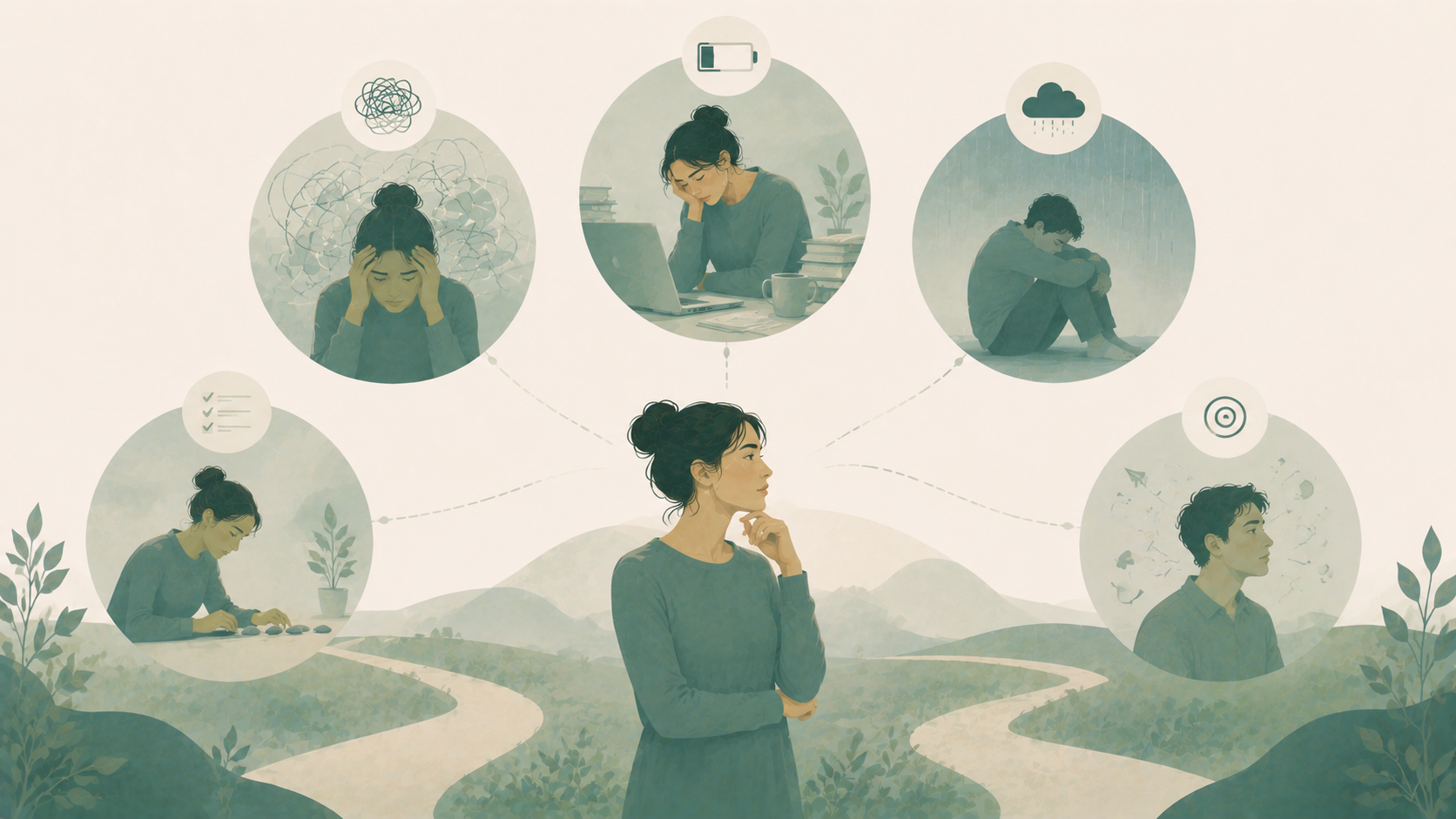
Most of us were never taught how to recognize the difference between common mental health conditions.
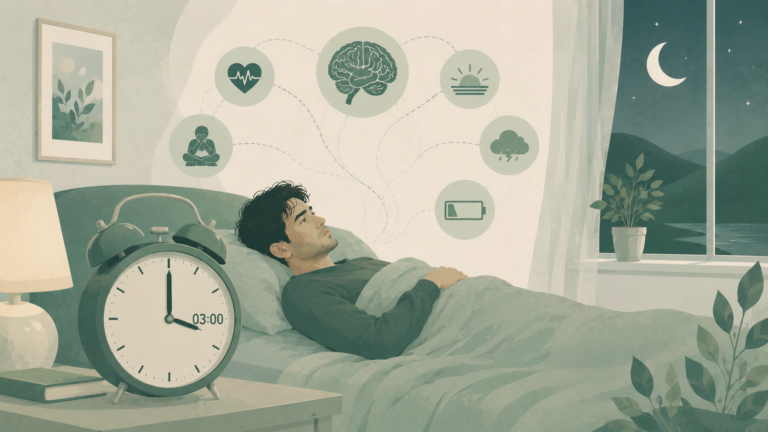
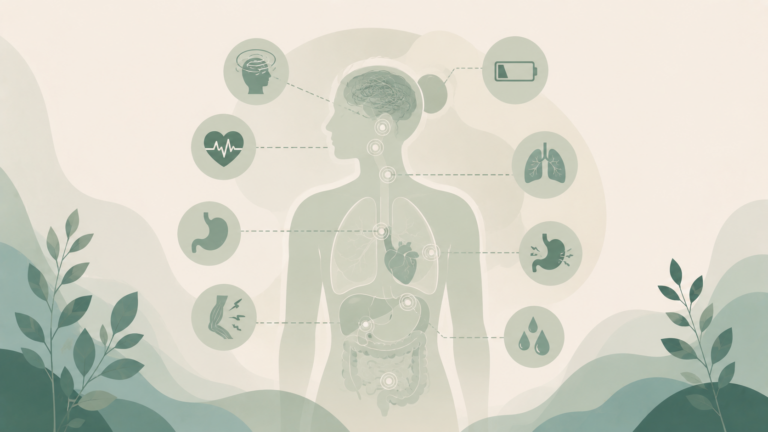
When something starts feeling wrong, it’s natural to look for answers. The challenge is that anxiety, burnout, depression, OCD, ADHD, and panic attacks can sometimes share similar symptoms. Poor concentration, sleep problems, irritability, exhaustion, feeling overwhelmed, physical symptoms, or difficulty coping can appear in more than one condition.
The goal of this article isn’t to diagnose you. It’s to provide an overview of some common patterns and differences that may help you better understand what you’re experiencing and what might be worth exploring further. I put this comparison together because it’s one of the questions I get asked most often, in one form or another.
Medical Disclaimer
This article is provided for general educational and informational purposes only and does not constitute medical advice, diagnosis, or treatment. While the content is written with input from a licensed healthcare professional, reading this article does not create a nurse-patient, provider-patient, or any other professional relationship between you and the author or Vida Atlas.
The information here is general in nature and is not a substitute for personalized medical advice from your own doctor or qualified healthcare provider, who can take your full medical history and individual circumstances into account. Always consult your doctor or another qualified healthcare provider with any questions you may have regarding a medical condition, and never disregard professional medical advice or delay seeking it because of something you read on this site.
If you think you may have a medical emergency, call your local emergency number or go to the nearest emergency room immediately. Do not rely on this article for urgent or emergency medical situations.
Vida Atlas and the author make no representations or warranties about the accuracy, completeness, or timeliness of the information provided, and disclaim liability for any actions taken or not taken based on the content of this article.
Quick Answer
Many mental health conditions overlap, which is one reason they can be difficult to tell apart. Two people with the same diagnosis may experience it differently, while two people with different diagnoses may describe very similar symptoms.
Rather than focusing on a single symptom, healthcare professionals usually look at the bigger picture: which symptoms are present, how long they have been there, how they affect daily life, and what patterns emerge over time.
A Quick Comparison Guide
| If you mostly notice: | It may be worth learning more about: |
| Ongoing physical symptoms such as muscle tension, a racing heart, tremor, a lump in the throat, poor sleep, or a constant feeling that something isn’t right when there is no obvious danger. | Anxiety Disorder |
| Sudden episodes of intense fear, often accompanied by fear of dying, losing control, or going crazy, followed by a strong urge to escape, seek help, or make the symptoms stop immediately. | Panic Attacks |
| Emotional exhaustion, loss of motivation, detachment, and a reduced sense of effectiveness that developed after prolonged periods of stress or responsibility. Symptoms often improve when the source of pressure is addressed, although recovery may take time. | Burnout |
| Persistent low mood, loss of interest, feelings of worthlessness, guilt, hopelessness, or difficulty enjoying things that once mattered to you. | Depression |
| Lifelong difficulties with attention regulation, organization, impulsivity, forgetfulness, time management, or task completion, sometimes combined with periods of intense hyperfocus. | ADHD |
| Repetitive unwanted thoughts, fears, doubts, or mental images that create significant distress, along with rituals, checking behaviors, or mental routines that temporarily reduce that distress. | OCD |
This table is only a starting point. Many of these experiences can overlap, and no single symptom automatically points to one specific condition.
Anxiety Disorder
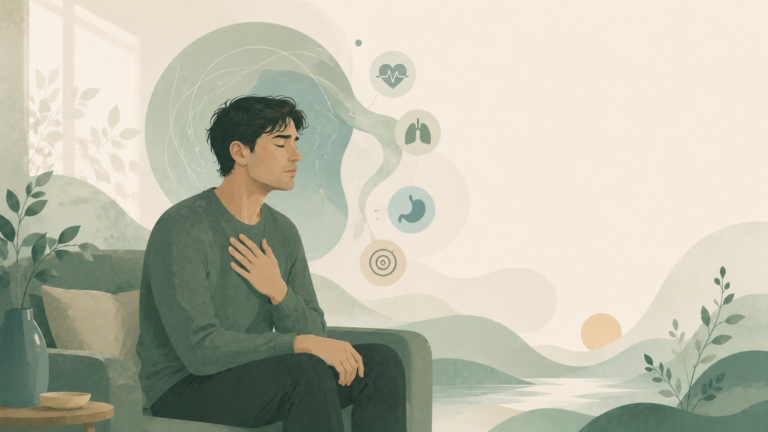
Anxiety disorder is more than ordinary worry. Many people describe a constant sense that something is wrong, even when there is no obvious danger.
Physical symptoms are a common part of anxiety and may include a racing heart, tremor, muscle tension, a lump in the throat, stomach problems, poor sleep, or sweating. Because they can feel so physical, many people worry something is wrong with their health. My guide on what anxiety disorder actually feels like explains these patterns in more detail.
Panic Attacks
Panic attacks are sudden episodes of intense fear that usually peak within minutes. While physical symptoms can be intense, the defining feature is often the overwhelming fear itself.
People may fear dying, losing control, passing out, or “going crazy.” They may also leave the situation, call for help, check their pulse, or seek reassurance. For a closer look, see What Is a Panic Attack?. Although panic attacks can feel frightening, they are not dangerous in themselves.
Burnout
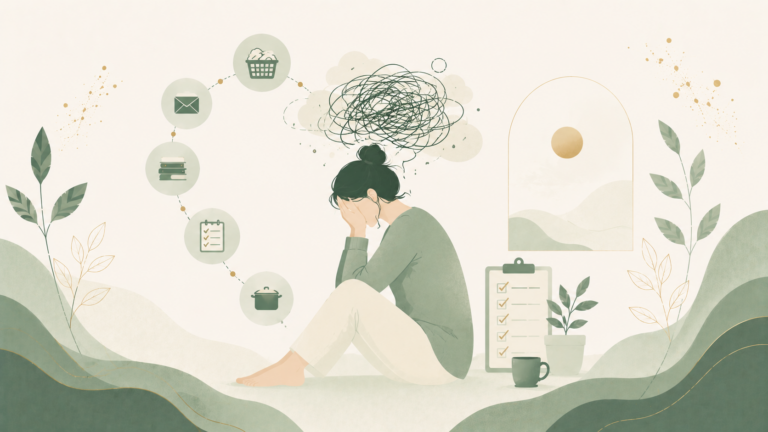
Burnout usually develops after prolonged stress, pressure, or emotional demands. Common signs include exhaustion, loss of motivation, detachment, and feeling less effective. Unlike ordinary stress, burnout may continue even after the pressure eases, and recovery can take longer than expected.
For a closer look at how burnout, stress, and depression differ from each other specifically, see my guide on burnout vs. stress vs. depression.
Depression
Depression is more than sadness. People often describe persistent low mood, loss of interest in activities they once enjoyed, feelings of worthlessness, guilt, hopelessness, or emotional numbness. Even positive events may have little impact on how they feel. Depression can affect sleep, appetite, concentration, energy levels, and daily functioning.
ADHD
ADHD usually begins in childhood, even if it isn’t recognized until adulthood. Common difficulties include attention regulation, organization, time management, forgetfulness, and impulsivity. Some people also experience hyperfocus and lose track of time. Read more in What Is ADHD in Adults?.
OCD
Obsessive-compulsive disorder is often misunderstood as simply liking things neat or organized. In reality, OCD involves intrusive thoughts, fears, doubts, or mental images that create significant anxiety. To reduce that anxiety, a person may perform rituals, checking behaviors, reassurance-seeking, or mental routines.
Most people with OCD recognize that their fears or behaviors may not be rational, but resisting them can create overwhelming distress. My full guide, What Is OCD?, explains the pattern of obsessions and compulsions in more depth.
Why These Conditions Get Confused
The human brain doesn’t divide symptoms into neat categories. Anxiety can affect concentration. Burnout can look like depression. Depression can reduce motivation and focus. ADHD can create overwhelm and emotional distress. OCD can cause significant anxiety. Panic attacks can feel like a medical emergency.
When people search online, it is easy to focus on one symptom and miss the bigger pattern. That is why healthcare professionals typically look at the whole picture rather than one symptom in isolation. It’s the same approach I use with my own patients: I’m less interested in the one word they came in with and more interested in the full story around it.
What If More Than One Sounds Familiar?
This is more common than many people realize. Someone with anxiety may also experience depression. A person with ADHD may develop anxiety after years of struggling with organization or focus. Burnout can coexist with depression, and OCD frequently occurs alongside anxiety.
Human beings do not always fit neatly into a single category. Recognizing yourself in more than one description does not necessarily mean you have multiple diagnoses, but it does highlight why professional assessment can sometimes be helpful.
How Professionals Make a Diagnosis
Mental health diagnoses are rarely based on a single symptom or questionnaire. Healthcare professionals consider symptom patterns, medical history, daily functioning, and how long difficulties have been present. Screening tools can help, but they’re only one part of the picture. The goal is to find the most accurate answer, not simply the fastest one.
When to Reach Out for Support
If your symptoms are affecting your relationships, work, studies, sleep, physical health, or quality of life, it may be worth speaking with a healthcare professional. You do not need to wait until things become severe before asking for help. Understanding what is happening is often the first step toward feeling better.
Conclusion
Mental health conditions can share many symptoms, making them difficult to tell apart. The goal isn’t to diagnose yourself after one article, but to understand what you’re experiencing, notice patterns, and know when to seek support. In my experience, sometimes having a clearer map is enough to make the next step feel less overwhelming.