How Stress Affects the Body

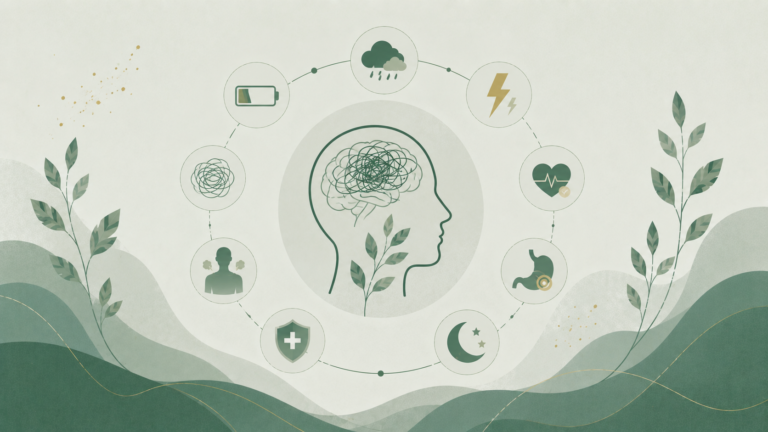
Most people expect stress to feel emotional. They expect worry, irritability, anxiety, or feeling overwhelmed.
But stress often shows up in the body first. It may start with headaches, muscle tension, poor sleep, digestive changes, unexplained fatigue, or simply feeling different without knowing why. Sometimes the body starts sending signals long before we connect them to stress. It’s often the physical symptom, not the worry, that finally brings someone in to talk to me.
Medical Disclaimer
This article is provided for general educational and informational purposes only and does not constitute medical advice, diagnosis, or treatment. While the content is written with input from a licensed healthcare professional, reading this article does not create a nurse-patient, provider-patient, or any other professional relationship between you and the author or Vida Atlas.
The information here is general in nature and is not a substitute for personalized medical advice from your own doctor or qualified healthcare provider, who can take your full medical history and individual circumstances into account. Always consult your doctor or another qualified healthcare provider with any questions you may have regarding a medical condition, and never disregard professional medical advice or delay seeking it because of something you read on this site.
If you think you may have a medical emergency, call your local emergency number or go to the nearest emergency room immediately. Do not rely on this article for urgent or emergency medical situations.
Vida Atlas and the author make no representations or warranties about the accuracy, completeness, or timeliness of the information provided, and disclaim liability for any actions taken or not taken based on the content of this article.
Quick Answer
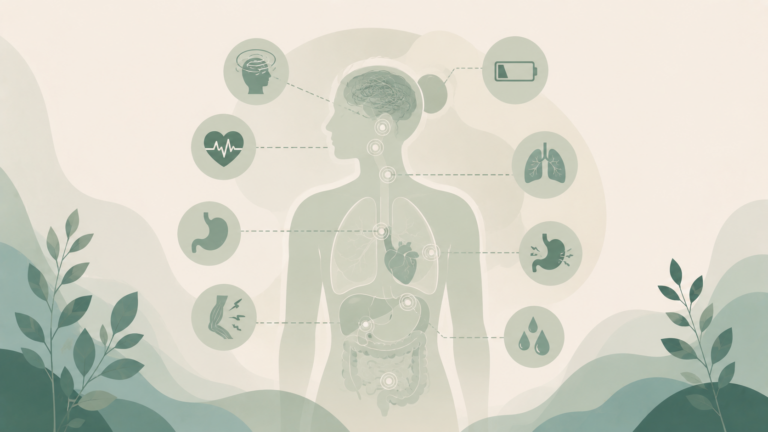
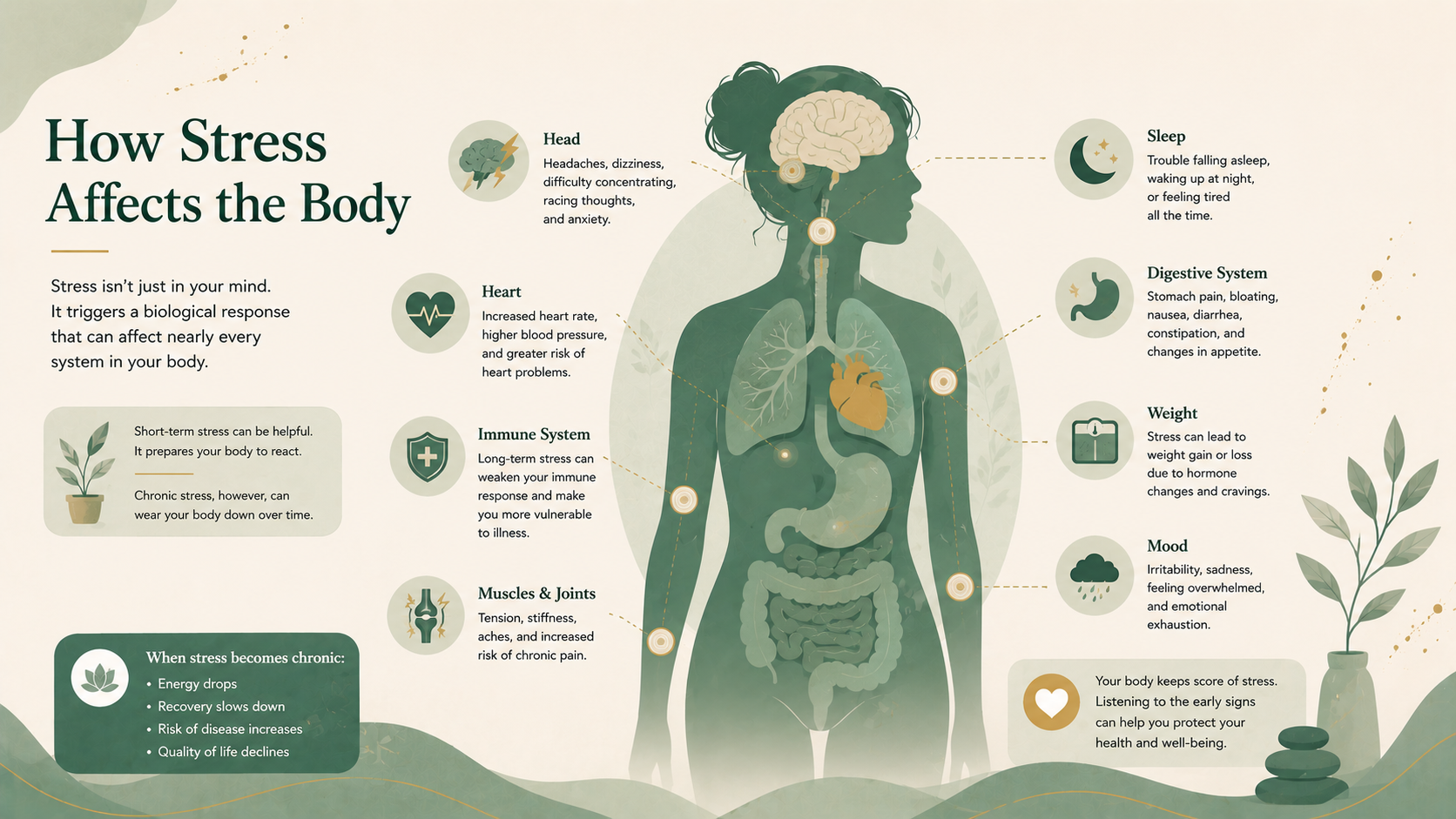
Stress can affect almost every system in the body. Short-term stress is a normal part of life, but when stress continues for weeks or months, it may begin affecting sleep, muscles, digestion, energy levels, appetite, skin, and overall wellbeing.
How Stress Can Affect Different Body Systems
Sleep
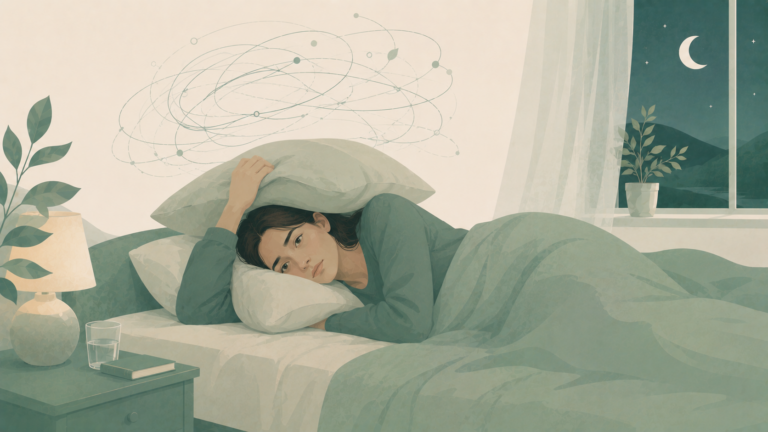
Sleep is often one of the first things to change. You may have trouble falling asleep, wake up during the night, wake up too early, or feel tired even after a full night’s sleep. Some people feel exhausted but still struggle to relax enough to rest.
Muscles and Pain
Stress can cause muscles to stay tense for long periods of time. This may contribute to headaches, jaw tension, neck pain, shoulder tightness, or back pain. In some cases, stress isn’t the only cause, but it can make existing pain feel worse.
Sometimes the source of stress can’t easily be removed. A demanding job, financial pressure, caregiving responsibilities, or other long-term situations may continue for years. In those cases, the goal isn’t always eliminating stress completely but finding ways to reduce its impact on the body.
Digestion
The digestive system is closely connected to the nervous system. During stressful periods, some people notice stomach discomfort, nausea, bloating, diarrhea, constipation, or changes in appetite. Others find themselves eating more than usual, while some lose interest in food altogether.
Energy Levels
Stress can affect energy in different ways. Some people feel exhausted and drained. Others feel tired but restless at the same time, as if their body is asking for sleep while their mind refuses to slow down.
Heart and Breathing
Stress can sometimes cause physical sensations that feel alarming. You may notice a racing heart, chest tightness, palpitations, or the feeling that you can’t take a satisfying deep breath. These symptoms can have many causes, so it’s important not to assume stress is always the explanation. These sensations often overlap with the physical symptoms of anxiety.
Skin and Hair
The skin and hair can sometimes reflect what’s happening inside the body. Prolonged stress may be linked to acne, eczema flare-ups, increased hair shedding, or other changes that can appear weeks later. I’ve had patients come in worried about hair loss without realizing that a stressful period a few weeks earlier may be connected.
Why Does This Happen?
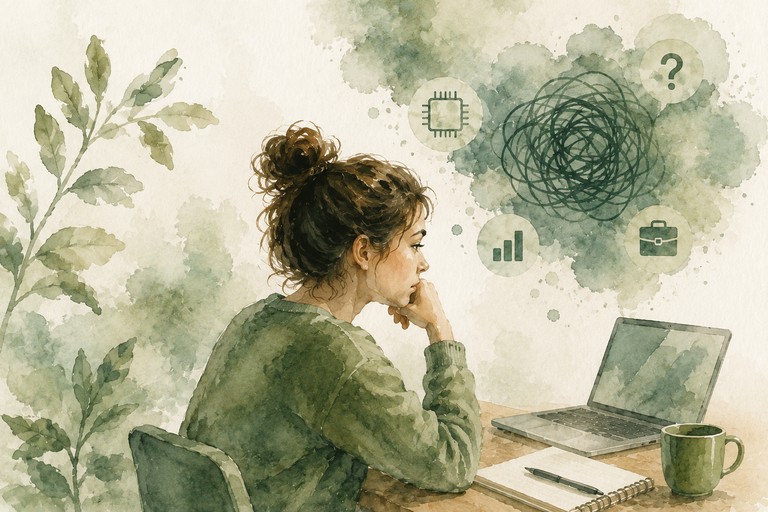
Your body is designed to help you respond to challenges. When stress appears, the nervous system releases hormones that prepare you to react quickly. This response can be helpful in the short term, but when it stays activated for too long, the body may start showing signs that it needs recovery. Left unaddressed for long enough, this can eventually contribute to burnout.
What May Help
The first step is recognizing that stress doesn’t only affect thoughts and emotions. Improving sleep, creating space for recovery, moving your body, spending time outdoors, talking to someone you trust, and reducing unnecessary pressure can all help support the nervous system.
Sometimes tests come back normal while symptoms continue. In those situations, treatment may focus on the nervous system itself, helping it become less sensitive and better regulated over time. Practices like slow breathing exercises and gentle movement, such as walking or stretching, can help signal to the nervous system that it’s safe to downshift out of a stress response.
When to See a Healthcare Professional
Physical symptoms should not automatically be blamed on stress. If symptoms are severe, persistent, unusual, or affecting your daily life, it’s important to seek medical advice. Sometimes stress is part of the picture, and sometimes there may be another explanation that deserves attention.
Conclusion
Stress isn’t “all in your head.” The mind and body constantly influence each other, and stress can leave physical clues before we fully recognize what’s happening. In my experience, noticing these signals can be an important step toward recovery. If several sound familiar, my overview of the signs of chronic stress can help you see the bigger picture.