Why Am I Always Cold?

Have you ever been the only one reaching for a sweater while everyone else feels fine? Or noticed your hands and feet feel cold, even in a warm room? Maybe people tease you for running cold. Maybe you’ve started to wonder if there’s more to it than just having a different comfort level than everyone else.
The good news is that feeling cold more than others usually has a clear reason, and it’s rarely something to worry about. I’ve had more patients than I can count ask me this exact question, usually while apologizing for needing an extra sweater. I always tell them the same thing: it’s rarely something to worry about, but it’s worth understanding.
Medical Disclaimer
This article is provided for general educational and informational purposes only and does not constitute medical advice, diagnosis, or treatment. While the content is written with input from a licensed healthcare professional, reading this article does not create a nurse-patient, provider-patient, or any other professional relationship between you and the author or Vida Atlas.
The information here is general in nature and is not a substitute for personalized medical advice from your own doctor or qualified healthcare provider, who can take your full medical history and individual circumstances into account. Always consult your doctor or another qualified healthcare provider with any questions you may have regarding a medical condition, and never disregard professional medical advice or delay seeking it because of something you read on this site.
If you think you may have a medical emergency, call your local emergency number or go to the nearest emergency room immediately. Do not rely on this article for urgent or emergency medical situations.
Vida Atlas and the author make no representations or warranties about the accuracy, completeness, or timeliness of the information provided, and disclaim liability for any actions taken or not taken based on the content of this article.
Quick Answer
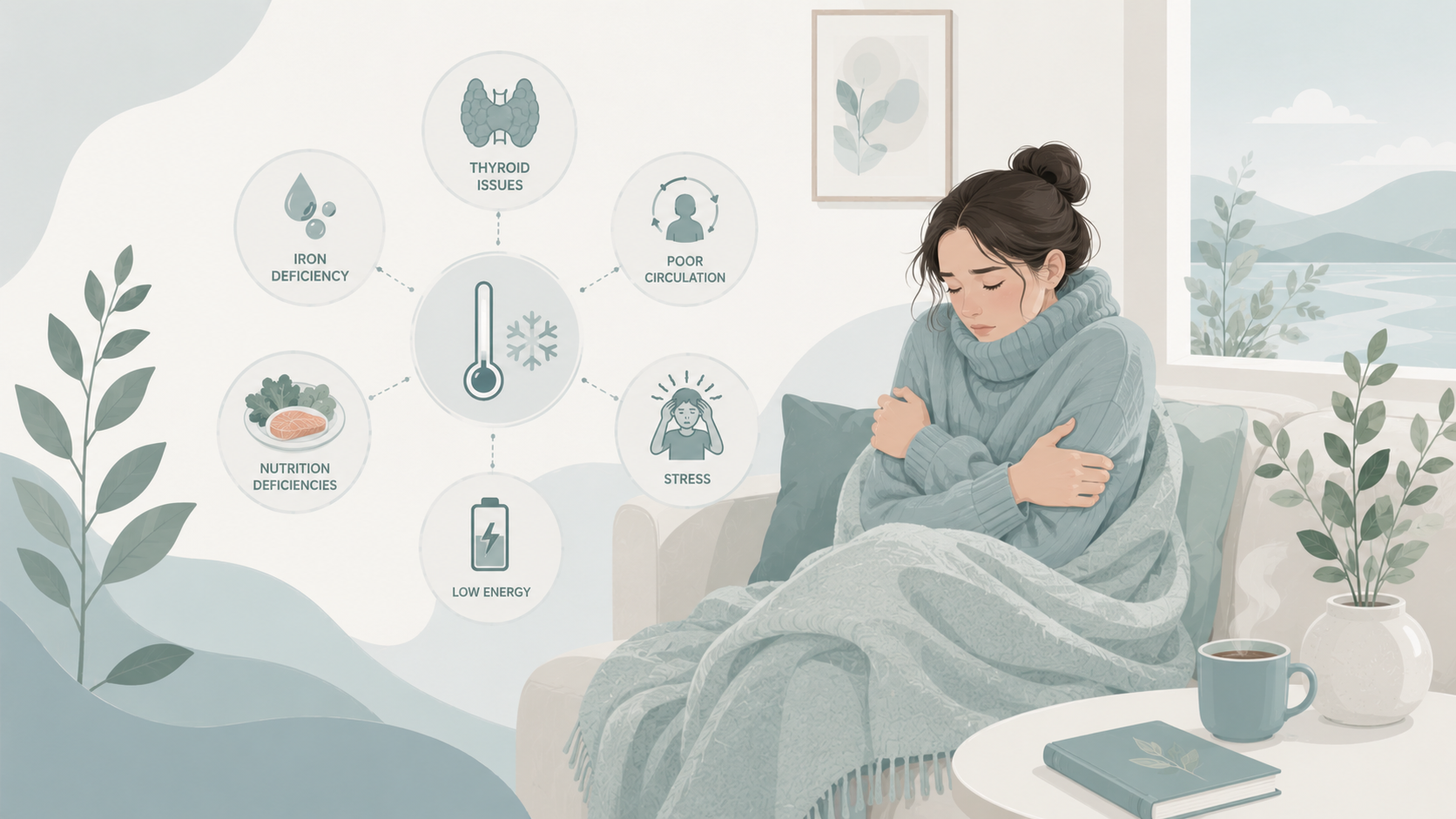
Feeling cold more than other people is often linked to your body type, blood flow, or how well your body makes and keeps heat. It can also be linked to low iron or thyroid problems. For many people, it’s simply a normal difference. For others, it’s worth a closer look.
What’s Actually Happening Inside Your Body
Your body works nonstop to keep your core temperature steady, protecting your heart, lungs, and brain. When it needs to save heat, it narrows the blood vessels near your skin, especially in your hands and feet, to keep warm blood close to your most important organs.
That’s why your fingers and toes are often the first places to feel cold. It’s not a problem with your body. It’s your body putting its most important parts first. This response happens automatically, and it can kick in even when a room doesn’t feel especially cold to anyone else in it.
Why It Happens
Less Body Fat or Muscle
Both fat and muscle help keep you warm. People with a leaner body or less muscle often feel cold more easily. This is simply due to how their body is built, and it explains why two people in the same room can genuinely feel very different temperatures.
Blood Flow
Some people’s blood flow is extra sensitive to cold. This is called Raynaud’s phenomenon. Their fingers and toes may turn pale or blue and feel cold in cool weather or during stress, sometimes for several minutes before color and warmth return.
An Underactive Thyroid
Your thyroid helps control how your body uses energy and produces heat. When thyroid levels are low, your body slows down, which can cause feeling cold, tiredness, weight gain, or dry skin. The opposite can happen too. See Why Am I Always Hot? This is one of the first things I check when a patient says they’ve always run cold but it’s suddenly gotten worse.
Low Iron
Low iron makes it harder for your blood to carry oxygen well. This can affect blood flow and make you feel cold, especially in your hands and feet. Read more in Common Vitamin Deficiencies.
Not Eating Enough
Your body makes heat partly through digesting food. Eating too little, whether from a busy day or a strict diet, leaves less energy for keeping you warm. Not eating enough is also a common reason people feel tired. See Why Am I Always Tired?
When It’s Usually Harmless
Naturally running cold, especially if it’s always been this way for you, is usually just a normal difference. Feeling cold in a cold room is normal too.
When It’s Worth Paying Attention To
Tell your doctor if feeling cold is new or getting worse, especially if it comes with tiredness, weight gain you can’t explain, dry skin, or hair thinning. These can point to a thyroid problem.
Get medical care if being out in the cold leads to shivering that suddenly stops, confusion, slurred speech, or feeling very sleepy. These can be signs of a dangerously low body temperature and need care right away.
What You Can Do
Layering your clothes, covering your hands and feet, and staying active to boost blood flow can all help you feel more comfortable day to day. Warm drinks and moving around every so often, especially if you sit for long stretches, can also make a noticeable difference.
If feeling cold is new for you, ask your doctor for a simple blood test to check your thyroid and iron levels. Both are easy to test, and if they’re low, easy to treat. Eating regular, balanced meals also helps your body make heat steadily throughout the day.
In my own practice, I remind patients that these small daily habits add up. I’ve seen people go from constantly reaching for blankets to feeling noticeably more comfortable just by staying on top of their meals and hydration.
FAQ:
It often comes down to body type, blood flow, and how efficiently the body makes and holds heat.
Yes. Low iron affects how well your blood carries oxygen, which can affect circulation and make you feel colder.
It can be. An underactive thyroid slows your body down and is a common cause of feeling cold along with tiredness or weight gain.
It’s a condition where blood flow to your fingers and toes is extra sensitive to cold, sometimes causing them to turn pale or blue.
See a doctor if it’s new, getting worse, or comes with tiredness, weight gain, or dry skin.
The Bottom Line
Running colder than the people around you is often just part of how your body is built. But when it’s a new or lasting change, it’s worth a closer look. Understanding what’s behind it can help you figure out if it’s simply who you are, or something your body needs help with.