Decision Fatigue Explained

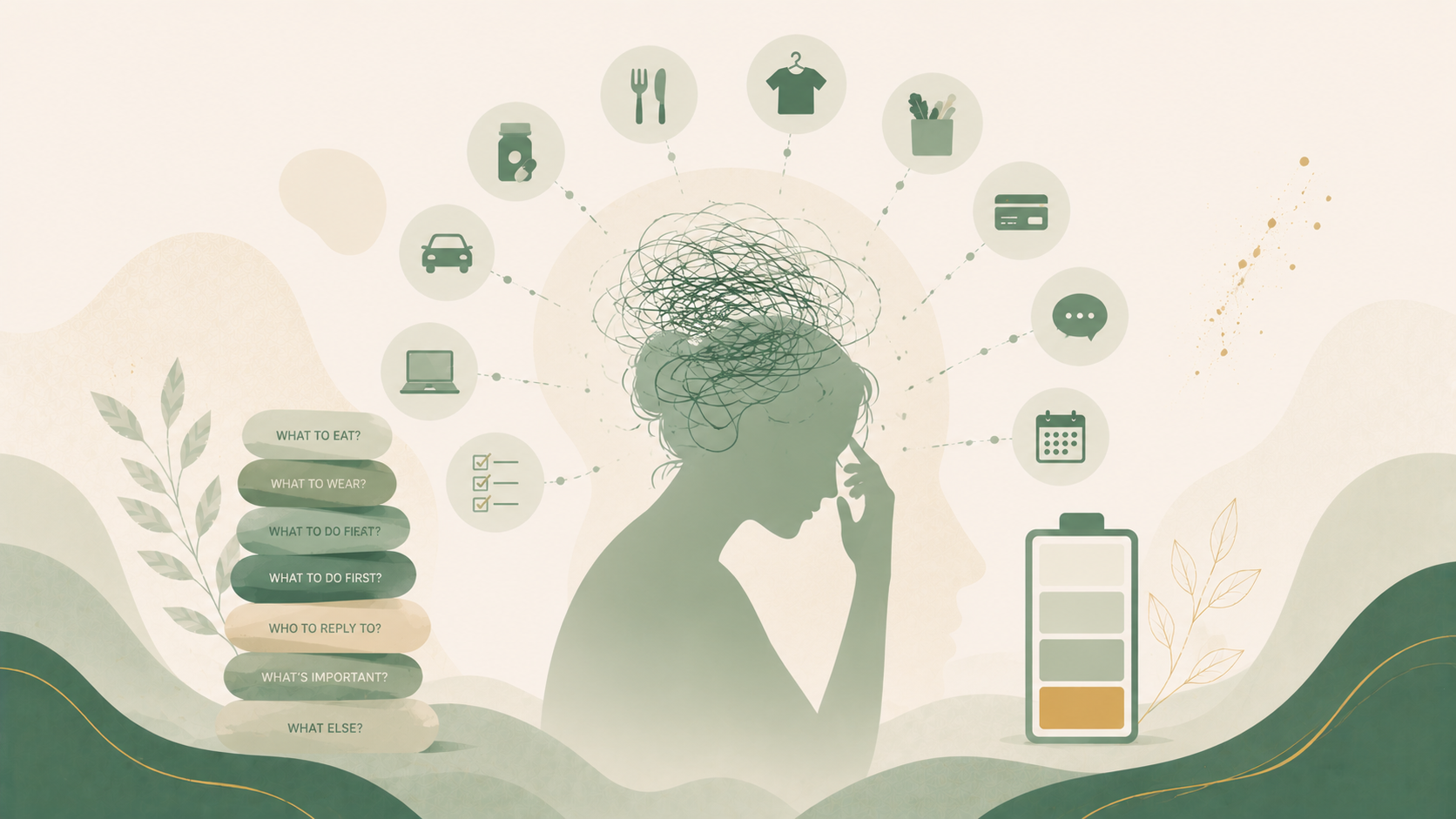
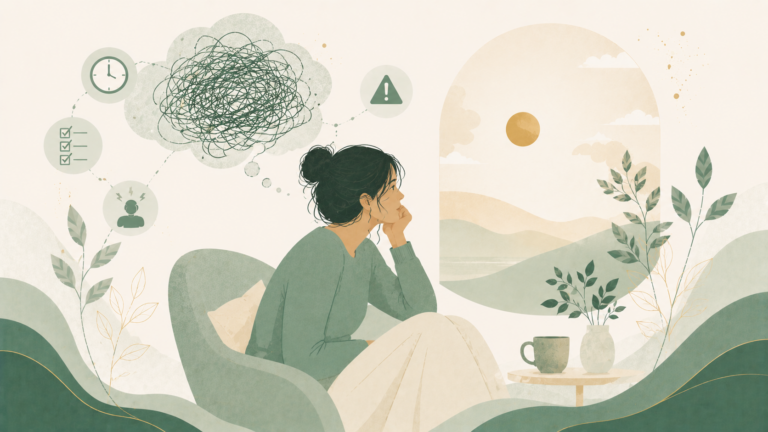
Have you ever reached the end of the day and felt completely incapable of making one more decision? Someone asks where you’d like to eat, what movie you’d like to watch, or what you’d like to do this weekend, and your answer is simply: “I don’t know.”
It’s not laziness, and it doesn’t necessarily mean something is wrong. Sometimes it’s a sign that your brain has spent the entire day making decisions and simply needs a break. The same mental depletion can also make small tasks feel overwhelming.
Medical Disclaimer
This article is provided for general educational and informational purposes only and does not constitute medical advice, diagnosis, or treatment. While the content is written with input from a licensed healthcare professional, reading this article does not create a nurse-patient, provider-patient, or any other professional relationship between you and the author or Vida Atlas.
The information here is general in nature and is not a substitute for personalized medical advice from your own doctor or qualified healthcare provider, who can take your full medical history and individual circumstances into account. Always consult your doctor or another qualified healthcare provider with any questions you may have regarding a medical condition, and never disregard professional medical advice or delay seeking it because of something you read on this site.
If you think you may have a medical emergency, call your local emergency number or go to the nearest emergency room immediately. Do not rely on this article for urgent or emergency medical situations.
Vida Atlas and the author make no representations or warranties about the accuracy, completeness, or timeliness of the information provided, and disclaim liability for any actions taken or not taken based on the content of this article.
Quick Answer
Decision fatigue happens when the brain becomes tired after making too many choices. The more decisions you make throughout the day, the harder it can become to make new ones. Even simple choices may start feeling surprisingly difficult when your mental resources are running low.
Why This Happens
Every decision requires energy. Most people think of decisions as major life choices, but the brain doesn’t only work on big decisions. It also processes hundreds of smaller ones throughout the day: what to wear, what to eat, which task to do first, whether to answer a message now or later, and countless other choices that barely register consciously.
Individually, these decisions don’t seem important. Together, they can become surprisingly draining.
What It Can Feel Like
Decision fatigue doesn’t always feel like stress or anxiety. You may notice:
- Difficulty choosing between simple options
- Procrastinating because you don’t know where to start
- Feeling mentally exhausted
- Avoiding decisions altogether
- Choosing the easiest option just to move on
- Feeling irritated when asked to make another choice
Some people describe it as feeling like their brain has run out of battery. By the end of the day, even small decisions can feel much bigger than they really are.
Common Situations That Can Lead to Decision Fatigue
Too Many Responsibilities
The more areas of life you’re managing, the more decisions you’re making. Work, family, finances, health, relationships, household tasks, caregiving responsibilities, and planning all require constant mental effort. Over time, the sheer volume of decisions can become exhausting.
Carrying Too Much Responsibility
Some people naturally become the decision-makers in their families, workplaces, or relationships. Constantly planning, organizing, and solving problems for others can become mentally draining. I see this often with mothers who become the default decision-maker for an entire household without ever really choosing that role.
Major Life Changes
Moving, changing jobs, caring for a family member, going through a divorce, dealing with illness, or navigating other major transitions often increases the number of decisions a person must make every day.
Too Many Options
Modern life gives us more choices than ever before. Sometimes the problem isn’t a lack of options. It’s having too many. The more possibilities we consider, the more energy the brain spends comparing them.
What May Help
One helpful question to ask is whether every decision truly belongs to you. Sometimes decision fatigue develops because one person has gradually become responsible for too many things. Delegating tasks, sharing responsibilities, or allowing other people to make their own decisions can reduce a surprising amount of mental pressure.
Creating routines can also help. The goal isn’t to remove all decisions from life but to save your mental energy for the choices that genuinely matter.
And if you find yourself unable to make even simple choices, it may be worth considering whether what you need most is not a better decision-making strategy, but rest. My guide on the signs you need a break can help you recognize when that’s the case.
When to Look at the Bigger Picture
Decision fatigue is often temporary, but if you’re constantly feeling mentally overwhelmed, struggling to concentrate, feeling exhausted, or finding everyday life increasingly difficult to manage, it may be worth looking at what else is happening in your life. Stress, burnout, poor sleep, emotional exhaustion, anxiety, and major life changes can all make decision fatigue worse.
Conclusion
Decision fatigue doesn’t mean you’re incapable of making decisions. In my experience, more often it means you’ve been making too many of them for too long. Sometimes the solution isn’t finding a better answer. It’s reducing the number of decisions that require your attention and giving your mind an opportunity to recover.