Why Do I Get Period Headaches?

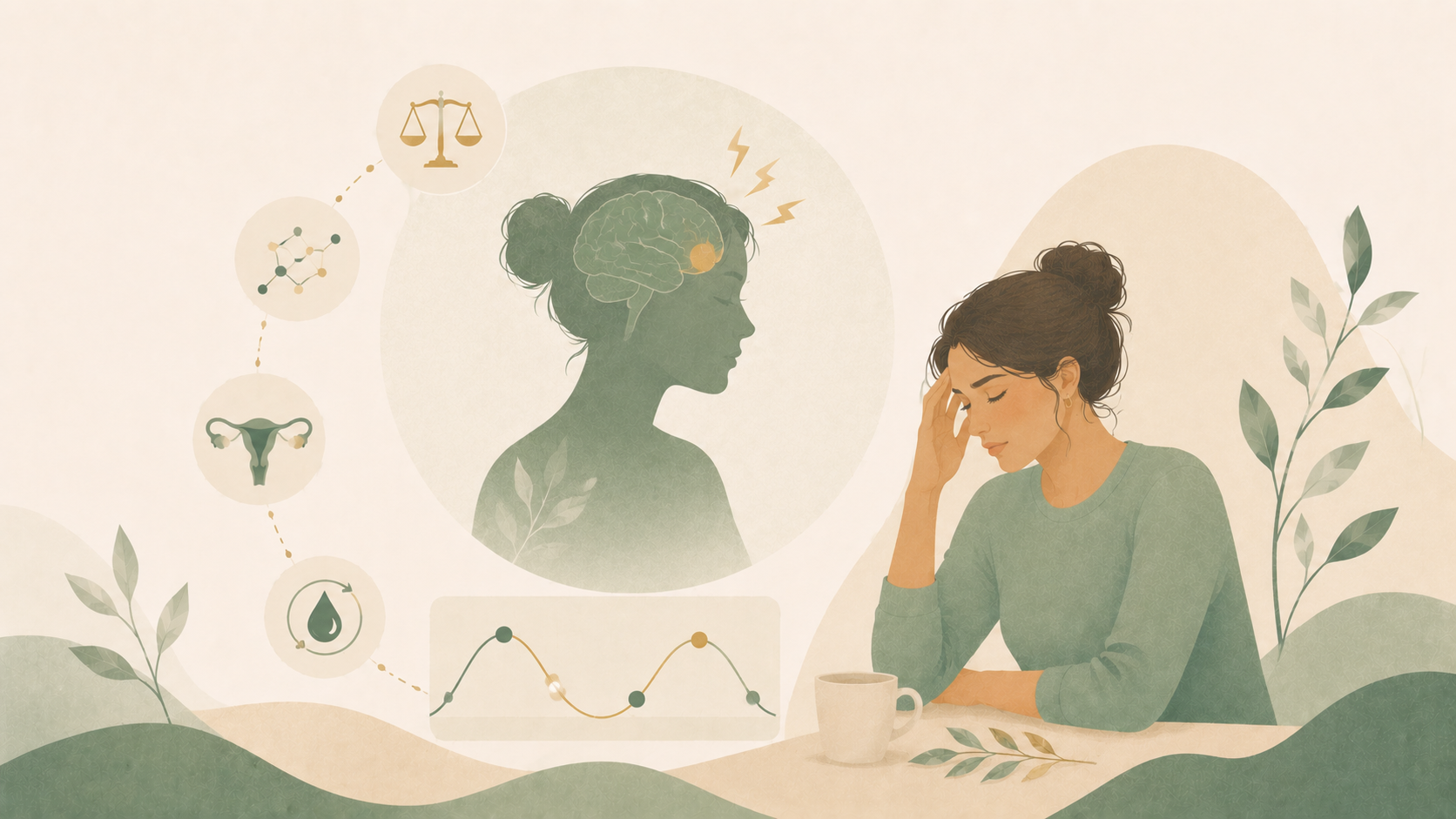
Have you ever noticed that a headache seems to show up right before your period, almost like clockwork? Maybe it starts the day before bleeding begins. Or perhaps it arrives every month and leaves you wondering why painkillers don’t always seem to help.
When headaches follow the same pattern month after month, hormones are often part of the story. Many women don’t immediately connect their headaches to their menstrual cycle until they start paying attention to the timing, something I encourage every patient with recurring headaches to try, since the pattern is often hiding in plain sight.
Medical Disclaimer
This article is provided for general educational and informational purposes only and does not constitute medical advice, diagnosis, or treatment. While the content is written with input from a licensed healthcare professional, reading this article does not create a nurse-patient, provider-patient, or any other professional relationship between you and the author or Vida Atlas.
The information here is general in nature and is not a substitute for personalized medical advice from your own doctor or qualified healthcare provider, who can take your full medical history and individual circumstances into account. Always consult your doctor or another qualified healthcare provider with any questions you may have regarding a medical condition, and never disregard professional medical advice or delay seeking it because of something you read on this site.
If you think you may have a medical emergency, call your local emergency number or go to the nearest emergency room immediately. Do not rely on this article for urgent or emergency medical situations.
Vida Atlas and the author make no representations or warranties about the accuracy, completeness, or timeliness of the information provided, and disclaim liability for any actions taken or not taken based on the content of this article.
Quick Answer
Period headaches are often linked to hormonal changes that happen around menstruation. For some women, the drop in estrogen that occurs just before a period can trigger headaches or migraines. Other factors, such as poor sleep, stress, dehydration, or changes in eating habits, may also play a role.
What’s Actually Happening in Your Body?
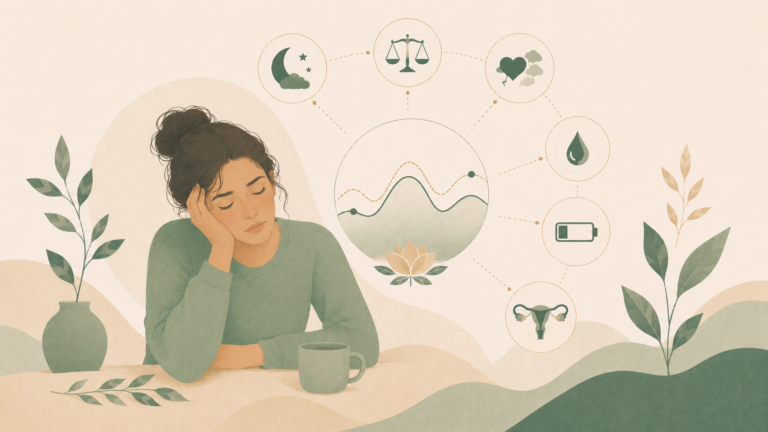
Throughout the menstrual cycle, hormone levels naturally rise and fall, and just before a period begins, estrogen levels drop. For some women, this hormonal shift can affect the nervous system and trigger headache symptoms.
The exact reason isn’t completely understood, but researchers believe changes in estrogen may influence pain pathways and certain brain chemicals involved in headaches and migraines.
What Types of Headaches Can Happen Around Your Period?
Mild Period Headaches
Some women experience a dull or moderate headache around the start of their period, and it may feel similar to a tension headache and improve with rest or simple pain relief measures.
Menstrual Migraines
Others experience migraines linked to their menstrual cycle, and these headaches are often more intense and may come with:
- Throbbing pain
- Nausea
- Sensitivity to light
- Sensitivity to sound
- Difficulty concentrating
Menstrual migraines can sometimes last longer than typical headaches. Some women experience what’s known as a menstrual migraine. These migraines tend to occur around the same point in the menstrual cycle and are often linked to hormonal changes, particularly the drop in estrogen before a period begins.
Why Do Period Headaches Happen?
The Drop in Estrogen
This is considered one of the most common triggers: as estrogen levels fall before menstruation, some women become more vulnerable to headaches or migraines.
Changes in Sleep
Sleep quality often changes around the menstrual cycle. Poor sleep can make headaches more likely or make them feel worse. Fatigue often follows the same pattern. See Why Am I So Tired Before My Period?
Stress
Stress doesn’t directly cause hormone-related headaches, but it can contribute, and when stress and hormonal changes happen at the same time, symptoms may feel more noticeable.
Skipping Meals
Busy days, reduced appetite, or irregular eating habits can sometimes trigger headaches, especially if you’re already prone to migraines.
Dehydration
Not drinking enough fluids can make headaches worse. That same fluid shift is behind why you might feel bloated before your period. Some women also notice changes in fluid balance before their period, which may contribute to symptoms.
How to Tell If Your Headaches Are Hormone-Related
Timing is often the biggest clue, so ask yourself:
- Do headaches happen around the same time every month?
- Do they start shortly before or during your period?
- Do they improve after your period begins?
- Have you noticed a connection with your cycle?
One thing that often stands out is how predictable menstrual headaches can be. Many women can almost identify the day their headache will start because the pattern repeats month after month. Keeping a headache diary for a few cycles can help confirm whether hormones may be involved.
What You Can Do
If headaches seem connected to your period, tracking them is often the most useful first step, and a simple headache diary can help you identify patterns that might otherwise be easy to miss. Try recording:
- when the headache starts
- how severe it feels
- whether nausea or light sensitivity occurs
- where you are in your menstrual cycle
One thing that often surprises women is how predictable hormonal headaches can become once they’re tracked for a few months, and if your healthcare provider has recommended pain relief, it’s often more effective to take it early rather than waiting until the headache becomes severe.
For some women, nonsteroidal anti-inflammatory drugs (NSAIDs) may help reduce headache symptoms. If headaches continue to worsen, become more frequent, or no longer seem connected to your cycle, it’s worth discussing them with a healthcare professional.
Other causes, including vision problems, sleep disorders, or other medical conditions, may need to be considered.
When to See a Doctor
Consider speaking with a healthcare professional if:
- Headaches are becoming more severe
- Pain interferes with work or daily activities
- Over-the-counter medications aren’t helping
- Headaches are accompanied by unusual symptoms
- You experience migraines for the first time
- Symptoms suddenly change
It’s particularly important to seek urgent medical attention for sudden, severe headaches or headaches accompanied by neurological symptoms such as weakness, difficulty speaking, vision loss, or significant changes in consciousness.
Conclusion
Period headaches can be frustrating, especially when they seem to appear at the same time every month. For many women, hormonal changes, particularly the drop in estrogen before a period, play an important role.
In my experience, understanding the pattern can help you identify triggers, manage symptoms, and know when it’s worth seeking medical advice. If your cycle timing itself feels unpredictable, see Irregular Periods Explained. For a broader look at period-related symptoms, see my complete guide to period symptoms.