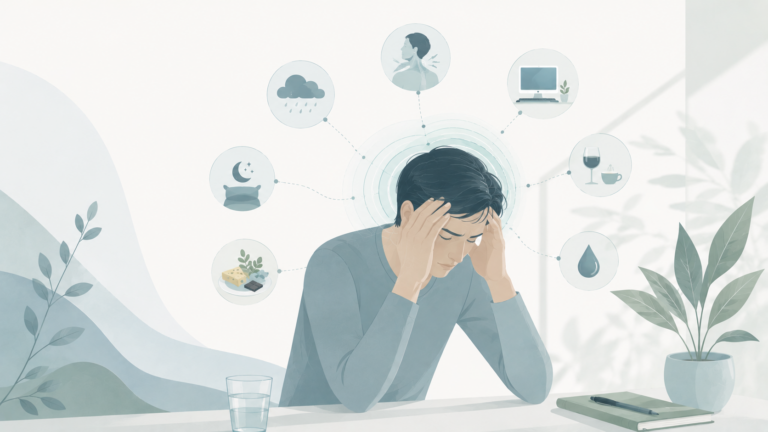
Why Am I Forgetful? Common Causes of Memory Lapses


You walk into the kitchen and completely forget why. A name you’ve known for years suddenly won’t come to you mid-sentence. You read the same paragraph three times because your mind wandered off somewhere else. Almost everyone has moments like these, but when they start happening more often, it’s natural to wonder if something is actually wrong.
The good news is that most everyday forgetfulness has a fairly ordinary explanation. It’s rarely the first sign of something serious, though it’s worth understanding what’s actually going on so you know when a memory lapse is just noise and when it’s worth mentioning to a doctor.
Medical Disclaimer
This article is provided for general educational and informational purposes only and does not constitute medical advice, diagnosis, or treatment. While the content is written with input from a licensed healthcare professional, reading this article does not create a nurse-patient, provider-patient, or any other professional relationship between you and the author or Vida Atlas.
The information here is general in nature and is not a substitute for personalized medical advice from your own doctor or qualified healthcare provider, who can take your full medical history and individual circumstances into account. Always consult your doctor or another qualified healthcare provider with any questions you may have regarding a medical condition, and never disregard professional medical advice or delay seeking it because of something you read on this site.
If you think you may have a medical emergency, call your local emergency number or go to the nearest emergency room immediately. Do not rely on this article for urgent or emergency medical situations.
Vida Atlas and the author make no representations or warranties about the accuracy, completeness, or timeliness of the information provided, and disclaim liability for any actions taken or not taken based on the content of this article.
Quick Answer
Occasional forgetfulness is common and often has a simple explanation. Stress, poor sleep, anxiety, depression, or simply not paying full attention can all make it harder to remember everyday things. These are some of the most common causes of everyday forgetfulness.
Memory changes are more worth discussing with a doctor if they happen often, get worse over time, or start interfering with your daily life.
What’s Actually Happening When You Forget Something
A lot of everyday forgetfulness is actually about attention, not memory. If you were distracted when you put down your keys or someone told you their name, your brain may not have fully taken in that information. Later, it feels like you forgot something, when you may never have properly registered it in the first place.
This happens more easily when you are stressed, tired, busy, or trying to do several things at once. Your attention is already stretched, so small details are easier to miss. Knowing this can make everyday forgetfulness feel less alarming and also give you a clearer idea of what may help.
Common Causes Worth Knowing About
Stress and Anxiety
A stressed or anxious mind has less attention available for everyday details. When your brain is busy dealing with worry, it can start to feel like it is sorting information by importance, holding on to what feels essential and letting smaller things slip.
I know this feeling personally. You can go from remembering phone numbers, appointments, and planning several steps ahead to suddenly forgetting simple things you never used to forget. It can feel like brain fog, but often your attention is simply so focused on getting through what feels most important that there is less room for everything else.
Poor or Not Enough Sleep
Your brain does not simply switch off when you sleep. It uses that time to process what happened during the day and help store new information. When you regularly get too little sleep, that process does not work as well.
You may notice that it becomes harder to concentrate, learn something new, or remember small details the next day. Over time, ongoing lack of sleep can make these problems more noticeable, simply because your brain is not getting enough time to do the work it normally does at night.
Depression
Depression can change where your mental energy goes. When you are dealing with low mood, exhaustion, or the same negative thoughts running through your mind, it can be harder to give your full attention to what is happening around you.
That can look like a memory problem, even when memory itself is not the main issue. You may read something without taking it in, forget part of a conversation, or struggle to remember everyday details because your brain never fully registered them in the first place. These changes often improve when the depression itself is treated.
Certain Medications
Some common medications, including certain antihistamines, sleep aids, and anti-anxiety medications, list forgetfulness or brain fog as a known side effect. If new memory trouble started around the same time as a medication change, that timing is worth mentioning at your next appointment. Don’t stop a prescribed medication on your own, but ask whether the dose, timing, or medication itself could be contributing.
Thyroid Problems
An underactive thyroid, or hypothyroidism, can make it harder to concentrate, think clearly, and remember everyday things. Thyroid hormones help regulate how your body and brain use energy, so when levels are too low, thinking and processing information can feel slower.
These changes often appear alongside symptoms like fatigue, feeling cold, dry skin, or unexplained weight changes. A simple blood test can check how your thyroid is working, and treating hypothyroidism may also improve problems with concentration and memory.
Vitamin B12 Deficiency
Vitamin B12 helps keep your nerve cells healthy and supports normal brain function. When levels are too low, nerve signals may not work as efficiently, which can show up as problems with concentration, memory, or thinking clearly.
Low B12 is more common in older adults and people on certain diets, but there are other possible causes as well. A blood test can check your level, and treating a deficiency early can help prevent symptoms from getting worse.
Constant Multitasking
When you split your attention between your phone, a conversation, and another task, your brain has less attention available for each one. If you never fully focus on the information in the first place, it is much harder to remember it later.
This can feel like your memory is getting worse, when the real problem may be attention. Doing one thing at a time gives your brain a better chance to take in the information before it needs to store and recall it.
What May Help
Protecting your sleep is one of the most useful places to start. A well-rested brain has an easier time paying attention, processing new information, and recalling it later. Managing ongoing stress can help too, especially if you notice that your memory gets worse during particularly stressful periods.
It also helps to take some of the work off your memory. Use the same calendar or reminder app, write important things down, and give yourself a moment to actually register what you are doing. If you are constantly multitasking, even small habits like putting your keys in the same place or finishing one task before checking your phone can make everyday forgetfulness much easier to manage.
When It’s Worth Paying Attention To
Forgetting a name and remembering it later, or occasionally misplacing your keys, is a normal part of everyday life. Memory changes become more concerning when they start interfering with daily activities or independence, especially if they are new or getting noticeably worse over time.
Talk to a doctor if you repeatedly ask the same questions, get lost in familiar places, struggle to follow conversations that used to be easy, or if someone close to you has noticed a clear change in your memory. Some causes of memory problems, including thyroid disorders and vitamin deficiencies, can improve with treatment, which is one reason it is worth finding out what is actually behind the change.
FAQ:
Yes, some changes in memory are normal with age. You might take longer to remember a name or occasionally forget where you put something. It is more concerning when memory problems start making everyday tasks difficult.
Yes. When you are stressed or anxious, a lot of your attention goes toward what is worrying you. That leaves less attention for everyday details, so you may forget things simply because your brain did not fully take them in at the time.
If forgetfulness is mild and only happens occasionally, improving your sleep and managing stress may be a good place to start. If it keeps happening, gets worse, or someone close to you notices a change, talk to a doctor rather than assuming stress is the only cause.
The Bottom Line
Forgetting things doesn’t automatically mean something is wrong. Often, it happens when you’re stressed, tired, distracted, or trying to keep track of too many things at once. Paying attention to the pattern, how often it happens, whether it’s getting worse, and whether it’s affecting your daily life, matters more than any single forgetful moment.
I know how easy it is to notice yourself forgetting things and immediately wonder if something is wrong. But there are many possible reasons, and if the pattern is bothering you, it’s always reasonable to have it checked. If you’ve also noticed a general mental fogginess alongside the forgetfulness, that guide explains the connection in more detail.