Slow Living: What It Means and How to Start


You have probably seen the phrase “slow living” online. It is often next to a photo of someone drinking coffee in a sunny kitchen. It can feel like something for people with more free time than you have. That image can make the whole idea seem unrealistic for everyday life.
But slow living is not about the photos. It is not about doing less, either. It is about doing one thing at a time, with your full attention. Even small changes in how you move through your day can make a difference. It is easier to start than it looks.
Medical Disclaimer
This article is provided for general educational and informational purposes only and does not constitute medical advice, diagnosis, or treatment. While the content is written with input from a licensed healthcare professional, reading this article does not create a nurse-patient, provider-patient, or any other professional relationship between you and the author or Vida Atlas.
The information here is general in nature and is not a substitute for personalized medical advice from your own doctor or qualified healthcare provider, who can take your full medical history and individual circumstances into account. Always consult your doctor or another qualified healthcare provider with any questions you may have regarding a medical condition, and never disregard professional medical advice or delay seeking it because of something you read on this site.
If you think you may have a medical emergency, call your local emergency number or go to the nearest emergency room immediately. Do not rely on this article for urgent or emergency medical situations.
Vida Atlas and the author make no representations or warranties about the accuracy, completeness, or timeliness of the information provided, and disclaim liability for any actions taken or not taken based on the content of this article.
Key Takeaways
- Slow living means doing one thing at a time, not doing less overall.
- Rushing all day can keep your body stuck in a low-level stress state.
- Small changes, like a phone-free breakfast, count as slow living.
- A few simple products can make it easier to build the habit.
- Pick one part of your day to protect from rushing, not your whole schedule.
What Slow Living Actually Means
Slow living means moving through your day with less rushing and more attention. It is not about how much you do. It is about how present you are while you do it. You do not need to quit your job or move to the countryside. Most people build slow living into small, specific parts of the day they already have.
Why It’s Worth Trying
Rushing from task to task keeps your body on alert, even when nothing is actually urgent. Slowing down specific parts of your day gives your body real time to rest, instead of staying keyed up all day. Ongoing stress like this has real effects on the body, not just how you feel.
Doing several things at once also has a cost. Research on heavy multitasking has found it can make it harder to filter out distractions and switch between tasks well. And a well-known study on attention found that people tend to feel less happy when their mind wanders, even if what they are thinking about is pleasant. Slowing down and focusing on one thing may help with both of these.
Ways to Start Slow Living
Do One Thing at a Time
Pick one activity a day, like eating or folding laundry. Do only that, with no show or phone running at the same time. It may feel strange at first. Your mind may keep looking for something else to do, but that is part of getting used to a slower pace.
Leave Some Time Unplanned
Leave a gap in your day with nothing scheduled, even just fifteen minutes. Try not to fill it right away with a new task. Use that time however you want, whether that means sitting quietly, going outside, or simply doing nothing for a while.
Slow Down Your Mornings
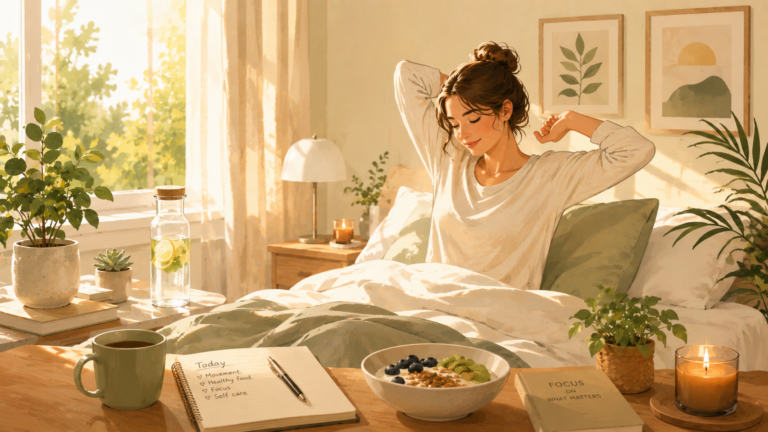
Grabbing your phone the moment you wake up sets a rushed tone for the whole day. Even five extra unhurried minutes before checking messages can help. You could use that time to make coffee, stretch, open a window, or get ready without immediately taking in new information.
Eat Without a Screen
Try one meal a day with no phone or TV in front of you. Many people are surprised how fast they normally eat once they actually notice it. Without a screen, it is easier to pay attention to your food and give yourself a real break from everything else.
Choose Fewer, Better Things
Slow living can also apply to what you own. Choosing fewer things you truly use, instead of buying often, can lower the small daily stress of managing a lot of stuff. The goal is simply to be more intentional about what you bring into your home.
Products That Can Help
You do not need anything special to start slow living. A few simple products can just make it easier to stick with, especially in the first few weeks. The best ones are those that help you slow down, stay present, or make everyday routines feel a little less rushed.
A Simple Notebook
Writing a few lines by hand each morning or evening is a slow, screen-free habit on its own. It also gives you a place to notice how your slower moments feel.
A Separate Alarm Clock
If your phone is also your alarm, it is hard to keep it out of reach in the morning. A basic alarm clock lets you leave your phone in another room overnight.
A Favorite Mug or Teapot
Making tea or coffee slowly, in a mug you actually enjoy, turns a daily task into a small ritual. It gives your morning a natural, unhurried starting point.
A Physical Book
A printed book, or an e-reader without a browser or notifications, gives your hands and eyes somewhere else to go instead of a phone. Even ten quiet minutes with one can help you unwind.
A Simple Kitchen Timer
Setting a timer for one focused task, like cooking or tidying, can help you stay with just that task instead of drifting to your phone. When the timer ends, so does the task.
Common Mistakes to Avoid
Turning It Into a Strict Rulebook
Slow living can turn into more pressure if you treat it as a strict set of rules. The goal is to feel less pressure, not gain a new checklist to feel behind on. If a habit starts feeling like another obligation, it may be worth simplifying it or letting it go.
Trying to Slow Everything Down at Once
Trying to apply this to your whole day right away rarely lasts. Starting with one part of your day works better than a full overhaul. Once that change feels natural, you can slowly bring the same approach into other parts of your routine.
Confusing Slow With Lazy
Slow living is not about doing less overall. It is about doing things with more attention. You can still be productive while building in moments that are not rushed. The difference is being more intentional about where your time and energy go.
Try This This Week
Instead of slowing your whole life down, pick one moment in your day to protect from rushing. You could:
- Eat one meal a day without your phone nearby.
- Leave your mornings phone-free for the first ten minutes.
- Take a walk with nothing playing in your ears.
- Leave one 15-minute gap in your day unscheduled.
At the end of the week, ask yourself one simple question:
Did that one slower moment change how the rest of my day felt?
If the answer is yes, you’ve found a habit worth keeping.
FAQ:
No. Most people start with one part of their day, like mornings or meals, instead of changing everything at once.
Not necessarily. It is more about attention than output. Many people focus better once they are not splitting attention across several things.
Even a few protected minutes a day, like an unhurried coffee or a screen-free walk, can offer some of the same benefit without needing a lighter schedule.
Final Thoughts
Slow living is not about how much you get done in a day. It is about how present you are while you do it. You can have a busy schedule and still create small pockets of time where you are not rushing, multitasking, or thinking about what comes next. The goal is not a perfectly calm life, but a more intentional way of moving through the one you already have.
In my experience, the people who stick with it start small and specific. Trying to change your entire routine at once usually creates more pressure, which defeats the point. Pick one moment, protect it, and let the rest follow from there. Over time, those small choices can become a natural part of your day rather than another habit you have to work at.