Period Symptoms Explained: A Complete Guide

Your period can bring more than bleeding, including bloating, headaches, exhaustion, or a cycle that never seems to run on time. These symptoms are common, and it’s normal to have several of them at once.
As a midwife, this is one of the most common conversations I have with patients, so I put together this guide as the resource I wish more of them had going in. This guide walks through the most common period-related symptoms, what usually causes them, and when it’s worth talking to a doctor.
Medical Disclaimer
This article is provided for general educational and informational purposes only and does not constitute medical advice, diagnosis, or treatment. While the content is written with input from a licensed healthcare professional, reading this article does not create a nurse-patient, provider-patient, or any other professional relationship between you and the author or Vida Atlas.
The information here is general in nature and is not a substitute for personalized medical advice from your own doctor or qualified healthcare provider, who can take your full medical history and individual circumstances into account. Always consult your doctor or another qualified healthcare provider with any questions you may have regarding a medical condition, and never disregard professional medical advice or delay seeking it because of something you read on this site.
If you think you may have a medical emergency, call your local emergency number or go to the nearest emergency room immediately. Do not rely on this article for urgent or emergency medical situations.
Vida Atlas and the author make no representations or warranties about the accuracy, completeness, or timeliness of the information provided, and disclaim liability for any actions taken or not taken based on the content of this article.
What This Guide Covers
Irregular periods, a late period, PMS and PMDD, heavy periods, bloating, headaches, the effect of stress on your cycle, and fatigue before your period. Jump to any section below, or read straight through.
Irregular Periods
A cycle is considered irregular when its length varies significantly or your period becomes difficult to predict. Common causes include stress, weight changes, PCOS, thyroid problems, pregnancy, and perimenopause. Tracking when your periods start and stop can help identify patterns.
Read the full guide on irregular periods.
Late Period
A late period can have many causes, from pregnancy and stress to illness, sudden weight changes, intense exercise, or conditions like PCOS, thyroid issues, and perimenopause. Most of the time, a late period isn’t an emergency. It’s worth seeing a doctor if it’s more than a few weeks late and pregnancy has been ruled out.
Read the full guide on why your period might be late.
PMS or PMDD?
PMS can cause mood swings, bloating, and fatigue before your period, usually improving once bleeding starts. PMDD causes more severe emotional symptoms, such as intense sadness, anger, or anxiety, that can disrupt daily life. The difference is linked to how the body responds to normal hormonal changes after ovulation.
Read the full guide on PMS vs. PMDD.
Heavy Periods
A period may be considered heavy if you’re changing a pad or tampon every 1–2 hours, passing large clots, or bleeding for more than 7 days. Causes can include hormonal changes, fibroids, or polyps. Ongoing heavy bleeding can also lead to low iron, causing fatigue, dizziness, or shortness of breath.
Read the full guide on heavy periods.
Bloating Before Your Period
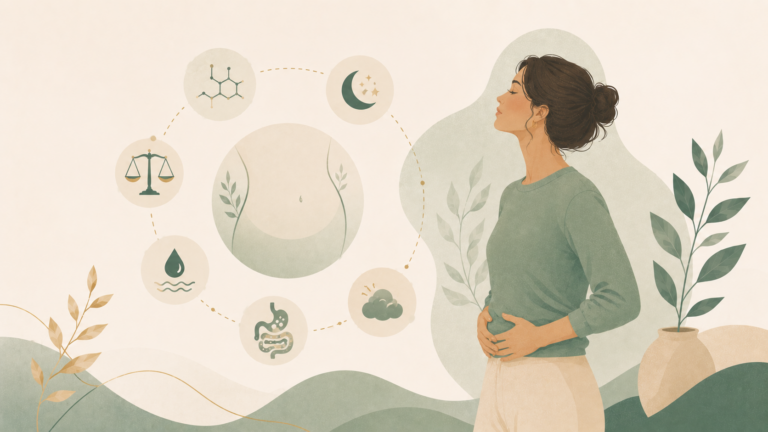
This kind of bloating usually comes from water retention, driven by shifting estrogen and progesterone in the days before your period. Slower digestion and cravings for salty or sweet food can make it worse. A good sign it’s period-related bloating rather than something else is timing: it builds up before your period and eases once bleeding starts.
Read the full guide on period bloating.
Period Headaches
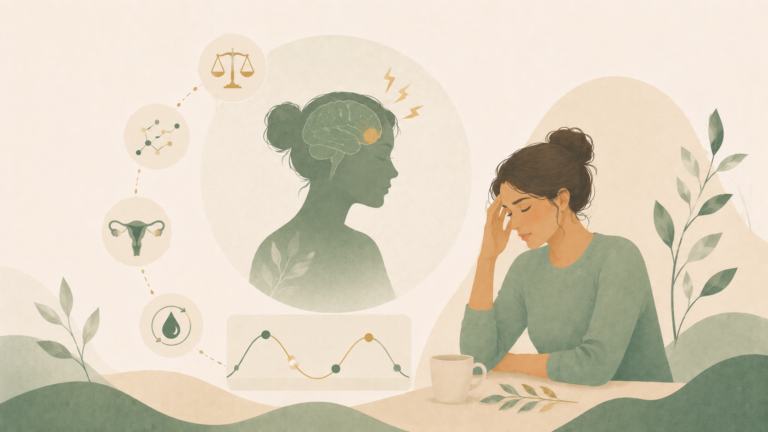
Many people get headaches right before their period, usually triggered by a drop in estrogen. This can range from a mild, tension-like headache to a full menstrual migraine with throbbing pain, nausea, or sensitivity to light. Poor sleep, stress, and skipping meals tend to make period headaches worse, so small changes to those habits can sometimes help.
Read the full guide on period headaches.
Stress and Your Cycle
Stress can throw off the connection between your brain and ovaries, delaying or even blocking ovulation. That can make your period late, irregular, heavier or lighter than usual, or make PMS symptoms worse than normal. This isn’t limited to emotional stress. Physical stress, like illness or overtraining, and undereating can affect your cycle in the same way.
Read the full guide on stress and your cycle.
Fatigue Before Your Period
Feeling extra tired before your period is often linked to rising progesterone and shifting estrogen, which can disrupt both sleep and energy in the days before bleeding starts. Poor sleep, PMS or PMDD symptoms, and stress can all add to it. If you also have heavy periods, low iron is worth ruling out too.
Read the full guide on period fatigue.
Why These Symptoms Overlap
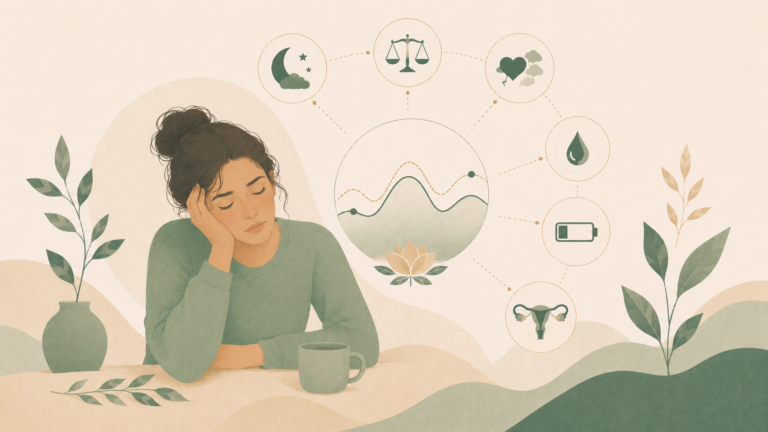
Your hormones don’t work in isolation, they affect your mood, digestion, sleep, and pain all at once, which is why bloating, headaches, fatigue, and mood swings often show up together in the same week of your cycle.
What If More Than One Sounds Familiar?
That’s more common than you might think. Bloating, headaches, and fatigue often show up together before your period, and having several of them doesn’t mean something is wrong. Tracking your cycle over a few months can help you and your doctor spot what’s actually a pattern versus what’s a one-off.
When to See a Doctor
Most period symptoms are a normal part of your cycle and don’t need medical care. It’s worth seeing a doctor if your periods are consistently very heavy, your cycle stays unpredictable for months at a time, your pain gets in the way of daily life, or you notice bleeding between periods.
Conclusion
Period symptoms overlap enough that it’s easy to lump them all together, but understanding what’s actually going on can make them feel a lot less confusing. In my experience, the goal here isn’t to diagnose yourself, it’s to recognize what’s likely happening and know when a symptom is worth bringing up with a doctor.