Why Small Tasks Feel Overwhelming


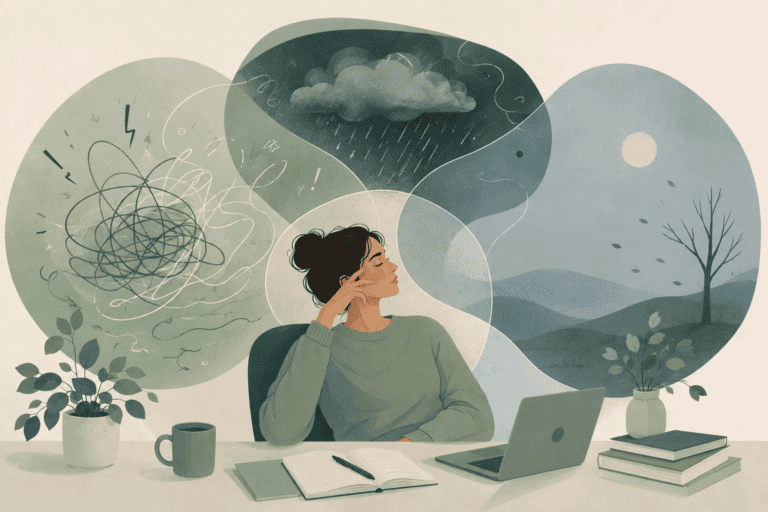
The dishes aren’t that difficult. Answering an email should take two minutes. Making a phone call isn’t a major life challenge. Folding laundry isn’t complicated. Yet sometimes even simple tasks can feel strangely difficult to start. You know what needs to be done. You may even want to do it.
But instead of taking action, you keep putting it off and wondering what’s wrong with you. I hear this described almost apologetically, like admitting to something shameful, when really it’s one of the clearest signs I look for that someone is running on empty.
Medical Disclaimer
This article is provided for general educational and informational purposes only and does not constitute medical advice, diagnosis, or treatment. While the content is written with input from a licensed healthcare professional, reading this article does not create a nurse-patient, provider-patient, or any other professional relationship between you and the author or Vida Atlas.
The information here is general in nature and is not a substitute for personalized medical advice from your own doctor or qualified healthcare provider, who can take your full medical history and individual circumstances into account. Always consult your doctor or another qualified healthcare provider with any questions you may have regarding a medical condition, and never disregard professional medical advice or delay seeking it because of something you read on this site.
If you think you may have a medical emergency, call your local emergency number or go to the nearest emergency room immediately. Do not rely on this article for urgent or emergency medical situations.
Vida Atlas and the author make no representations or warranties about the accuracy, completeness, or timeliness of the information provided, and disclaim liability for any actions taken or not taken based on the content of this article.
Quick Answer
Small tasks can feel overwhelming when your mental and emotional resources are already stretched thin. Stress, exhaustion, poor sleep, emotional overload, major life changes, or simply having too many responsibilities can make ordinary tasks feel much bigger than they actually are.
Why This Can Happen
Most people assume motivation comes first and action comes second, but in reality, it often works the other way around. When you’re mentally overloaded, the brain starts treating even small tasks as something that requires effort, energy, and attention.
If those resources are already running low, simple things can begin to feel surprisingly difficult. That doesn’t mean you’re lazy. It often means your system is carrying more than it can comfortably manage.
What It Can Feel Like
People often describe it as knowing exactly what they should do but feeling unable to start. You may notice:
- Putting off simple tasks for days
- Feeling overwhelmed by your to-do list
- Jumping between tasks without finishing them
- Avoiding emails, messages, or phone calls
- Feeling guilty about procrastinating
- Getting stuck in planning instead of doing
- Feeling exhausted before you’ve even started
One of the most frustrating parts is that the task itself often isn’t the problem. The effort required to begin can feel much bigger than the task itself.
Common Triggers or Contributing Factors
Too Many Things Competing for Your Attention
Sometimes small tasks feel overwhelming because they aren’t actually small anymore. Work responsibilities, household chores, caregiving, appointments, finances, paperwork, emails, and everyday decisions can slowly pile up. At some point, even a simple task starts feeling like one more thing on an already overflowing list.
Decision Fatigue
The more decisions you make throughout the day, the harder it becomes to make new ones. Read more in Decision Fatigue Explained. When your brain is already busy planning, organizing, remembering, and solving problems, even choosing where to start can feel exhausting.
Unrealistic Expectations
Sometimes the task itself isn’t difficult, but the expectations attached to it are. You may feel like everything has to be done perfectly, immediately, and without mistakes. That pressure can make even simple tasks feel much larger than they really are.
Feeling Stuck
The problem isn’t always the task itself. Sometimes it’s the feeling that life has become an endless cycle of responsibilities with very little time left for yourself, your interests, or the things that help you recharge.
What May Help and Why
Breaking tasks into smaller steps can help, especially when everything feels overwhelming. Focusing on one small action instead of the entire project often makes it easier to get started. At the same time, it’s important to ask whether the problem is really the task. Sometimes people spend months trying to become more productive when what they actually need is rest.
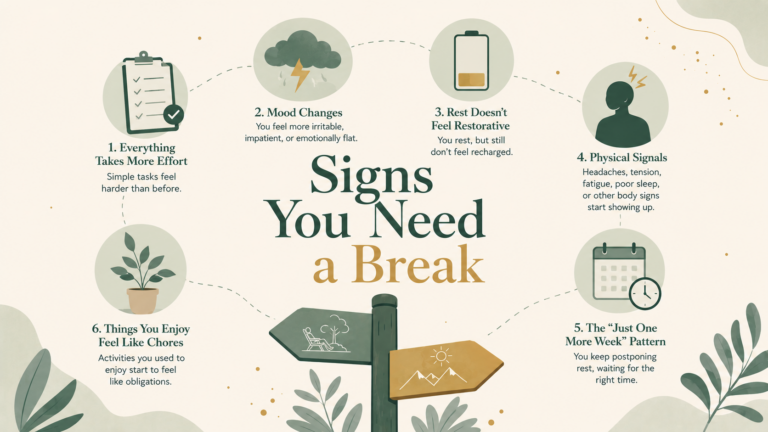
If you’ve been carrying responsibilities for a long time, a pause may be more helpful than another productivity strategy. Giving yourself permission to slow down, take a break, or temporarily do less can sometimes provide more clarity than constantly pushing forward. For a fuller checklist, see the signs you need a break.
It’s also worth asking whether everything on your plate truly belongs there. As life changes, responsibilities may need to be redistributed. Delegating tasks, asking for help, or lowering expectations can be just as important as becoming more organized. The goal isn’t to do more. It’s to create a life that feels manageable again.
When It Might Be More Than Overwhelm
Everyone feels overwhelmed sometimes. But if small tasks have felt impossible for weeks or months, or if you’re also noticing anxiety, low mood, exhaustion, poor sleep, concentration problems, or a loss of interest in everyday life, it may be worth looking at the bigger picture.
Overwhelm and difficulty starting tasks often go hand in hand with overthinking. Sometimes the task isn’t the real problem. The task is simply revealing that something else needs attention.
Conclusion
If small tasks suddenly feel much harder than they used to, it doesn’t automatically mean you’re lazy, unmotivated, or failing.
In my experience, it’s more often a sign that your mental and emotional resources are running low. Understanding what’s happening beneath the surface is often the first step toward making everyday life feel manageable again.