Why Am I Always Overthinking?


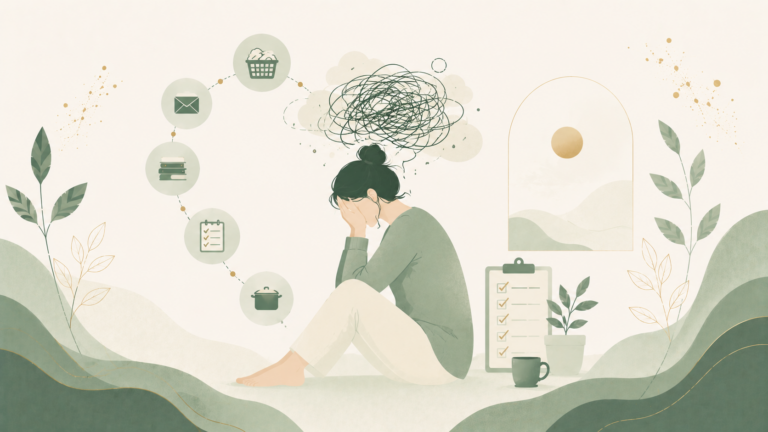
You’re lying in bed replaying a conversation from earlier that day. Or maybe you’re trying to make a decision, but your mind keeps finding new possibilities, new risks, and new things that could go wrong.
You tell yourself to stop thinking about it, but somehow that makes you think about it even more. Overthinking can feel productive, as if you’re solving a problem, when you may actually be going around the same circle again and again. I’ve done this myself, so I never tell patients to “just stop thinking about it.” I know how unhelpful that advice can be.
Medical Disclaimer
This article is provided for general educational and informational purposes only and does not constitute medical advice, diagnosis, or treatment. While the content is written with input from a licensed healthcare professional, reading this article does not create a nurse-patient, provider-patient, or any other professional relationship between you and the author or Vida Atlas.
The information here is general in nature and is not a substitute for personalized medical advice from your own doctor or qualified healthcare provider, who can take your full medical history and individual circumstances into account. Always consult your doctor or another qualified healthcare provider with any questions you may have regarding a medical condition, and never disregard professional medical advice or delay seeking it because of something you read on this site.
If you think you may have a medical emergency, call your local emergency number or go to the nearest emergency room immediately. Do not rely on this article for urgent or emergency medical situations.
Vida Atlas and the author make no representations or warranties about the accuracy, completeness, or timeliness of the information provided, and disclaim liability for any actions taken or not taken based on the content of this article.
Quick Answer
Overthinking happens when the mind gets stuck analyzing, worrying, reviewing, or predicting without reaching a useful conclusion. It can be connected to stress, anxiety, perfectionism, uncertainty, unresolved situations, or simply being mentally overwhelmed. The goal of overthinking is usually to find certainty, but certainty rarely arrives.
Why This Can Happen
You tell yourself to stop thinking about it, but somehow that makes you think about it even more. Overthinking can feel productive, as if you’re solving a problem, when you may actually be going around the same circle again and again.
I’ve done this myself plenty of times, so I never tell patients to “just stop thinking about it,” because I know exactly how unhelpful that advice actually is.
What It Can Feel Like
Overthinking doesn’t always feel like anxiety. Sometimes it feels like preparation, problem-solving, or simply being responsible and trying to avoid mistakes. You may notice:
- Replaying conversations repeatedly
- Analyzing decisions long after they’ve been made
- Imagining worst-case scenarios
- Difficulty relaxing
- Trouble falling asleep because your mind won’t switch off
- Feeling mentally exhausted
- Second-guessing yourself
- Constantly searching for the “right” answer
One reason overthinking becomes so exhausting is that it rarely feels pointless while you’re doing it.
Common Triggers or Contributing Factors
Anxiety and Uncertainty
When anxiety is present, the brain often becomes more focused on identifying potential problems. The mind starts treating uncertainty as something dangerous that must be solved immediately.
Perfectionism
People who hold themselves to very high standards may spend a lot of time reviewing decisions and looking for mistakes. For years, this approach may help them succeed, but eventually every decision can start feeling equally important and emotionally draining.
Unfinished Conversations
Sometimes overthinking isn’t about the future at all. A conflict, misunderstanding, hurtful comment, or words left unsaid can keep replaying in your mind long after the situation has ended.
You may find yourself mentally rewriting conversations, imagining different outcomes, or thinking about what you should have said. The mind often returns to situations that feel emotionally unfinished.
Stress and Mental Exhaustion
Ironically, a tired brain sometimes finds it harder to let thoughts go. When you’re already overwhelmed, even small decisions can start feeling much bigger than they actually are. That overload is also behind why small tasks feel overwhelming and decision fatigue.
What May Help and Why
Writing your thoughts down can help. Some people prefer a notebook, while others use voice notes. The goal isn’t to solve every problem immediately but to get the thoughts out of your head. Over time, you may start noticing that the same worries, fears, or unresolved situations come up again and again.
Some people also find it helpful to set aside a specific time to think about a problem later. Instead of trying not to think about it, postpone it until you’re calmer and better able to look at it objectively.
Another approach is shifting from thinking to action. Overthinking can feel like progress when you’re actually revisiting the same problem. Ask yourself what one small action you can take right now instead of spending another hour analyzing the situation. Sometimes clarity comes after action, not before it.
When Thinking Becomes a Trap
Thinking is useful when it leads somewhere, so a helpful question to ask yourself is: “Am I getting new information, or am I repeating the same thoughts?” If you’re circling the same worries, conversations, or decisions for days or weeks, the problem may no longer be the situation itself.
The problem may be the process of thinking. That’s often the point where stepping back becomes more useful than continuing to analyze.
Conclusion
Overthinking is usually not a sign that you’re weak or incapable of coping. More often, it’s a sign that your mind is working very hard to protect you from uncertainty, mistakes, conflict, or discomfort.
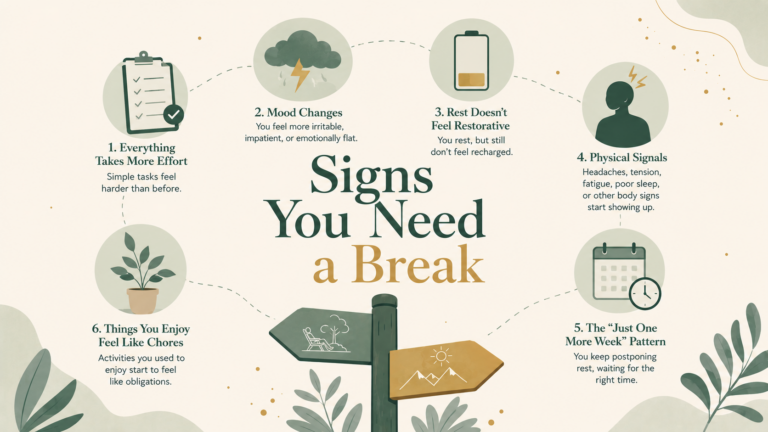
In my experience, the challenge is learning that not every problem can be solved through more thinking. Sometimes the healthiest step forward is accepting that you’ve already thought about it enough. If your mind and body both feel like they need a reset, see the signs you need a break.