Common Menopause Symptoms

Have you started waking up in the middle of the night feeling hot for no obvious reason? Maybe your periods have stopped, your sleep isn’t what it used to be, and suddenly you’re dealing with symptoms you’ve never experienced before. It can feel confusing, especially when several changes seem to happen at once.
One thing that surprises many women is that menopause isn’t just about periods ending. In my own practice, I spend as much time talking about sleep, mood, and energy as I do about hot flashes. The hormonal changes involved can affect sleep, mood, energy levels, body temperature, vaginal health, and overall quality of life.
Medical Disclaimer
This article is provided for general educational and informational purposes only and does not constitute medical advice, diagnosis, or treatment. While the content is written with input from a licensed healthcare professional, reading this article does not create a nurse-patient, provider-patient, or any other professional relationship between you and the author or Vida Atlas.
The information here is general in nature and is not a substitute for personalized medical advice from your own doctor or qualified healthcare provider, who can take your full medical history and individual circumstances into account. Always consult your doctor or another qualified healthcare provider with any questions you may have regarding a medical condition, and never disregard professional medical advice or delay seeking it because of something you read on this site.
If you think you may have a medical emergency, call your local emergency number or go to the nearest emergency room immediately. Do not rely on this article for urgent or emergency medical situations.
Vida Atlas and the author make no representations or warranties about the accuracy, completeness, or timeliness of the information provided, and disclaim liability for any actions taken or not taken based on the content of this article.
Quick Answer
Menopause can cause a wide range of symptoms, including hot flashes, night sweats, sleep problems, mood changes, vaginal dryness, lower libido, and changes in energy levels.
Not every woman experiences the same symptoms. Some women have very few symptoms, while others find the transition much more challenging.
What’s Actually Happening in Your Body?
Menopause occurs when the ovaries stop releasing eggs and estrogen levels decline significantly. Officially, menopause is reached when a woman has gone 12 consecutive months without a menstrual period.
The hormonal changes begin earlier, often during perimenopause, and may continue to affect the body for several years. Learn more about the early signs in Early Signs of Perimenopause. Because estrogen influences many body systems, symptoms can show up in different ways.
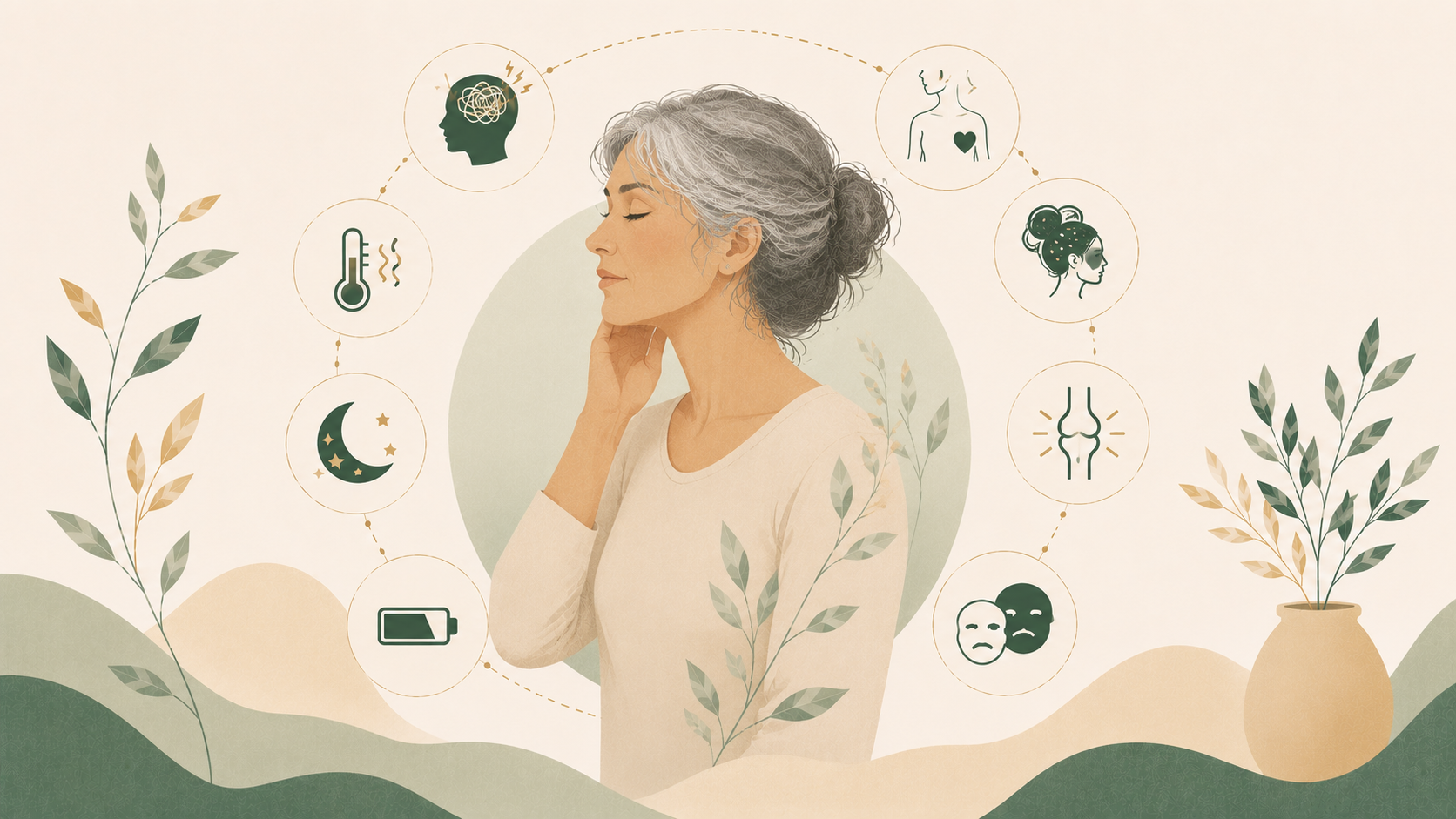
Common Menopause Symptoms
Hot Flashes
Hot flashes are one of the most recognized menopause symptoms, and you may suddenly feel warmth in your face, neck, or chest, often accompanied by sweating or flushing.
Night Sweats
Night sweats are essentially hot flashes that occur during sleep, and they can interrupt rest and leave you feeling tired the next day.
Sleep Problems
Many women notice they wake up more frequently or have trouble falling asleep. Sometimes night sweats are responsible. Other times sleep changes happen even without obvious hot flashes.
Mood Changes
Hormonal changes can affect emotional well-being, and some women notice increased irritability, anxiety, mood swings, or feeling less emotionally resilient than before.
Vaginal Dryness
Lower estrogen levels can affect vaginal tissues, which may lead to dryness, irritation, itching, burning, or discomfort during sex.
Urinary Symptoms
This symptom is discussed less often, but it can be surprisingly bothersome: some women notice increased urinary urgency, burning, irritation, or symptoms that feel similar to recurring urinary tract infections. In some cases, these symptoms may be related to changes in vaginal and urinary tissues caused by declining estrogen levels.
Lower Sex Drive
Changes in hormones, sleep quality, and vaginal comfort can all influence libido, and some women notice a decline in sexual desire during menopause.
Brain Fog
You may find yourself forgetting names, losing track of conversations, or feeling less focused than usual. Many women describe this as feeling mentally slower or less sharp.
Fatigue
Poor sleep, night sweats, and hormonal changes can all contribute to lower energy levels. You may feel unusually tired during the day, even after a full night’s sleep, or notice that everyday activities take more effort than they used to.
Joint and Muscle Aches
Some women notice more stiffness or aching during menopause. The exact reason isn’t fully understood, but hormonal changes may play a role.
Changes in Skin and Hair
As estrogen levels decline, skin may become drier, thinner, or less elastic. Some women also notice changes in hair thickness or texture, including increased shedding or drier, more fragile hair. These changes can vary widely and may also be influenced by aging, genetics, and other factors.
Why Do These Symptoms Happen?
Lower Estrogen Levels
Most menopause symptoms are linked, directly or indirectly, to declining estrogen levels. My guide to low estrogen symptoms covers this in more depth. Estrogen affects much more than reproduction. It also plays a role in temperature regulation, sleep, vaginal health, skin health, bone health, and brain function.
Changes in Sleep
Sleep disruption can create a cycle of fatigue, irritability, and difficulty concentrating, which is one reason menopause symptoms often seem connected.
Natural Aging
Not every change that happens during menopause is caused by hormones alone, and some symptoms may also reflect normal aging processes.
How to Tell If Menopause Is the Cause
The combination of symptoms often provides important clues, so ask yourself:
- Have my periods become irregular or stopped?
- Am I experiencing hot flashes or night sweats?
- Has my sleep changed?
- Have symptoms appeared gradually over time?
- Am I in my 40s or 50s?
One thing that often becomes apparent is that women rarely experience just one symptom. Several smaller changes often appear together.
What You Can Do
The first step is understanding that menopause looks different for everyone. Some women have very few symptoms and move through the transition with little disruption. Others find that symptoms affect sleep, mood, work, relationships, or overall quality of life for years.
If symptoms are bothering you, don’t assume you simply have to live with them. Treatment options may include:
- Hormone therapy
- Non-hormonal prescription medications
- Vaginal estrogen products for dryness and urinary symptoms
- Lubricants and moisturizers
- Lifestyle changes that support sleep and overall health
For vaginal dryness, irritation, discomfort during sex, or recurrent urinary symptoms, local vaginal estrogen may be recommended. It works mainly in the vaginal tissues, unlike systemic hormone therapy. The best option depends on your symptoms, medical history, and preferences.
A Note About Treatment
One thing that often gets lost in conversations about menopause is that treatment decisions are usually based on quality of life. If symptoms are mild, some women choose not to use any treatment at all. If symptoms are significantly affecting daily life, discussing options with a healthcare professional may be worthwhile.
Before starting hormone therapy, your healthcare provider will review your medical history, discuss the benefits and risks, and check that recommended screenings, including routine breast screening when appropriate, are up to date. Treatment should be tailored to your individual needs.
When to See a Doctor
Consider speaking with a healthcare professional if:
- Symptoms are affecting your quality of life
- Sleep problems become persistent
- Hot flashes are severe
- Vaginal dryness causes discomfort
- Urinary symptoms keep returning
- You’re unsure whether symptoms are related to menopause
- Bleeding occurs after menopause
Bleeding after menopause should always be evaluated by a healthcare professional.
Conclusion
Menopause can bring a variety of physical and emotional changes, and the experience is different for every woman. Some women notice only mild symptoms, while others need support to manage the transition comfortably. For a broader overview of hormone-related symptoms, see Signs of Hormonal Changes.
In my experience, if symptoms are affecting your daily life, it’s worth discussing your options with a healthcare professional. There are often more solutions available than many women realize.