Postpartum Hair Loss: Why It Happens and When It Stops

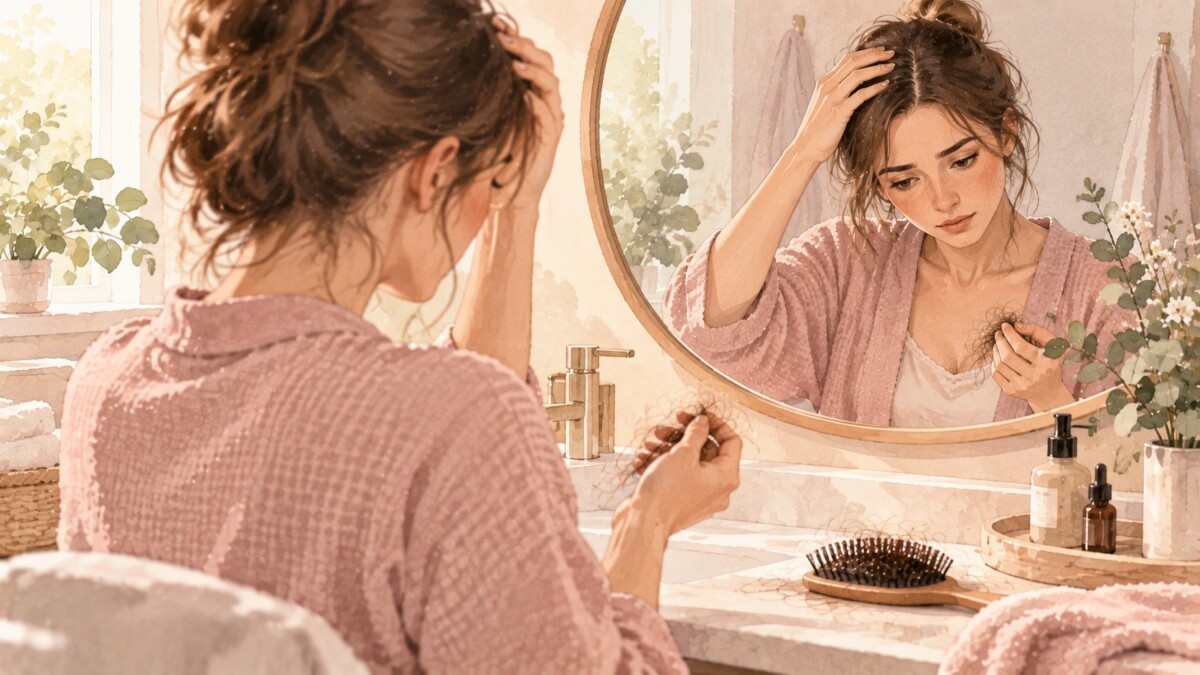
Somewhere around three or four months after birth, many new moms notice much more hair than usual coming out in the shower, collecting on the brush, or showing up on clothing and around the house. It can feel sudden and alarming, especially on top of everything else postpartum recovery involves.
Some women notice only a modest increase, while others feel like they’re losing hair by the handful, and both can be part of the same normal process. The good news is that this is one of the most predictable postpartum changes, and for most women, it is temporary.
Medical Disclaimer
This article is provided for general educational and informational purposes only and does not constitute medical advice, diagnosis, or treatment. While the content is written with input from a licensed healthcare professional, reading this article does not create a nurse-patient, provider-patient, or any other professional relationship between you and the author or Vida Atlas.
The information here is general in nature and is not a substitute for personalized medical advice from your own doctor or qualified healthcare provider, who can take your full medical history and individual circumstances into account. Always consult your doctor or another qualified healthcare provider with any questions you may have regarding a medical condition, and never disregard professional medical advice or delay seeking it because of something you read on this site.
If you think you may have a medical emergency, call your local emergency number or go to the nearest emergency room immediately. Do not rely on this article for urgent or emergency medical situations.
Vida Atlas and the author make no representations or warranties about the accuracy, completeness, or timeliness of the information provided, and disclaim liability for any actions taken or not taken based on the content of this article.
Quick Answer
Postpartum hair loss typically starts one to six months after birth, often becomes most noticeable around three to four months, and gradually settles as the normal hair cycle returns. Full recovery of pre-pregnancy hair thickness can take several months and sometimes up to a year.
What’s Actually Happening
During pregnancy, rising hormone levels keep more hair than usual in its active growing phase, which is why many women notice thicker, fuller hair while pregnant. After birth, hormone levels drop sharply, and more of those hairs enter the resting phase and then shed over the following weeks and months. This process is called telogen effluvium.
The change can make it seem as though you are suddenly losing an unusual amount of hair. In reality, much of the extra shedding reflects hairs that remained in the growing phase longer during pregnancy and are now returning to their usual cycle.
How noticeable it feels varies quite a bit from person to person, depending on hormone levels, hair type, and how much extra hair was held onto during pregnancy in the first place.
What to Expect
- Shedding usually starts around one to six months postpartum.
- It often feels most noticeable around month three or four.
- Hair may look thinner around the temples and along the hairline.
- Regrowth usually becomes noticeable over the following months.
- Returning to your pre-pregnancy hair thickness can take up to a year.
- You may notice short, wispy new hairs around the hairline as regrowth begins.
- Shedding usually slows down gradually rather than stopping all at once.
What Can Help
There is no reliable way to stop normal postpartum shedding itself because it is driven by the hair cycle, but a few things can protect the hair and make it easier to manage while regrowth happens, according to Johns Hopkins Medicine:
- Use a gentle shampoo and conditioner. Volumizing products may make thinning less noticeable.
- Consider a shorter haircut or layers if your hair feels difficult to manage.
- Avoid very tight ponytails, braids, or hairstyles that repeatedly pull on the hair.
- Eat a balanced diet. Iron deficiency and some other nutritional problems can contribute to hair loss.
- Continue a prenatal vitamin if your healthcare professional has recommended it.
- Brush gently with a wide-tooth comb, especially right after washing when hair is more fragile.
- Ease off heavy heat styling while shedding is at its worst, since heat adds extra stress to hair that’s already thinning.
When to See a Doctor
Most postpartum hair loss does not need treatment. It is worth discussing with a healthcare professional if the shedding remains very heavy or continues to worsen around nine to twelve months postpartum, you develop distinct bald patches rather than general thinning, or there are no signs of regrowth over time.
Hair loss together with symptoms such as marked fatigue, dizziness, palpitations, unusual sensitivity to cold or heat, or other new symptoms may also be worth checking because iron deficiency, thyroid problems, and other conditions can cause or worsen hair loss.
It’s also worth telling the difference between this kind of shedding and gradual pattern thinning, which develops slowly at the hairline or crown over years rather than showing up suddenly a few months after birth. If what you’re seeing looks more like steady, long-term thinning than a postpartum shedding phase, that’s a separate conversation worth having with your provider.
Conclusion
Postpartum hair loss can be noticeable, but in most cases it is temporary. The increased shedding happens because more hairs than usual enter the resting and shedding phase after pregnancy, not because the hair follicles have stopped working.
Hair growth gradually returns to its usual cycle. If shedding continues much longer than expected, causes distinct bald patches, or comes with other symptoms, it is worth checking for another cause rather than assuming it is still related to pregnancy.
Being a little gentler with your hair in the meantime, brushing softly, easing off heat and tight styles, won’t speed up regrowth. But it can help the hair you do have look and feel better while you wait it out.