
Sleep Tracking: What Wearables Tell You

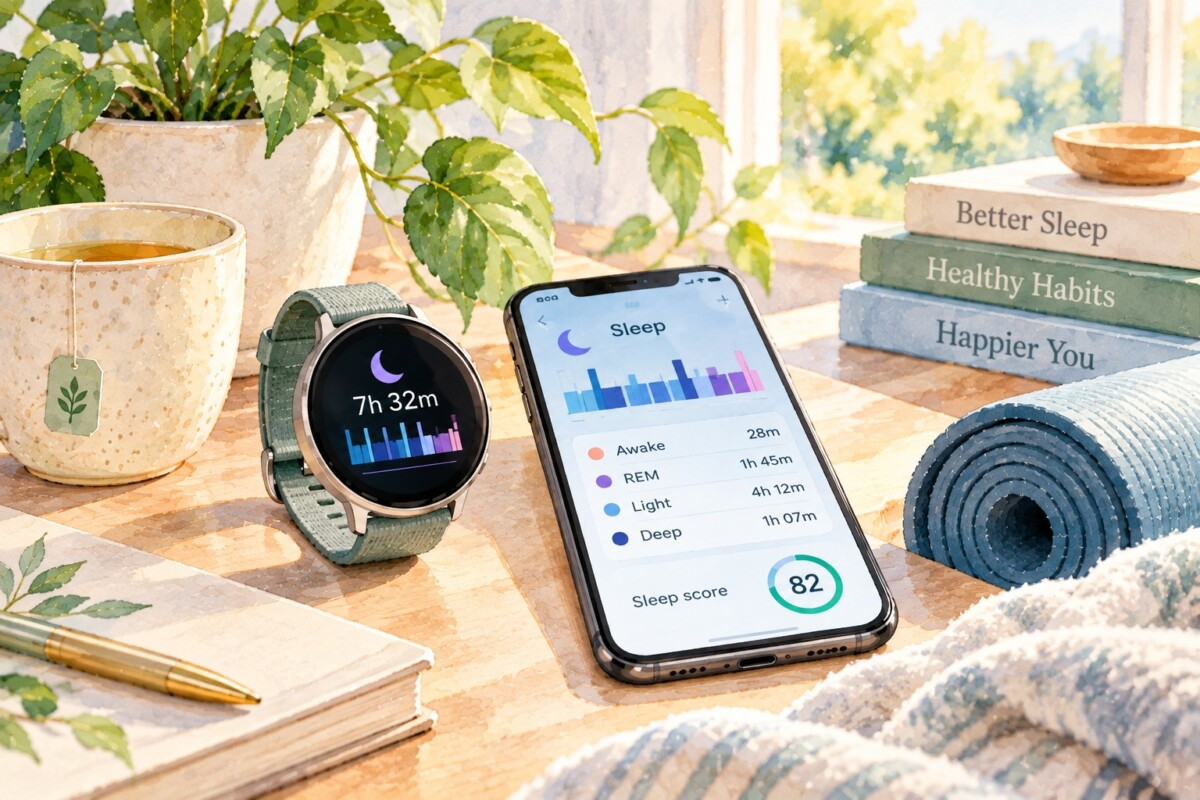
Sleep trackers are everywhere now, built into rings, watches, and even mattresses, all promising to explain your sleep with a simple score each morning. They can be useful. They can also make you worry too much over a number that isn’t as precise as it looks.
Here is what these devices measure reasonably well, where they fall short, and how to use the data without letting one score decide whether you slept well.
Medical Disclaimer
This article is provided for general educational and informational purposes only and does not constitute medical advice, diagnosis, or treatment. While the content is written with input from a licensed healthcare professional, reading this article does not create a nurse-patient, provider-patient, or any other professional relationship between you and the author or Vida Atlas.
The information here is general in nature and is not a substitute for personalized medical advice from your own doctor or qualified healthcare provider, who can take your full medical history and individual circumstances into account. Always consult your doctor or another qualified healthcare provider with any questions you may have regarding a medical condition, and never disregard professional medical advice or delay seeking it because of something you read on this site.
If you think you may have a medical emergency, call your local emergency number or go to the nearest emergency room immediately. Do not rely on this article for urgent or emergency medical situations.
Vida Atlas and the author make no representations or warranties about the accuracy, completeness, or timeliness of the information provided, and disclaim liability for any actions taken or not taken based on the content of this article.
Key Takeaways
- Sleep trackers are quite accurate at detecting whether you’re asleep or awake.
- They’re much less reliable at identifying specific sleep stages, especially deep sleep.
- Becoming overly focused on your sleep score can itself hurt your sleep, a pattern called orthosomnia.
- Trackers are most useful for spotting patterns over time, not for judging any single night.
- If you feel rested, trust that over a device score that disagrees.
What These Devices Measure
Most consumer sleep trackers don’t measure brain activity directly, the way a clinical sleep study does. Instead, they estimate sleep from indirect signals like movement, heart rate, and sometimes blood oxygen or skin temperature, then use an algorithm to work out when you were asleep, awake, or in a particular sleep stage.
What Sleep Trackers Get Right
For the basic question of asleep versus awake, wearables perform quite well. In one study of three commercial wearables, all three correctly detected sleep at least 95% of the time and agreed with a sleep lab test more than 90% of the time. That study included only 35 healthy adults, so the results may differ for people with sleep disorders.
Trackers are also useful for spotting trends over weeks or months, like whether a new bedtime routine is helping, or whether your sleep tends to suffer after certain days.
Where They Fall Short
Sleep stage estimates are far less reliable. In the same study, deep sleep was the hardest stage to detect. Depending on the device, only about 50% to 80% of deep sleep was correctly identified. Accuracy varies noticeably between brands and models. A “light sleep” or “deep sleep” percentage on your app is a rough estimate, not a lab measurement.
The Orthosomnia Risk
Some people become so focused on a “perfect” score that it hurts their sleep, a pattern researchers call orthosomnia. Lying awake anxious about your data, or lying unnaturally still just to improve your numbers, can make your actual sleep worse, even while your tracker looks fine. If you often lie awake at night, our guide on why you can’t fall back asleep may help. Ongoing worry matters too, so see how stress affects the body.
Products That Can Help
A tracker is only one tool. These simple products tend to support better sleep more directly.
A Consistent Wake-Up Alarm
A fixed wake time, even on weekends, helps keep your body clock steady. The CDC recommends going to bed and getting up at the same time every day.
Blackout Curtains
Even small amounts of light can block the hormone that helps you feel sleepy. Making your room dark with blackout curtains, or wearing a sleep mask, is one of the simpler fixes.
A White Noise Machine
Consistent background sound can mask household or street noise that fragments sleep without fully waking you. Research on white noise is mixed, so treat it as optional. If you try it, keep the volume low.
A Basic Sleep Journal
Writing down your bedtime, caffeine, and how you felt the next day can show patterns that a device may miss.
Common Mistakes to Avoid
Treating One Bad Night’s Score as a Crisis
A single low score usually isn’t meaningful on its own. Sleep naturally varies night to night, and one number doesn’t capture your overall health.
Ignoring How You Feel
If you feel rested and alert, but your app disagrees, trust your own experience over the algorithm.
Chasing a Perfect Score
Sleep doesn’t need to be optimized to the last percentage point. Obsessing over the data can create the exact anxiety that disrupts good sleep in the first place.
Using a Tracker to Diagnose a Problem
A tracker cannot diagnose a sleep disorder. If you often feel very tired during the day, snore loudly, or wake up gasping, talk to your doctor instead of relying on your device.
Try This Week
Instead of checking your sleep score first thing every morning, try this:
- Set a consistent wake-up time for the next seven days.
- Rate how rested you feel each morning, on your own, before looking at your device.
- Compare your own rating to your tracker’s score at the end of the week.
- Notice which one matches how your day went.
Final Thoughts
Sleep trackers work best when you use them to look for patterns over time and stop needing a perfect number every night. The device is a helpful tool, not the final word on how well you slept. If you feel rested, that is a good sign. If you often feel tired even when your scores look good, talk to your doctor. If new sleep habits are hard to keep, see Why Healthy Habits Don’t Stick for ideas that work in real life.
Sources
- Centers for Disease Control and Prevention (CDC). About Sleep.
- Sleep Foundation. What Is Orthosomnia?
- National Center for Biotechnology Information (NCBI). Accuracy of Three Commercial Wearable Devices for Sleep Tracking in Healthy Adults.
- Sleep Foundation. How To Make Your Room Dark for a Good Night’s Sleep.