What Is Burnout?

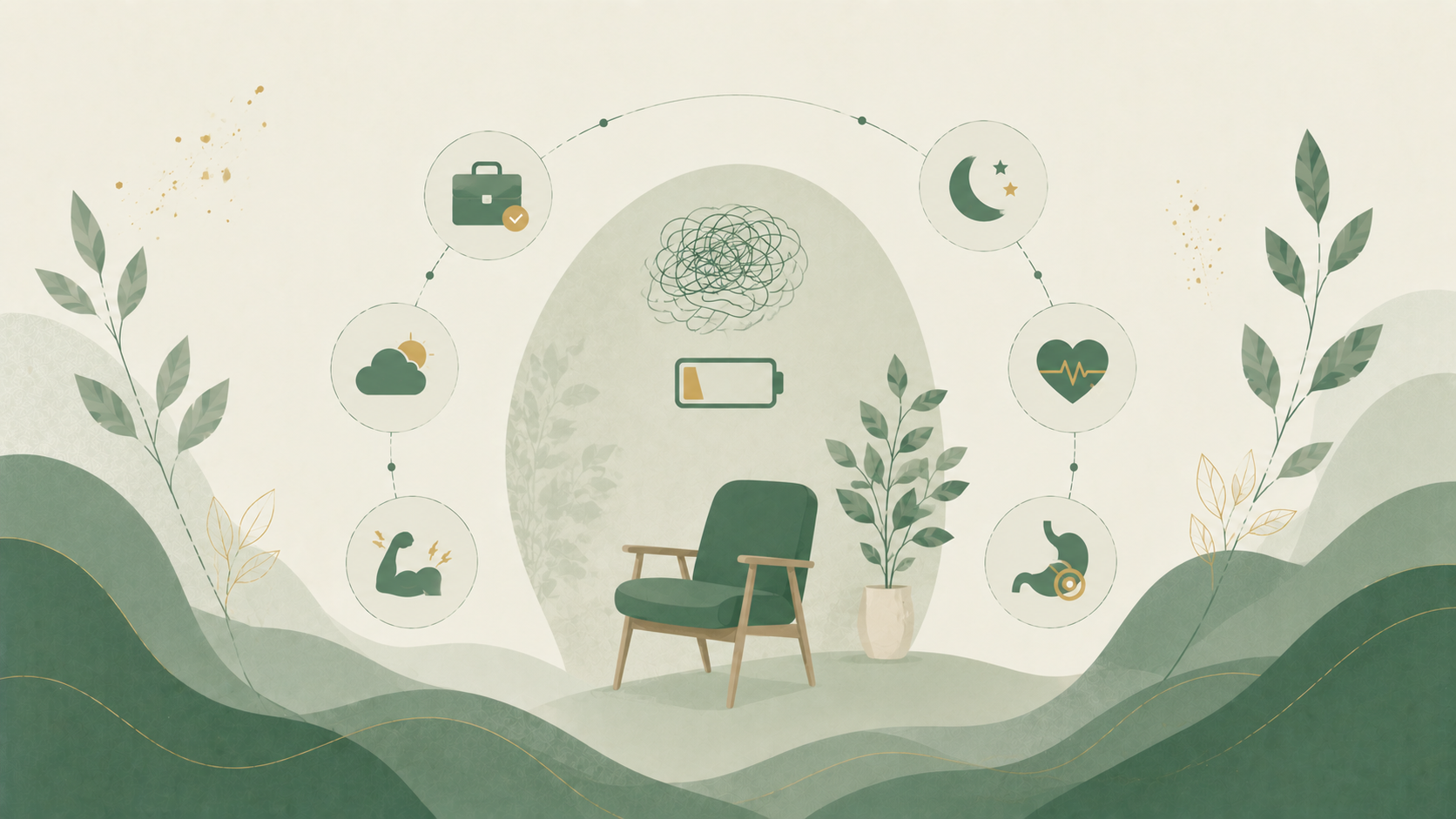
You wake up tired, get through the day, and notice that everything feels harder than it used to. Tasks that once felt manageable become overwhelming, things you enjoyed feel less rewarding, and even rest doesn’t seem to restore your energy.
At first, you may assume you’re just stressed or simply need a break. But burnout can develop gradually when stress continues for too long and your ability to cope starts running low. In my work with patients, I’ve seen how easy it is to miss because burnout doesn’t always feel dramatic. Often, it builds quietly over time.
Medical Disclaimer
This article is provided for general educational and informational purposes only and does not constitute medical advice, diagnosis, or treatment. While the content is written with input from a licensed healthcare professional, reading this article does not create a nurse-patient, provider-patient, or any other professional relationship between you and the author or Vida Atlas.
The information here is general in nature and is not a substitute for personalized medical advice from your own doctor or qualified healthcare provider, who can take your full medical history and individual circumstances into account. Always consult your doctor or another qualified healthcare provider with any questions you may have regarding a medical condition, and never disregard professional medical advice or delay seeking it because of something you read on this site.
If you think you may have a medical emergency, call your local emergency number or go to the nearest emergency room immediately. Do not rely on this article for urgent or emergency medical situations.
Vida Atlas and the author make no representations or warranties about the accuracy, completeness, or timeliness of the information provided, and disclaim liability for any actions taken or not taken based on the content of this article.
Quick Answer
Burnout is a state of physical, mental, and emotional exhaustion that can develop after prolonged periods of stress. It often involves feeling drained, detached, unmotivated, and unable to recover fully, even when you try to rest. Burnout isn’t a sign of weakness. It’s often a sign that you’ve been carrying more than your mind and body can comfortably sustain for too long.
Why This Can Happen
It rarely appears overnight. In many cases, it develops gradually. You keep pushing through stressful situations because you have responsibilities, deadlines, people depending on you, or goals you want to achieve. For a while, that may work.
The problem is that recovery often gets postponed. You tell yourself you’ll rest later, slow down later, take care of yourself later. Eventually, “later” never arrives, and one of the hardest parts is that many people don’t notice burnout developing because they’ve become used to functioning under constant pressure.
What It Can Feel Like
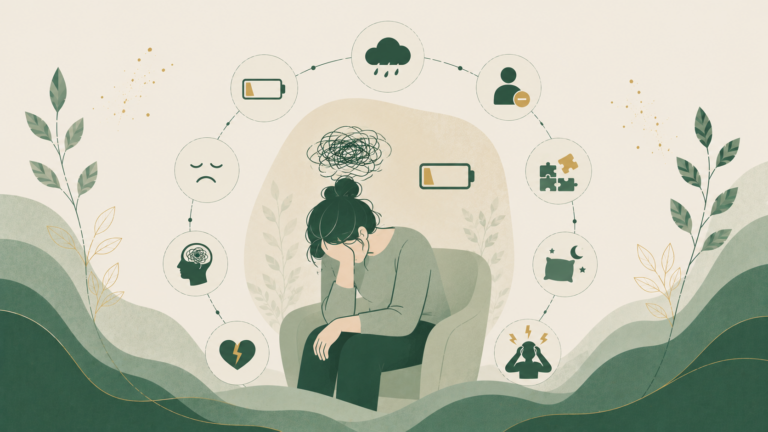
It can affect both the mind and the body. You may notice:
- Constant fatigue
- Difficulty concentrating
- Feeling emotionally numb
- Increased irritability
- Trouble sleeping
- Lack of motivation
- Feeling overwhelmed by simple tasks
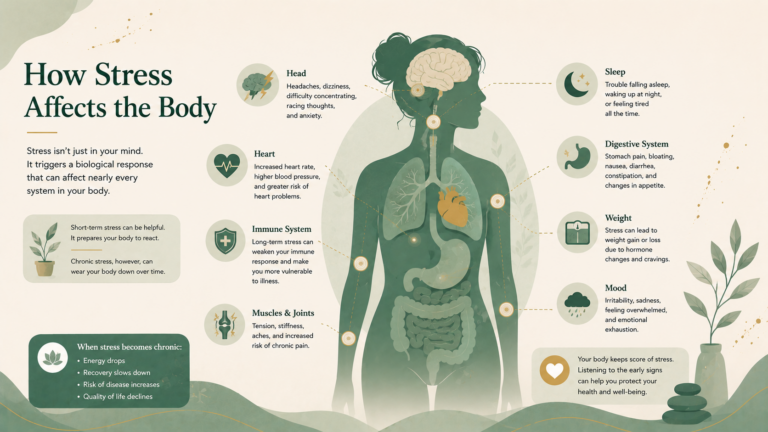
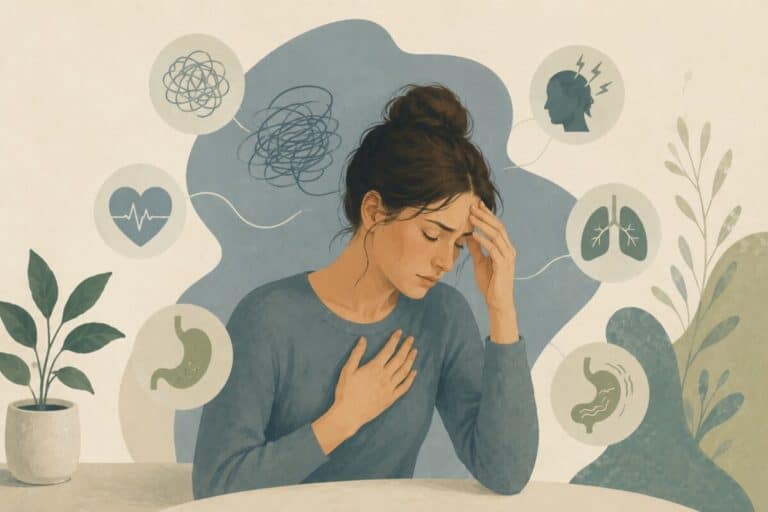
- Frequent headaches or muscle tension
- Loss of interest in things you used to enjoy
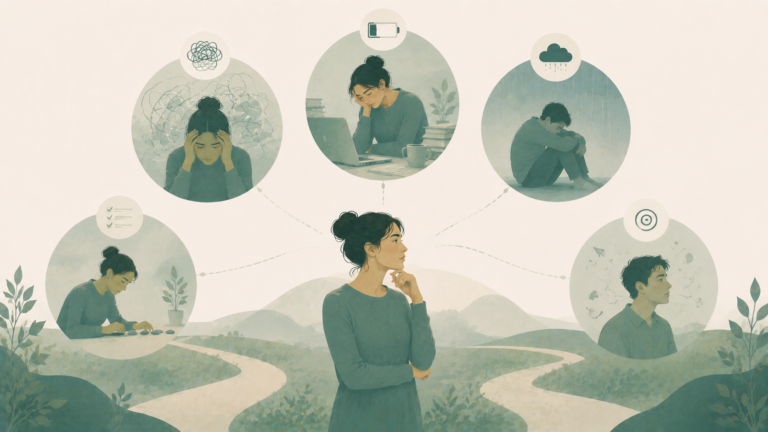
Some people describe it as feeling empty, while others describe it as feeling stuck. Many people expect burnout to feel dramatic, but in reality, it often feels like slowly losing access to your energy, patience, motivation, and enthusiasm.
Common Triggers or Contributing Factors
Work-Related Stress
Burnout is often associated with work, where high workloads, constant pressure, lack of control, difficult environments, or feeling undervalued can all contribute.
Caregiving Responsibilities
Looking after children, family members, or others who depend on you can be rewarding and exhausting at the same time. This is one I understand from both sides of the exam room.
Perfectionism
The challenge comes when life becomes more demanding, and at some point, there may simply be too many responsibilities to do everything perfectly.
One of the hardest lessons for perfectionists is accepting that being human means making mistakes, changing priorities, and sometimes doing things well enough instead of perfectly. When that adjustment doesn’t happen, burnout can become a recurring pattern.
Major Life Changes
Relationship difficulties, financial stress, health problems, grief, career changes, and other major transitions can all increase the risk.
Ignoring Early Warning Signs
Many people notice signs of stress long before burnout develops, but the challenge is that those signs are often pushed aside until functioning becomes much harder.
What May Help and Why
Recovery Usually Takes Longer Than a Weekend
One of the biggest misconceptions about burnout is that a single weekend off will fix it. If burnout has been building for months or years, recovery usually takes longer than a few days.
Start by Identifying What’s Draining You
The first step is often identifying what is draining your energy and what helps restore it. That sounds simple, but many people spend so much time responding to other people’s needs that they lose track of their own.
It may help to look honestly at your current situation: are there responsibilities that could be shared? Are there expectations you’ve placed on yourself that are no longer realistic? Are you giving yourself genuine recovery time, or only brief pauses between obligations?
Question the Rules You’ve Been Following
Sometimes recovery isn’t only about doing less. Sometimes it’s about thinking differently. Burnout can force us to question rules we’ve followed for years:
- I must always be productive.
- I can’t disappoint anyone.
- I should be able to handle everything myself.
- If it’s not perfect, it’s not good enough.
Letting go of these beliefs is often harder than taking a vacation. But for some people, it becomes an important part of recovery.
Find What Helps You Reconnect
Some people find therapy helpful because it creates space to understand what led to burnout in the first place, while others benefit from journaling, healthier boundaries, creative hobbies, spending time outdoors, changing jobs, or reconnecting with parts of life that have been neglected for too long.
The goal isn’t to become more productive. The goal is to recover enough that you can function without feeling depleted all the time.
What If You’re Not Sure It’s Burnout?
Not everyone recognizes burnout right away: some people assume they’re simply tired, while others believe they just need to try harder. Sometimes it looks like stress, sometimes anxiety, and sometimes simply a loss of motivation or a physical health problem.
If you’ve felt different for a while and your usual ways of coping aren’t helping anymore, it’s worth paying attention. You don’t need to have reached a breaking point before seeking support. Talking to a psychologist, therapist, counselor, coach, trusted friend, or healthcare professional may help you understand what is happening and what your next steps could be.
It’s also worth remembering that persistent fatigue, sleep problems, low mood, concentration difficulties, or physical symptoms aren’t always caused by burnout. Conditions such as depression, anxiety disorders, thyroid problems, anemia, and sleep disorders can sometimes look very similar.
Conclusion
Burnout is more than ordinary tiredness. It’s often the result of carrying too much for too long without enough opportunity to recover.
If this article feels familiar, try not to see it as a sign that you’ve failed. In my experience, it may simply be a sign that your mind and body need something different than what they’ve been getting.