Iron Deficiency in Women: Why It’s So Common

Tired all the time, even after a full night’s sleep. Nails that split or peel. Hair that seems to be thinning no matter what you try. These are easy to blame on a busy schedule or getting older, but they can also be signs of iron deficiency, one of the most common nutrient deficiencies in women.
In my years working in women’s health, checking iron levels was one of the first things I’d think about when a woman felt constantly exhausted, especially if her periods were heavy. It’s such a common cause of fatigue that it’s worth ruling out when the symptoms fit.
Iron deficiency doesn’t always cause anemia right away, and its symptoms can be easy to dismiss. Here’s why it’s so common in women, what it can feel like, and when it’s worth getting your levels checked.
Medical Disclaimer
This article is provided for general educational and informational purposes only and does not constitute medical advice, diagnosis, or treatment. While the content is written with input from a licensed healthcare professional, reading this article does not create a nurse-patient, provider-patient, or any other professional relationship between you and the author or Vida Atlas.
The information here is general in nature and is not a substitute for personalized medical advice from your own doctor or qualified healthcare provider, who can take your full medical history and individual circumstances into account. Always consult your doctor or another qualified healthcare provider with any questions you may have regarding a medical condition, and never disregard professional medical advice or delay seeking it because of something you read on this site.
If you think you may have a medical emergency, call your local emergency number or go to the nearest emergency room immediately. Do not rely on this article for urgent or emergency medical situations.
Vida Atlas and the author make no representations or warranties about the accuracy, completeness, or timeliness of the information provided, and disclaim liability for any actions taken or not taken based on the content of this article.
Quick Answer
Iron deficiency happens when your body’s iron stores become too low. Women are more likely to develop it because of factors such as menstrual blood loss and the increased iron needs of pregnancy, according to the Office on Women’s Health.
Iron deficiency can exist before anemia develops. If iron levels continue to fall, your body may eventually struggle to make enough hemoglobin, leading to iron-deficiency anemia and reducing its ability to carry oxygen around the body.
What’s Actually Happening in Your Body?
Iron is needed to make hemoglobin, the protein in red blood cells that carries oxygen from your lungs to the rest of your body. Your body also keeps some iron in storage, so those reserves can begin to fall before changes show up in your hemoglobin levels.
According to Mayo Clinic, iron deficiency can develop when you lose blood, don’t get enough iron from food, have trouble absorbing it, or need more than usual. For women, menstrual blood loss and pregnancy are two particularly important reasons iron needs can outpace supply.
Common Causes of Iron Deficiency
Heavy Periods
Heavy menstrual bleeding is one of the most common reasons women develop iron deficiency. Losing more blood each month means losing more iron too, and over time your body may not be able to replace it fast enough.
If your periods are heavier than what’s typical, or your cycle brings other symptoms along with the bleeding, it’s worth discussing the pattern with your doctor.
Pregnancy and Postpartum
Your body needs more iron during pregnancy to support your increased blood volume and your baby’s development. Blood loss during childbirth can also reduce iron stores, making the postpartum period another time when deficiency may develop or become more noticeable.
Diet
Your body absorbs iron from meat and seafood more easily than iron from plant foods. If you eat little or no meat, or your diet is generally low in iron-rich foods, you may need to pay more attention to getting enough iron from other sources.
Diet becomes particularly important when your iron needs are higher or you’re also losing iron through menstrual bleeding.
Certain Health Conditions
Conditions that affect the digestive system, including celiac disease and inflammatory bowel disease, can interfere with iron absorption. Other sources of ongoing blood loss can also gradually reduce your iron stores.
If your iron remains low despite treatment or keeps dropping again, your doctor may need to look for an underlying reason rather than simply continuing to replace the iron.
Symptoms of Iron Deficiency
Iron deficiency doesn’t always look the same from one woman to the next. Symptoms can also become more noticeable as iron stores fall or anemia develops. You may notice:
- Feeling unusually tired, even after enough sleep.
- Pale skin, especially around your face and inner eyelids.
- Brittle or unusually shaped nails.
- Shortness of breath or a racing heart during normal activity.
- Hair thinning or increased shedding.
- An uncomfortable urge to move your legs, especially at night.
From what I’ve seen, women often explain symptoms like fatigue away as simply being busy or getting older. If everyday things like climbing stairs or carrying groceries suddenly feel harder than they used to, that change is worth paying attention to.
What Can Help
If iron deficiency is suspected, your doctor may order blood tests such as a complete blood count and ferritin, which helps show how much iron your body has stored. Other tests may sometimes be needed depending on your symptoms and medical history.
If your levels are low, treatment usually involves replacing iron and finding out why the deficiency developed in the first place. Your doctor may recommend iron-rich foods, an iron supplement, or both. It’s better not to take high-dose iron supplements without medical guidance, since they can cause side effects and too much iron can be harmful.
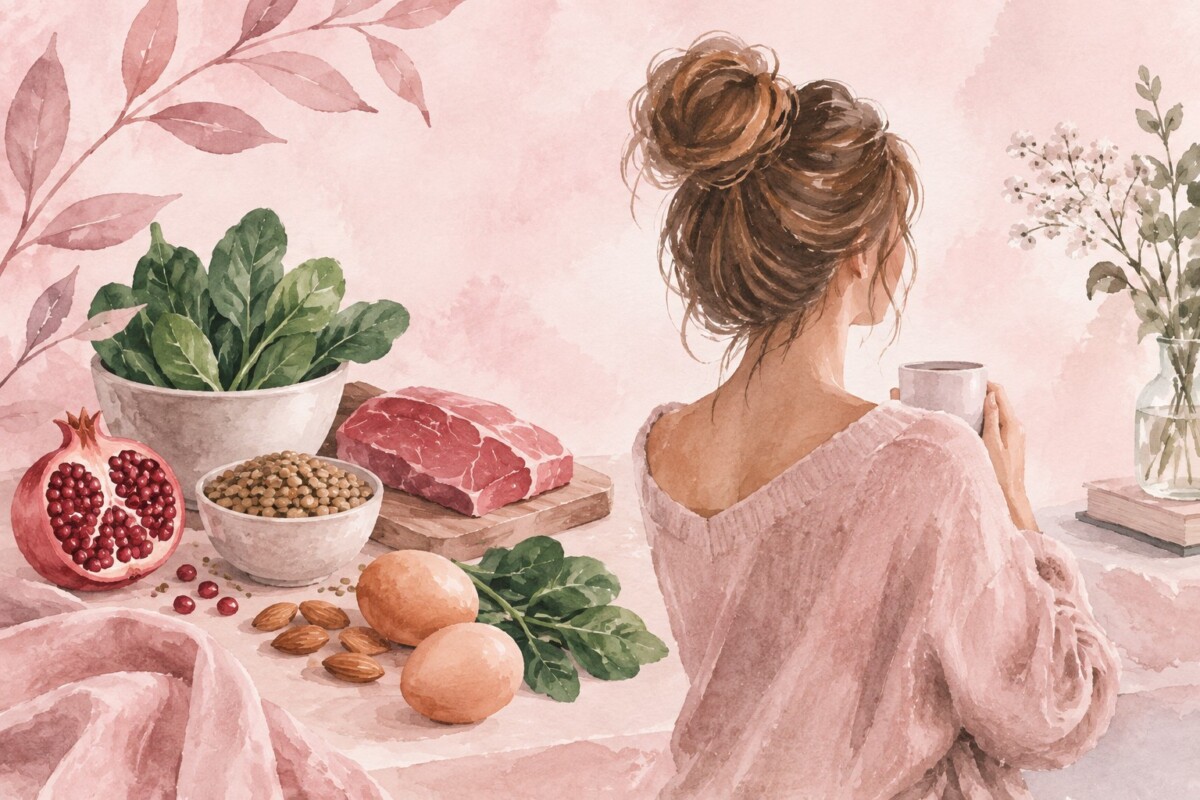
Food can also help support your iron intake. Meat, seafood, beans, lentils, fortified cereals, and some leafy green vegetables contain iron. Pairing plant sources of iron with vitamin C-rich foods can improve absorption, according to the National Institutes of Health.
When to See a Doctor
Consider asking about your iron levels if:
- You feel exhausted most days despite enough sleep.
- Your periods are heavy, prolonged, or getting worse.
- You’ve noticed new hair thinning, brittle nails, or paler skin.
- You feel short of breath or your heart races during normal activity.
- You’re pregnant or trying to become pregnant.
A blood test can help show whether iron deficiency or anemia may be contributing to your symptoms. If your iron is low, it’s also important to understand why rather than focusing only on replacing it. If heavy periods seem to be part of the pattern, it may also be worth talking with a gynecologist about the bleeding itself and whether it needs further evaluation.
Conclusion
Iron deficiency is common in women and surprisingly easy to miss. Fatigue, hair changes, shortness of breath, or feeling weaker than usual can have many causes, but low iron is one of the things worth checking, especially if you have heavy periods or other risk factors.
If testing shows that your iron is low, treatment can help restore your levels, but finding out why they dropped matters too. Sometimes the answer is straightforward, such as heavy periods or pregnancy. Other times, recurring iron deficiency is a reason to look a little deeper with your doctor.